 Glenhaven Siding
 Roofing Built for Lynden's Weather, Not Just Any Weather
Lynden sits far enough inland from Bellingham Bay that people sometimes assume the salt air and marine weather that hammer coastal roofs don't apply here. They do, just on a different schedule. Moisture rolls in off the Sound and up the Nooksack valley, settles into low-lying farmland and tree-lined residential streets, and sits there under grey skies for months at a time. Add the driving rain that comes sideways during winter storms and the moss season that seems to start earlier every year, and a roof in Lynden is working harder than its shingles were probably rated for on paper.
A new roof installation here isn't a generic tear-off-and-replace job. It's an opportunity to correct whatever the old roof got wrong, upgrade ventilation and moisture protection to match Whatcom County's actual climate, and set the home up for a couple decades of low-drama performance. That's the standard we hold every Lynden roof to.
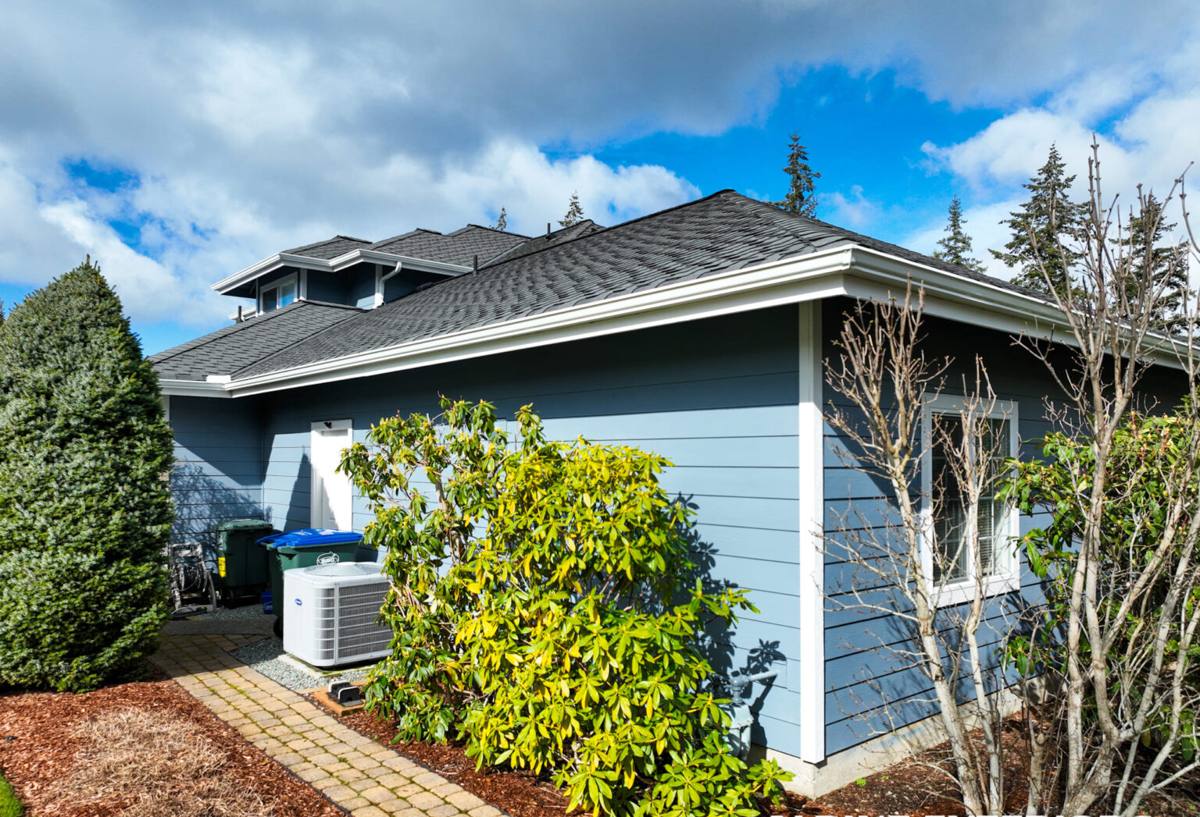
What Lynden Homes Actually Need From a New Roof
Moss Resistance That Starts Before the Shingles Go Down
Moss doesn't grow because a roof is old — it grows because moisture sits, shade lingers, and organic debris collects in valleys and against fascia. A new roof install is the right time to address the conditions that fed moss on the old roof: trimming back overhanging limbs where reasonable, correcting low-slope areas that hold water, and installing zinc or copper strips at the ridge on shingle roofs where the homeowner wants ongoing moss suppression instead of relying on annual treatments alone.
Underlayment That Handles Driving Rain
Wind-driven rain in this part of Whatcom County doesn't fall straight down — it gets pushed sideways under wind gusts common to open farmland and river-valley exposure. Standard felt underlayment can let wind-driven water find its way to the deck at laps and fasteners over time. We use synthetic underlayment rated for high wind-driven rain exposure as a baseline, with self-adhered membrane at eaves, valleys, and any roof-to-wall transitions where water concentrates.
Ventilation That Matches a Marine Climate
A roof deck that can't breathe traps the humidity Whatcom County supplies year-round, which shows up later as premature shingle aging from the underside, deck rot, or condensation in the attic. Balanced intake and exhaust ventilation, sized to the actual attic and roof geometry rather than a one-size assumption, is part of every new roof install we do — not an upsell.
What a Correct New Roof Installation Involves
A roof is only as good as what's underneath it. Here's what should happen on every full replacement, regardless of the material chosen:
- Complete tear-off to the deck — no roofing over an existing layer, which traps moisture and voids most manufacturer warranties
- Deck inspection and repair of any soft, delaminated, or water-damaged sheathing before anything new goes down
- Ice-and-water shield or equivalent self-adhered membrane at eaves, valleys, skylights, and chimney flashing
- Synthetic underlayment across the full field, rated for wind-driven rain
- New flashing at all penetrations, walls, and valleys — reusing old flashing is a shortcut that shows up as a leak within a few years
- Balanced ridge and soffit ventilation sized to the attic volume
- Manufacturer-correct fastening pattern and exposure, not a faster approximation
- Final inspection with photos of the deck and underlayment before they're covered — the parts of the job you can't see later
Choosing the Right Roofing Material for Lynden
There's no single "best" roofing material — there's a best fit for the home's slope, budget, and how much long-term maintenance the owner wants to take on. Here's how the common options actually compare under Whatcom County conditions:
| Material | Moss & moisture behavior | Typical lifespan here | Maintenance |
|---|---|---|---|
| Architectural asphalt shingle | Good with zinc strips and clean gutters; algae-resistant granules help | 25-30 years | Low — periodic moss check and gutter cleaning |
| Standing seam metal | Excellent — sheds moisture fast, little surface for moss to grip | 40-50+ years | Very low |
| Cedar shake | Needs regular treatment and airflow underneath or moss becomes a recurring issue | 20-25 years with upkeep | High |
| Synthetic/composite shingle | Good — resists moisture absorption better than wood | 30-40 years | Low to moderate |
We install all of these, but we're upfront when a material isn't a good fit for a particular roof's slope or shade exposure. Cedar shake on a heavily shaded, low-slope section of a Lynden lot, for example, is going to demand more upkeep than most owners want to sign up for — not because the product is bad, but because that combination of shade and slope is exactly the moisture trap moss needs.
Reading the Signs a Lynden Roof Needs Replacing, Not Patching
Homeowners often call about a leak and end up needing a full replacement instead of a repair. Some signals point clearly toward replacement:
- Granule loss heavy enough to show bald patches or fill gutters repeatedly
- Moss that returns within a season or two of cleaning, even after treatment
- Soft spots or sagging visible from the ground or attic
- Shingles curling, cracking, or lifting at multiple locations rather than one isolated spot
- A roof already at or past 20-25 years old with any of the above present
- Daylight visible through the roof deck from inside the attic
If a roof shows one or two of these in a single area, a repair may still make sense. When several show up together, patching becomes a short-term fix on a roof that's already telling you it's done.
Our Process for a Lynden New Roof Install
1. On-Site Assessment
We walk the roof and attic, not just the driveway view. Slope, existing ventilation, deck condition where accessible, and the specific moisture and shade patterns of the property all factor into what we recommend.
2. Straight Material and Cost Conversation
We lay out the realistic options for that specific roof, what each costs, and what each will actually demand in maintenance over the next 20-30 years — including where a cheaper option now means more attention later.
3. Scheduled Tear-Off and Deck Inspection
Full removal to the deck, with any damaged sheathing replaced before we move forward. We document deck condition so there are no surprises or guesswork about what was underneath.
4. Installation to Manufacturer Spec
Underlayment, flashing, ventilation, and the roofing material itself go in to the manufacturer's actual installation requirements — the details that keep a warranty valid if something goes wrong down the line.
5. Cleanup and Walkthrough
Site cleared of debris and fasteners, and a walkthrough covering what was done, what to watch for, and simple maintenance the homeowner can handle themselves.
Why Local Experience in Lynden Matters
A crew that regularly works Lynden roofs already knows which neighborhoods sit in tighter tree cover and need extra moss attention, which areas catch more of the valley wind during winter storms, and how the marine layer's moisture patterns differ block to block, not just city to city. That's not something you get from a regional crew passing through on a single job. It shows up in smaller decisions — where we add extra membrane, how we size ventilation, which flashing details we double up on — that don't cost much more up front but matter a lot over the life of the roof.
It also means we're still local when a question comes up two years after the job is done. That kind of accountability is part of what you're paying for with any roofing contractor, and it's worth confirming before you hire — not just for us, but for anyone bidding the job.
What to Ask Before Hiring Anyone for a Roof Replacement
Whoever you choose, a few questions separate a solid contractor from a risky one:
- Are you licensed and insured in Washington, and can you provide proof directly?
- Do you tear off completely to the deck, or do you ever install over existing layers?
- What underlayment and flashing do you use as your baseline, not just as an upgrade option?
- Who handles the manufacturer warranty registration, and what does it actually cover?
- Can you walk me through what happens if you find deck damage once the old roof is off?
If a contractor can't answer these clearly and specifically, that's worth noticing before you sign anything.
If your Lynden roof is showing its age, or you just want an honest read on whether repair or replacement makes more sense, we're happy to take a look. Estimates are free, there's no pressure, and you'll get a straight answer either way — the form below is the easiest way to get started.