 Glenhaven Siding
 Building New in Everson? The Windows Only Get Installed Once
New construction gives you one clean shot at doing windows right. There's no old flashing to fight, no fifteen-year-old caulk to dig out, no guessing what's hiding behind the trim. But that also means there's no fixing a shortcut later without opening up finished walls. If the sill pan flashing is missing or the weather-resistive barrier isn't lapped correctly at the header, that mistake gets sided over, drywalled over, and forgotten about until water starts showing up somewhere it shouldn't.
For a home going up in Everson, in Whatcom County's wet, moss-friendly climate, that first install matters more than in a lot of the country. We work on new builds in this area regularly, and this page covers what a correct new-construction window job actually requires here, what we look at before the walls close in, and how our process fits alongside your builder's schedule.
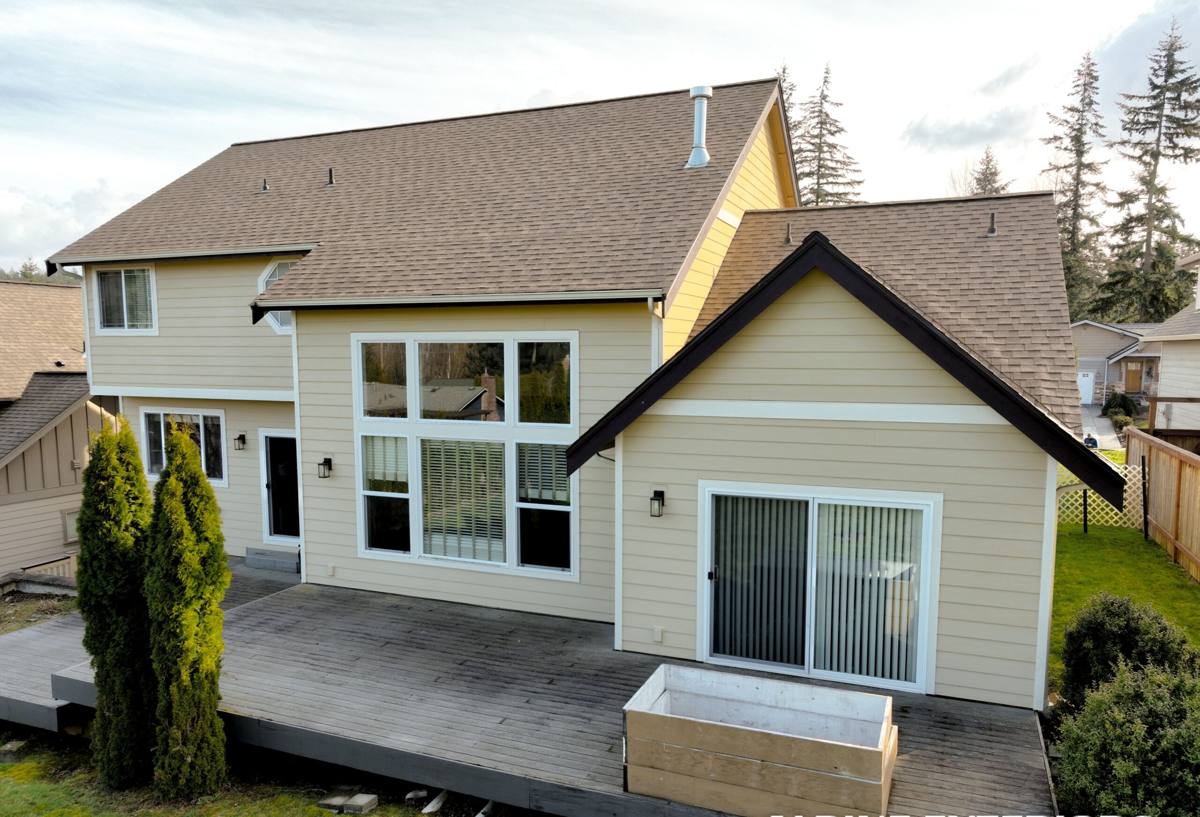
What This Climate Does to a New Build's Windows
Driving rain
Whatcom County gets rain that doesn't just fall straight down — storms push it sideways against west- and south-facing walls for days at a time. A window opening that relies on caulk alone to keep water out will eventually leak. The building science solution is flashing that directs water back out of the wall assembly by gravity, not sealant that's supposed to hold it back by adhesion. Sealant fails over time; flashing doesn't, as long as it's installed in the right order.
A long moss and mildew season
Shaded north and east elevations in this region stay damp for months at a stretch. That doesn't just mean algae on siding — it means any spot where water can pool or sit against wood trim or sheathing has extra time to do damage before things dry out again. Correct window flashing and drainage details matter more here than in a drier climate, simply because everything stays wet longer.
Salt air and coastal moisture
Parts of Whatcom County sit close enough to the Sound that salt-laden air is part of the equation, and it's harder on exposed fasteners, uncoated metal flashing, and lower-grade hardware than inland air is. It's one more reason we spec corrosion-resistant fasteners and flashing components on new builds in this part of the state rather than whatever is cheapest at the yard.
What a Correct New-Construction Window Installation Actually Involves
"New-construction" windows have a nailing fin around the perimeter that gets fastened directly to the wall sheathing before siding goes on, which is what allows a proper, layered flashing job. Here's what that should look like, in order:
Sill pan flashing first
Before the window ever goes in, the rough opening sill gets a formed or built-up pan flashing that slopes slightly to the exterior. If water ever does get past the window — through a failed seal, wind-driven rain, or condensation — the pan gives it a way out instead of a way into the wall cavity below.
Weather-resistive barrier integration
The WRB (house wrap) has to be cut and lapped in a specific shingle-style order around the opening — bottom first, sides next, top last — so that any water running down the wall is always directed over the layer below it, never under. Get this sequence backwards and you've built a funnel instead of a drain.
Nailing fin fastening
Every fastener location the manufacturer specifies gets used — not a handful in the corners. Under-fastened windows shift, rack, and open gaps at the corners over time, especially under wind load.
Sealant as a backup, not the plan
A quality sealant bead at the fin and at interior air-sealing points still matters, but it's the second line of defense. If sealant is the only thing keeping water out of your wall, the install is incomplete regardless of how new the window is.
Choosing Window Frame Materials for This Climate
Frame material affects how the window performs over a Whatcom County winter and how much upkeep it asks of you. There's no single right answer for every build, but here's how the common options compare for a new construction project in this area:
| Frame Material | Moisture Performance | Maintenance | Typical Cost Position |
|---|---|---|---|
| Vinyl | Good; won't rot, but lower-grade profiles can flex or bow over time in temperature swings | Low — no painting, occasional cleaning | Lowest |
| Fiberglass | Very good; dimensionally stable, holds paint and seals well long-term | Low to moderate | Mid to upper-mid |
| Wood-clad | Good on the exterior clad face; interior wood needs the cladding and flashing detail to be right, or trapped moisture becomes an issue | Moderate — interior wood may need occasional finish work | Upper |
| Aluminum | Poor thermal performance and prone to condensation in this climate unless thermally broken | Low | Varies widely |
Our standard is to steer new-construction clients toward vinyl or fiberglass windows built with a full nailing fin and manufacturer-published flashing details, because those installation instructions are what let us build a warrantable, code-compliant assembly. We're glad to install a brand you or your builder already prefer — the caveat is that we hold every install to the same flashing and fastening standard regardless of label, and we'll tell you plainly if a particular product's flange design or documentation makes that harder to guarantee.
Energy Code, Glass, and Comfort
Washington's energy code sets minimum U-factor requirements for new-construction windows, and most quality double-pane, low-E, argon-filled units clear that bar comfortably. Where we usually recommend stepping up is on:
- West and south exposures with a lot of glass area, where solar heat gain coating choice affects summer comfort
- North-facing rooms in a house with limited other insulation upgrades, where triple-pane can noticeably reduce the "cold wall" feeling near the glass
- Bedrooms facing busier roads or open fields, where an upgraded glass package also cuts down on sound transmission
None of this is about chasing the highest number available — it's about matching the glass package to how each room actually gets used and which direction it faces.
Our Process on an Everson New Build
- We review the window schedule and rough opening sizes with your builder or GC before framing is final, catching sizing or header conflicts early.
- We coordinate timing with whoever is running the WRB and siding, so flashing sequencing happens in the correct order rather than around someone else's already-finished work.
- We install sill pan flashing, set and fasten each window per manufacturer spec, and integrate the WRB laps around every opening.
- We do an in-house check of every opening before siding closes it in — this is the point where a missed flashing lap is a five-minute fix instead of a torn-open wall later.
- We hand off documentation of what was installed and how, so it's on record for warranty purposes and for whoever owns the house down the road.
Before the Wall Closes Up: A Homeowner's Checklist
If you're a hands-on owner-builder or just want to know what to look for during a site walk, these are worth checking before siding goes on:
- Sill pan flashing is present and sloped outward, not sitting flat or tilted inward
- House wrap is lapped shingle-style — bottom, sides, then top — around every opening
- Every fastener location called for by the window manufacturer is actually filled
- No gaps where housewrap tape has lifted, wrinkled, or been cut short at corners
- Sealant is applied as a backup, not as the only water barrier at the fin
- Window is plumb, level, and square in the opening — not just "close enough" and shimmed to fit trim later
Why a Crew That Already Works Everson Matters
New-construction window flashing isn't exotic work, but it's detail-sensitive, and a crew that's done it repeatedly in this specific corner of Whatcom County knows to plan for driving rain direction, the long stretches of damp weather that don't give sealant much time to cure, and the realities of coordinating with local building departments and inspection timing. That familiarity shows up as fewer surprises mid-build, not as anything flashy — which is exactly what you want from the trade that's closing in your walls before the siding goes on.
Living With New Windows: What Maintenance Looks Like Here
A properly installed new-construction window doesn't ask for much, but a couple of habits go a long way in this climate. Rinse pollen, moss spores, and grime off frames and sills a couple of times a year, especially on shaded elevations that stay damp longest. Keep an eye on exterior sealant lines for cracking or separation and have them touched up before they fail outright — sealant is a maintenance item, not a lifetime one. And keep gutters and downspouts clear near window headers, since overflowing gutters are one of the more common (and avoidable) sources of water finding its way to window trim that was otherwise installed correctly.
If you're planning a new build in the Everson area and want windows installed the way this climate actually requires, we're happy to walk the plans with you or your builder and put together a free, no-pressure estimate — just fill out the form below.