 Glenhaven Siding
 New-Construction Windows, and Why Ferndale Needs Them Done a Certain Way
"New-construction window" is a specific term, not just a window that happens to be going into a new house. These units have a nailing fin (also called a flange) around the outside edge that gets fastened directly to the wall sheathing before the siding goes on. That fin is what ties the window into the water-resistive barrier and flashing system for the life of the building. Get that sequence right and the window will shed water for decades. Get it wrong, and you won't know it until there's staining on the interior sill or soft sheathing behind the siding five or ten years down the road.
In Ferndale, that margin for error is smaller than it is in drier parts of the state. This is a Whatcom County community close to the water, and the combination of salt-laden air, wind-driven rain coming off the Salish Sea, and long stretches of damp, low-sun winter weather is hard on building materials in ways that inland construction doesn't have to plan for. A window package that would be fine in a drier climate can underperform here if the installer treats it like a generic install instead of a coastal one.
New-Construction vs. Replacement: Not the Same Job
Replacement or "pocket" windows are built to slide into an existing frame with no fin, because the siding and trim around the opening already exist and aren't coming off. New-construction windows are the opposite — they're meant to be installed into an open stud wall, before the weather-resistive barrier is fully lapped and before exterior finishes go on. If a builder or homeowner mixes these up, or if a crew installs a new-construction window without doing the flashing steps that make it a system, you end up with a window that looks right but isn't actually integrated into the wall's drainage plane. This matters most on new builds, additions, and any project where the wall is genuinely open to the studs.
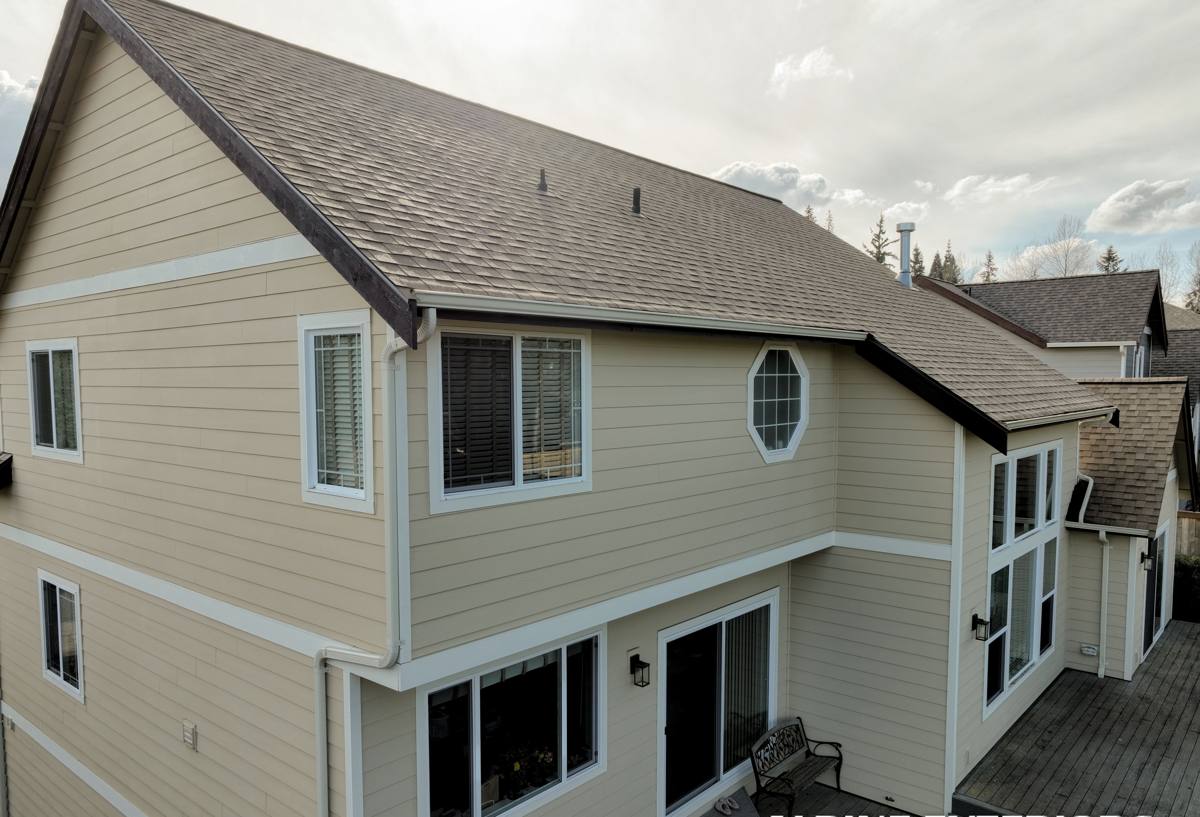
What Ferndale's Climate Actually Demands From a Window Install
Salt Air and Metal Fatigue
Proximity to the water means airborne salt settles on exterior surfaces, including window hardware, fasteners, and metal flashing. Over years, uncoated or poorly rated fasteners and hinges can corrode faster here than they would twenty miles inland. This isn't a reason to panic, but it is a reason to be deliberate about fastener and flashing material selection on a coastal build.
Driving Rain, Not Just Rain
Whatcom County gets plenty of straight-down rain, but the rain that causes window problems is wind-driven — pushed sideways and even slightly upward against the wall by storms coming off open water. That kind of rain finds gaps that vertical rain never would. It's why sill pan flashing and proper head flashing aren't optional details on this coast; they're the difference between a window that's dry inside in a January windstorm and one that isn't.
The Long Moss Season
Extended cool, wet, low-light stretches in fall and winter are exactly the conditions moss and algae need to take hold on north-facing and shaded exterior surfaces. Window trim, sills, and the siding immediately around a window are common places for it to start, especially where water is draining slowly instead of shedding cleanly. Correct flashing and slope at the sill reduce how much standing moisture sits against those surfaces in the first place.
The Flashing Details That Actually Determine Whether a Window Leaks
Sill Pan Flashing
The sill pan is the flashing that sits under the window in the rough opening, forming a shallow pan that directs any water that gets past the window itself back out to the exterior instead of into the wall cavity. On a coastal project like Ferndale, we treat sill pan flashing as non-negotiable on every new-construction window, not just the ones facing bad weather. Storms don't always come from the direction you'd expect.
Shingle-Lap Sequencing With the Weather-Resistive Barrier
Flashing tape and the housewrap have to be layered like shingles on a roof — each piece overlapping the one below it — so water is always directed down and out, never trapped behind a lap that runs the wrong way. This applies at the sill, the jambs, and the head, in that order, and it has to happen before siding covers any of it up. Once siding is on, this detail is hidden for the life of the house.
Sealant Is a Backup, Not the Plan
Caulk and sealant around a window are meant to be a secondary line of defense, not the primary water-management strategy. A window that depends on a bead of sealant to stay dry will eventually leak once that sealant ages, shrinks, or gets missed during a repaint. Correct flashing keeps the window dry even if the sealant fails later.
Choosing Frame Material and Glass for This Climate
There's no single "best" window brand or material for every Ferndale project — it depends on budget, the style of the home, and how exposed the wall is to weather. What does matter is understanding the trade-offs each option carries in a damp, salt-air coastal climate.
| Frame Material | Coastal Performance | Maintenance |
|---|---|---|
| Vinyl | Doesn't corrode; handles moisture well; can flex slightly in temperature swings | Low — occasional cleaning |
| Fiberglass | Very stable dimensionally; strong resistance to moisture and salt exposure | Low — durable finish |
| Wood-clad (aluminum or vinyl exterior) | Good performance if the cladding and flashing are done correctly; interior wood look | Moderate — cladding needs to stay sealed at joints |
| Bare wood exterior | Highest maintenance burden in a wet, salt-exposed climate | High — regular refinishing needed |
On glass, look for a low-E coating rated for the Pacific Northwest rather than a hot-climate package — the goal here is retaining heat and controlling condensation through a long cool, damp season, not blocking intense summer sun. Argon-filled double-pane units are standard for new construction in this region and meet current energy code when specified correctly.
How We Handle a New-Construction Window Job
Most of our new-construction work happens in coordination with a builder or general contractor, on a timeline set by the framing schedule. The sequence generally looks like this:
- Verify rough openings against final window specs before ordering — a mismatch here causes delays once the windows arrive.
- Order windows with enough lead time built in, since manufacturing and shipping schedules can shift and framing crews don't wait.
- Coordinate install timing with the builder so windows go in once the wall is sheathed and ready for the weather-resistive barrier, but before siding starts.
- Install sill pan flashing, set the window, and shingle-lap the flashing tape and housewrap in the correct order.
- Check every unit for square, level, and proper reveal before final fastening.
- Walk the job with the builder or homeowner before siding covers the flashing work.
What Drives Cost on a New-Construction Window Package
We won't quote a number without seeing the plans, but these are the factors that actually move the price up or down on a Ferndale new-construction job:
| Factor | Why It Matters |
|---|---|
| Number and size of openings | More glass and larger units mean more material and labor |
| Frame material | Vinyl, fiberglass, and clad-wood carry different material costs |
| Glass package | Upgraded low-E coatings or tempered glass where required add cost |
| Wall exposure | Elevations facing prevailing wind and rain may warrant extra flashing detail |
| Access and timing | Working around an active framing schedule affects labor efficiency |
Meeting Washington's Code Requirements
New-construction windows in Whatcom County need to meet current Washington State Energy Code U-factor and performance requirements, which are stricter than many homeowners expect coming from other states. Bedrooms also have egress requirements — a minimum clear opening size and maximum sill height — that have to be accounted for at the design stage, not discovered after a window is already ordered. We check these against the plans before placing an order so there are no surprises at inspection.
A Practical Checklist Before Your Windows Go In
- Confirm final window sizes match the rough openings on the actual framed structure, not just the plans.
- Confirm which openings are egress-required bedrooms and which need tempered glass.
- Ask what flashing tape and sill pan method will be used, and confirm it's rated for this climate.
- Confirm lead time on ordering so the framing schedule isn't held up.
- Walk the flashing details with your installer before siding goes on — once it's covered, it's covered for good.
Why Hiring a Crew That Already Works Ferndale Matters
A window install that would pass fine in a drier inland town can be the wrong call on a lot exposed to wind off the water. Crews that regularly work Ferndale and the surrounding Whatcom County coastline know which elevations take the worst weather, which fastener and flashing materials hold up under salt exposure, and how to sequence a job around local framing and inspection timelines. That familiarity isn't something you can shortcut — it comes from having done this work, on this coast, more than once.
If you're building new construction or a major addition in Ferndale and want windows installed the way this climate actually requires, we're happy to walk your plans and give you a straightforward, no-pressure estimate using the form below.