 Glenhaven Siding
 Composite Decking Built for Nooksack's Weather, Not Just Your Backyard
Nooksack homeowners don't need a deck that looks good in a showroom photo. They need one that still looks good after ten Whatcom County winters — the kind with weeks of driving rain, a moss season that seems to start earlier every year, and the salt-laden air that drifts in off the bay and slowly works on anything metal or untreated. Composite decking, installed correctly for this specific climate, holds up to that pressure in a way that traditional lumber decks generally can't without constant upkeep.
This page focuses on one thing: composite deck installation for homes in and around Nooksack. Not a national overview of decking materials, not a generic "why composite is great" pitch — the actual conditions your deck will face here, what a correctly built one requires, and how we approach the job when we already know this area.
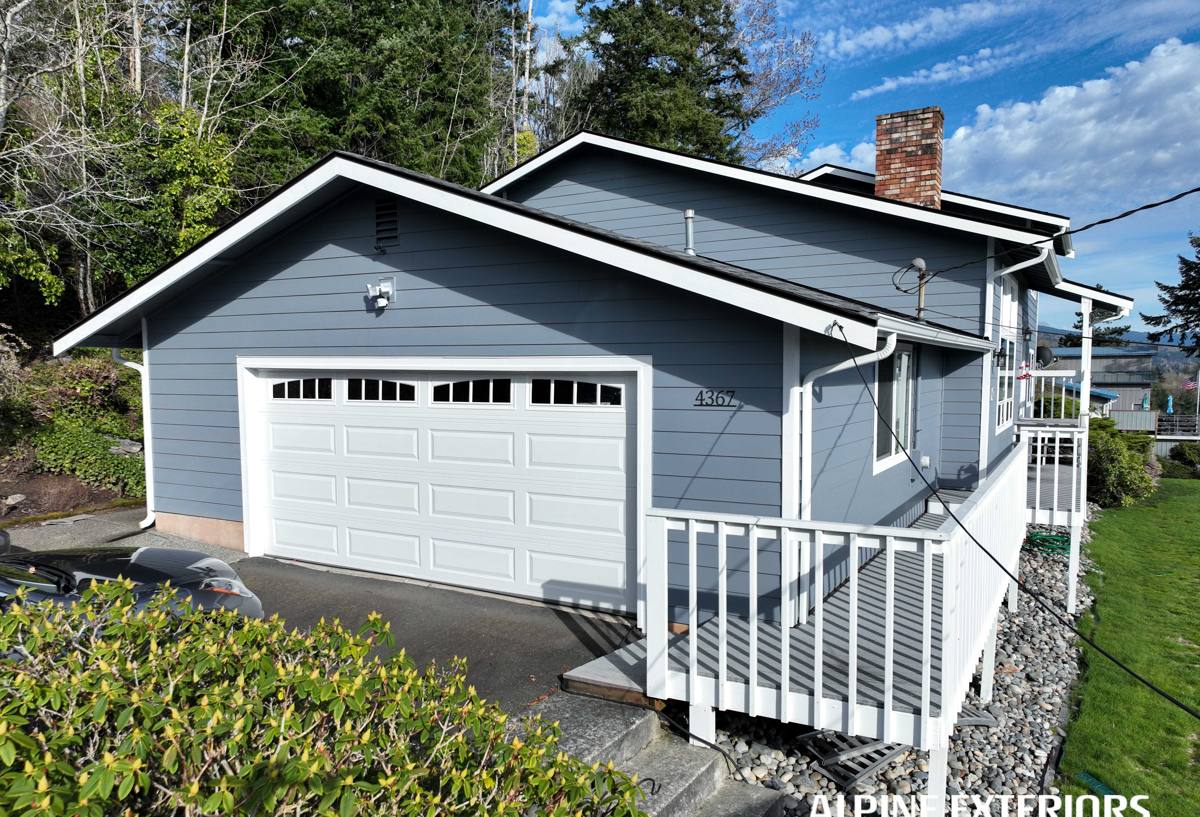
What Nooksack's Climate Actually Demands From a Deck
Every decking material claim gets tested against real weather eventually. In Whatcom County, that testing happens fast.
Driving Rain and Standing Moisture
Rain here doesn't just fall — it drives sideways during winter storms and sits in shaded corners for days at a time. A deck surface that traps water against the substructure, or fasteners that let moisture wick into board cores, will show problems within a few seasons: soft spots, discoloration, and in wood decks, rot that's often invisible until a board fails underfoot. Composite boards resist water absorption far better than solid wood, but that resistance only matters if the substructure underneath is built to shed water too.
A Long Moss Season
Moss and algae need shade, moisture, and time — and Nooksack's tree cover combined with our extended wet season gives them plenty of both. On a poorly ventilated deck, moss doesn't just sit on the surface; it holds moisture against the boards and turns the whole deck into a slip hazard by late fall. Composite decking with a textured, capped surface sheds moss growth more easily than raw wood grain, but airflow underneath the deck and proper board spacing do most of the real work.
Salt Air and Fastener Corrosion
Homes closer to the water deal with a slower, quieter problem: salt-laden air corroding anything that isn't rated for it. Standard fasteners, brackets, and ledger hardware can start showing rust streaks and weakening well before the decking itself shows wear. This is one of the most common failure points we see on decks that were built with materials sourced for a drier climate.
Composite vs. Wood vs. PVC Decking in This Climate
Every decking material is a trade-off. Here's how the three most common options actually perform under Nooksack conditions specifically.
| Material | Moisture & Rot Resistance | Moss/Algae Resistance | Maintenance Needed | Typical Lifespan Here |
|---|---|---|---|---|
| Pressure-treated wood | Moderate — depends heavily on sealing schedule | Low without regular cleaning | Annual staining/sealing recommended | 10–15 years with upkeep |
| Composite (capped) | High — cap layer blocks water absorption | Good with proper airflow underneath | Periodic washing, no staining/sealing | 25–30+ years |
| PVC | Very high — fully synthetic | Good, similar to composite | Periodic washing | 25–30+ years |
PVC and high-end composite perform similarly on paper. In practice, we install composite most often for Nooksack homeowners because it offers a more natural wood-grain look and feel underfoot, at a lower cost than premium PVC, while still handling the moisture and moss pressure this area produces. We're glad to walk through both if you're weighing the difference for your specific project.
What a Correct Composite Deck Installation Involves
Composite boards are only as good as what's underneath and around them. A lot of the decks we get called to repair weren't failing because of the decking material — they were failing because of shortcuts in the parts you can't see once the project is finished.
Substructure and Joist Protection
Joists and beams need to be protected from moisture just as much as the visible decking, because trapped water at the framing level is what eventually causes sag and structural failure. That means joist tape or an equivalent moisture barrier on top of every joist, correctly rated fasteners throughout, and framing spaced to manufacturer spec so the boards aren't over-spanned.
Hidden Fastening and Board Spacing
Most composite systems use hidden fastener clips rather than face screws, which keeps the surface clean and avoids the small water-entry points that screws create. Board gapping has to account for our humidity swings — composite expands and contracts less than wood, but it still moves, and gapping it wrong leads to buckling or unsightly gaps within a year or two.
Flashing and Ledger Attachment
Where the deck attaches to the house is the single most common source of long-term water damage on any deck, composite or otherwise. Proper ledger flashing, correctly lapped under the house's water-resistive barrier, keeps rain from working its way behind the siding at the attachment point — a detail that matters even more in a region with as much sustained rainfall as ours.
Ventilation Underneath
Skirting and understructure design need to allow airflow, not seal the space off completely. A closed-off understructure holds moisture and encourages the moss and mildew growth that shorten the life of even a high-quality composite deck.
Our Process, Start to Finish
- On-site assessment — we look at drainage, sun exposure, existing structure (if replacing a deck), and how the space is actually used before recommending anything.
- Material and layout selection — board color, profile, and railing options chosen for how they'll hold up here, not just how they look in a sample chip.
- Permitting — most deck projects in Whatcom County require a permit; we handle that process as part of the job.
- Framing and moisture-barrier installation — the substructure work described above, done before a single composite board goes down.
- Decking, fastening, and finish work — hidden-fastener installation, trim, and railing.
- Final walkthrough — we go over the finished deck with you and explain basic care before we consider the job done.
Cost Factors for a Composite Deck in Nooksack
Every project is different, but these are the variables that most affect what a composite deck actually costs to install correctly.
| Factor | Why It Matters |
|---|---|
| Deck size and shape | Square footage and complexity (angles, multiple levels) both drive labor time. |
| Substructure condition | Replacing decking over failing framing costs more than a straightforward rebuild — but skipping that work is what causes early failure. |
| Height and railing requirements | Elevated decks need code-compliant railings and often stairs, which add materials and labor. |
| Board tier and color | Composite lines range from entry-level to premium capped boards; darker colors and wood-grain finishes are typically higher tier. |
| Site access | Tight side yards or limited equipment access can add time to demolition and material staging. |
We give straightforward, itemized estimates so you can see where the cost is actually going, rather than a single lump number.
Keeping a Composite Deck in Good Shape Here
One of composite decking's real advantages is how little upkeep it needs compared to wood — but "low maintenance" isn't "no maintenance," especially in a climate that pushes moss growth this hard.
- Sweep leaves and debris off regularly, especially under trees — trapped organic matter is what feeds moss and mildew.
- Wash the deck surface once or twice a year with mild soap and water or a manufacturer-approved cleaner.
- Avoid pressure-washing at close range or high PSI, which can damage the cap layer on some composite boards.
- Check that skirting and understructure vents haven't been blocked by landscaping, mulch, or storage.
- Inspect ledger flashing and railing attachment points once a year for any early signs of water intrusion.
- Address moss with a soft-bristle brush and appropriate cleaner as soon as you notice it, rather than letting it establish.
Why It Matters That We Already Work in Nooksack
A deck crew that's only ever worked in a drier climate will make reasonable-sounding decisions that don't hold up here — the wrong fastener grade, understructure venting that doesn't account for our moss pressure, ledger flashing details that work fine in a dry summer but fail the first wet winter. We've built and repaired decks throughout the Nooksack area and Whatcom County long enough to know which shortcuts show up as callbacks two years later, and we build to avoid them the first time.
That local knowledge also means we're realistic with you about timelines and weather windows. Composite decking installation goes smoother when it's scheduled around our wetter months rather than fought through them, and we plan projects accordingly.
Get a Straight Answer on Your Deck Project
If you're planning a new composite deck or replacing one that's showing its age, we're happy to take a look and give you a straightforward, no-pressure estimate — what it'll take, what it'll cost, and what to expect given your specific property. Use the form below to get started.