 Glenhaven Siding
 Roof Repair Built for Nooksack's Weather, Not a Generic Checklist
A roof in Nooksack works harder than a roof in a dry climate ever will. Whatcom County sits in a marine-influenced weather pattern — long stretches of driving rain, damp air that lingers instead of clearing out, and moss seasons that can run most of the year on shaded or north-facing slopes. Add in salt-tinged air moving through the county on weather systems off the Sound, and you have a combination that quietly ages roofing material faster than most homeowners expect. Roof repair here isn't just about patching a leak — it's about understanding why that leak started in the first place and whether the surrounding roof is heading toward the same failure.
This page is about roof repair specifically for homes in and around Nooksack. Not a re-roof, not a full replacement — the targeted work that fixes a specific problem, restores the roof's ability to shed water and moss, and buys the homeowner years of reliable service without paying for a full system they don't need yet.
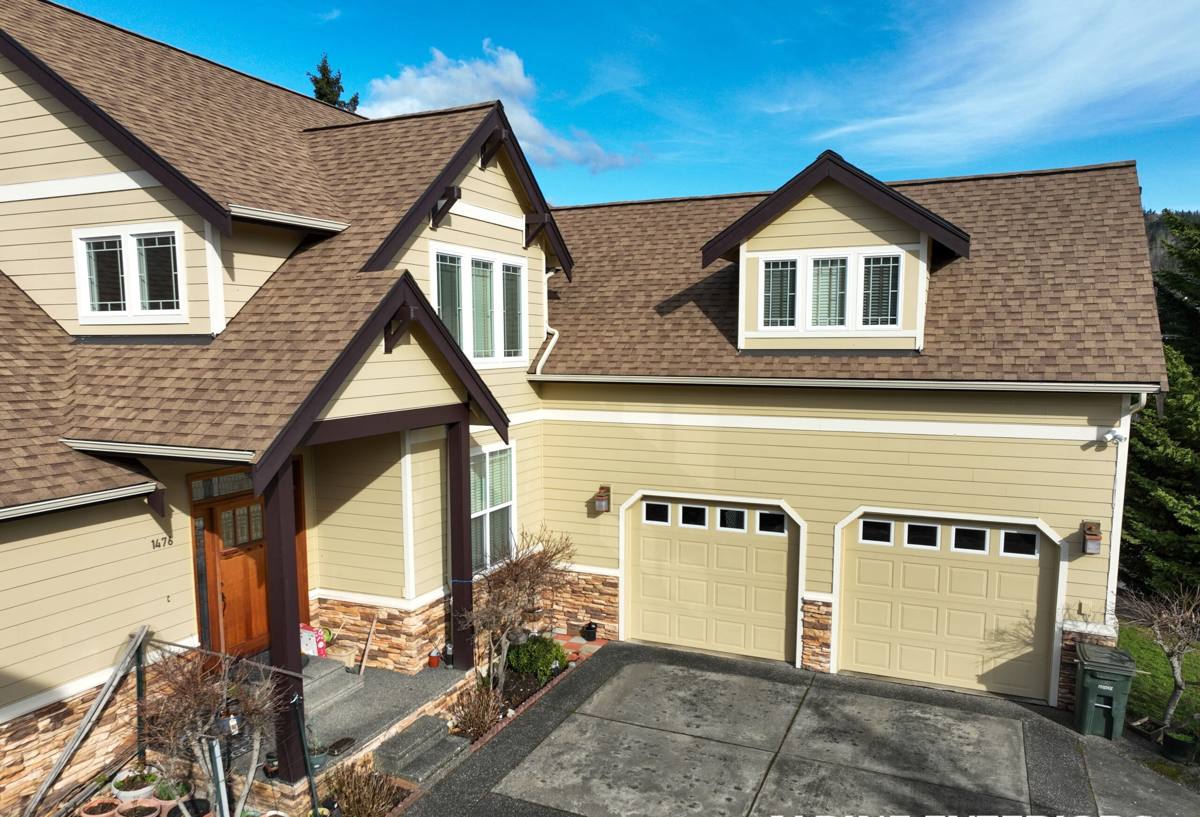
What Nooksack Roofs Are Actually Up Against
Every roofing material eventually needs repair, but the failure patterns we see locally are shaped by a few specific conditions:
Moss and Organic Growth
Moss doesn't just sit on top of shingles — it works underneath tabs, lifts edges, and holds moisture against the roofing material long after a storm has passed. On shaded roof sections or slopes that don't get much afternoon sun, moss can establish itself within a single wet season and start doing real damage within two or three.
Driving Rain and Wind-Driven Water
Straight-down rain is manageable for almost any roofing system. Wind-driven rain is different — it gets pushed sideways and upward under flashing, around vent boots, and into any gap that wouldn't matter in calmer weather. Most of the repair calls we get after a windstorm trace back to flashing or penetrations, not the field of the roof itself.
Freeze-Thaw and Temperature Swings
Whatcom County doesn't get extreme cold for long stretches, but it does get enough freeze-thaw cycling in winter to stress already-damaged materials. A shingle or seam that's been holding moisture from moss or a slow leak is far more likely to crack or fail outright once temperatures dip below freezing overnight.
Marine Air and Metal Fatigue
Salt-influenced air moving through the region accelerates corrosion on exposed metal — flashing, fasteners, gutter hardware, and any unpainted or uncoated metal components on the roof. It's a slower process than wind or water damage, but it's a real factor in how long metal roofing components last before they need attention.
Signs a Nooksack Roof Needs Repair, Not Just a Cleaning
Homeowners often call us for a roof cleaning when what they actually need is repair, or vice versa. Here's a practical way to tell the difference before you book anything:
- Moss on the roof but no staining, sagging, or granule buildup in the gutters — usually a cleaning and treatment situation.
- Water stains on interior ceilings or in the attic — this is a repair call, and it shouldn't wait for a scheduled cleaning.
- Shingles that look cupped, curled, or are missing granules in patches — sun and moisture damage that needs a repair assessment.
- Daylight visible through the roof deck from inside the attic — a repair issue, and worth an urgent look.
- Flashing around chimneys, skylights, or vent pipes that looks lifted, rusted, or gapped — a common source of leaks that's cheaper to fix early.
- Gutters overflowing or pulling away from the fascia — often connected to roof edge or drip edge problems, not just a gutter issue on its own.
How We Approach a Repair Call in Nooksack
We work this area regularly, which matters more than it might sound like. Knowing which slopes in this part of Whatcom County tend to hold moss longest, which roof ages and material types are common on local homes, and how the area's rain patterns actually behave lets us assess a roof faster and more accurately than a crew coming in cold.
1. On-Site Assessment
We start on the ground and in the attic before we ever get on the roof. Interior water stains, insulation condition, and deck moisture tell us as much as the shingles do. Then we get up on the roof itself and look at the actual source: flashing, penetrations, valleys, and the condition of the field material around the reported problem area.
2. Honest Scope — Repair or Something Bigger
Most of the time, a leak or damage report really is a contained repair. Occasionally what looks like one bad spot is actually a sign the whole roofing system is near the end of its service life. We'll tell you which situation you're in and why, with a straightforward explanation of what we're seeing — not a push toward the bigger job.
3. The Repair Itself
Depending on what we find, this might mean replacing damaged shingles or shakes, resealing or replacing flashing, addressing a compromised valley, fixing a vent boot, or repairing decking that's taken on water damage. We match materials as closely as possible to what's already on the roof and make sure the repair sheds water the same way the surrounding roof does — a patch that traps water is worse than no patch at all.
4. Moss and Debris Cleanup
If moss or organic debris contributed to the problem, we clear it and treat the affected area as part of the repair, not as a separate upsell. A repair that ignores the moss that caused the damage just resets the clock on the same failure.
5. Follow-Up Recommendation
We'll tell you honestly whether the rest of the roof looks solid, whether it's worth a preventive moss treatment on other slopes, and roughly what kind of service life we'd expect from the roof going forward. No pressure, just what we'd want to know if it were our own house.
Repair vs. Replacement: How to Think About the Decision
This is the question we get asked most, and the honest answer depends on a few specific factors rather than a fixed age or rule of thumb.
| Factor | Leans Toward Repair | Leans Toward Replacement |
|---|---|---|
| Extent of damage | Isolated to one area or slope | Spread across multiple slopes or the whole roof |
| Roof age | Well within expected service life | At or beyond typical lifespan for the material |
| Underlying decking | Dry and structurally sound | Soft, stained, or showing rot in multiple spots |
| Granule loss / material wear | Localized, matching a specific event | Widespread and consistent with age, not one incident |
| History of repairs | First or infrequent repair call | Repeated repairs to the same or nearby areas |
None of these alone makes the call — it's the combination. A 12-year-old roof with one storm-damaged section is almost always a repair. A roof with three separate leak histories and visible wear across every slope is telling you something different, even if no single spot looks catastrophic.
What a Correct Repair Actually Involves
Not all roof repairs are equal, and the difference usually isn't visible from the ground. A repair done right accounts for how water actually moves across a roof, not just where it's currently showing up inside the house.
- Removing and replacing damaged material back to solid, dry decking — not just capping over a wet spot.
- Reinstalling flashing with proper overlap and fastening, not just applying sealant over an existing gap.
- Matching underlayment and material type so the repair performs the same as the surrounding roof in wind and rain.
- Checking adjacent areas the water may have traveled to before it showed up as an interior leak — water rarely drips straight down from where it enters.
- Verifying attic ventilation isn't contributing to condensation that gets mistaken for a roof leak.
Maintenance That Keeps Repairs From Turning Into Replacements
Given how much moss season and driving rain factor into wear here, a modest maintenance routine goes a long way toward avoiding bigger repair bills down the line.
- Have moss growth checked and treated before it establishes heavily — earlier is cheaper and less damaging than later.
- Keep gutters and downspouts clear so water has somewhere to go instead of backing up under the roof edge.
- After major windstorms, a quick visual check for lifted shingles or displaced flashing catches small problems before the next heavy rain finds them.
- Have an attic check done periodically — early signs of moisture show up there before they show up on a ceiling.
- Address minor repairs promptly rather than waiting; a small flashing fix today is a lot less than a deck repair after two more wet seasons.
Why Local Experience on Roof Repair Matters
Roof repair is diagnostic work as much as it is physical labor. A crew that already works regularly in this part of Whatcom County has a working sense of which materials and installation practices hold up to the local combination of rain, moss, and marine air — and which ones tend to show problems early. That background shortens the assessment, sharpens the diagnosis, and means less guesswork about whether a repair will actually hold through the next wet season. It also means we're not learning the region's weather behavior on your roof — we already know what a Nooksack winter does to an unmaintained roof edge or a shaded north slope, and we plan the repair accordingly.
We also stand behind the materials and methods we use because we've watched how they perform locally over time, not just on a spec sheet. When we recommend one flashing approach over another, or one shingle repair method over a quicker fix, it's because we've seen which one actually holds up through a Whatcom County winter.
Get a Straightforward Look at Your Roof
If you're dealing with a leak, storm damage, heavy moss, or just want an honest read on a roof's condition before it becomes a bigger problem, we're glad to come take a look. There's no pressure and no obligation — just a clear explanation of what we find and what it would take to fix it right. Use the form below to request a free estimate.