 Glenhaven Siding
 Windows That Actually Hold Up in Nooksack
Nooksack sits in a part of Whatcom County where moisture is a year-round fact of life, not a seasonal inconvenience. Between the driving rain off the coast, the humidity that settles into the river valley, and a moss season that can stretch from fall through spring, windows here take a beating that drier climates simply don't produce. A window that's a good fit for eastern Washington or the desert Southwest is often the wrong choice up here, and a window installed even slightly out of level or under-flashed will show it within a year or two — fogged glass, soft trim, drafts you can feel with your hand.
We install windows for homes throughout this part of Whatcom County, and Nooksack jobs tend to have their own personality: older farmhouses with settled framing, newer builds that need the install done right the first time, and everything in between. This page covers what actually matters for a window job done right here, not a generic rundown of window types.
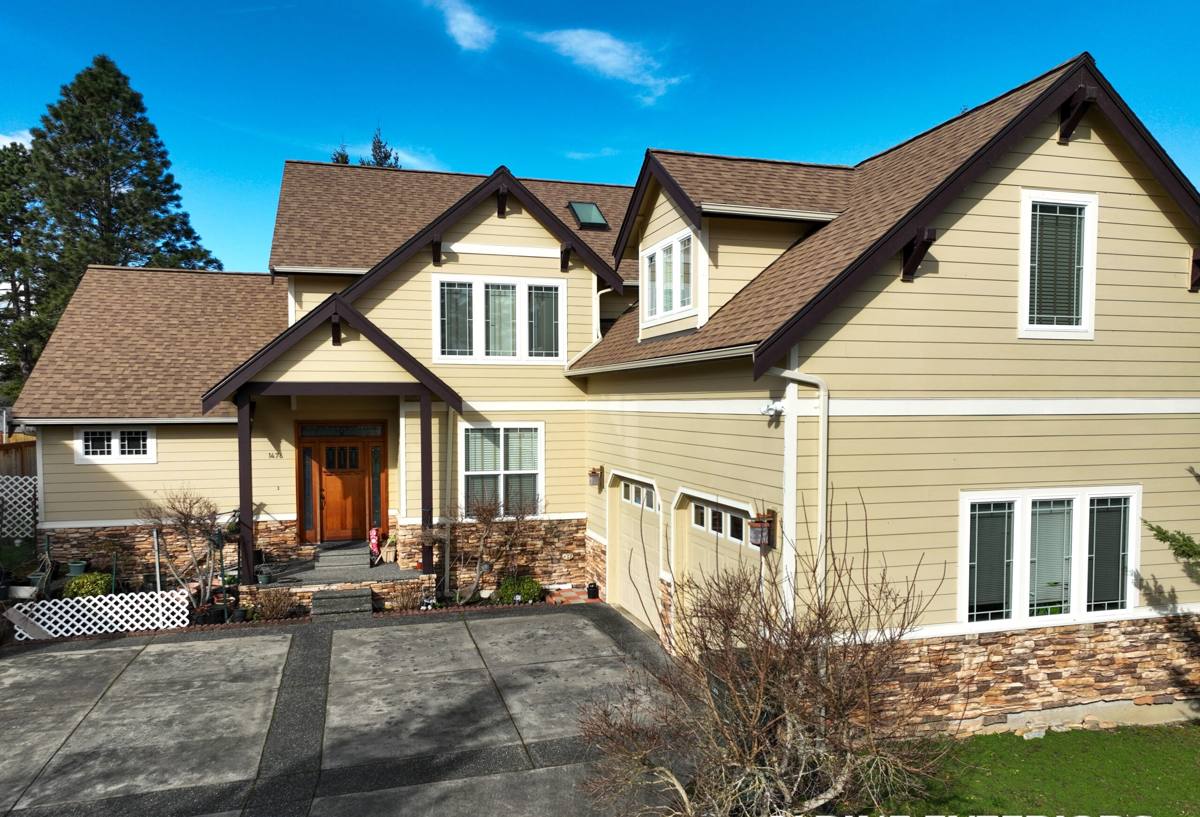
Signs Your Nooksack Home Needs New Windows
Window failure is usually gradual, which is why a lot of homeowners live with problems longer than they need to. Here's what we look for, and what you can check yourself before calling anyone:
- Fog or condensation trapped between panes of double- or triple-glazed glass — this means the seal has failed and it can't be repaired, only replaced
- Visible daylight or a draft around the frame when the window is closed and locked
- Wood trim or sills that feel soft, spongy, or show dark staining, especially on north- and west-facing walls that catch the most weather
- Windows that are hard to open, close, or lock — often a sign the frame has shifted or swollen
- Moss or algae growth on the sill or lower frame that keeps coming back no matter how often it's cleaned
- A noticeable rise in heating bills without any other explanation
- Paint that's peeling or bubbling specifically around the window opening, which usually points to moisture getting behind the trim
Any one of these on its own isn't necessarily an emergency. Several of them together, especially on an older window, usually means it's time to plan a replacement before winter rather than after.
What a Correct Window Installation Actually Involves
The window itself matters less than most homeowners assume. A quality window installed poorly will fail faster than a mid-grade window installed correctly. In a climate like ours, the installation details are where jobs succeed or fail.
Flashing and Weatherproofing
Every window opening needs to be flashed so that any water that gets behind the siding is directed back out, not into the wall cavity. This means proper sill pan flashing at the bottom of the opening, correctly lapped house wrap or weather barrier, and flashing tape or drip caps sequenced so water always sheds downward and outward. This step is invisible once the job is done, which is exactly why it's the step some installers rush. It's also the single biggest factor in whether a window causes rot problems five years down the road.
Insulation and Air Sealing
The gap between the window frame and the rough opening needs to be filled with a material that insulates without expanding so hard it bows the frame — typically a low-expansion foam or backer rod and sealant, never packed fiberglass alone. Over-filled or under-filled gaps are one of the most common causes of drafts and condensation complaints after a "new" window job.
Proper Fit, Level, and Shim
A window has to be plumb, level, and square in the opening, and shimmed at the right load points so the frame doesn't rack over time. A window that's slightly out of square will bind, won't seal tight, and will wear out its own hardware faster. This is a slower, more careful process than it looks like from the outside, and it's the part of the job that separates an experienced crew from a fast one.
Choosing the Right Window Materials for This Climate
There's no single "best" window material — the right choice depends on your home's exposure, your budget, and how much upkeep you want to take on. Here's an honest comparison for a Whatcom County home:
| Material | Moisture Performance | Maintenance | Typical Fit |
|---|---|---|---|
| Vinyl | Good — won't rot, resists moisture well | Low — occasional cleaning | Most homes; best value for performance |
| Fiberglass | Excellent — very stable in wet/dry cycles | Low | Higher-exposure walls, long-term durability priority |
| Wood | Requires vigilant sealing and upkeep | High — regular painting/sealing needed | Historic homes prioritizing original character |
| Wood-clad (wood interior, clad exterior) | Good on the exterior face; interior still needs care | Moderate | Homes wanting a wood look inside with better weather resistance outside |
In our experience, solid wood exteriors are the hardest product to keep looking right through a Whatcom County moss season without a real maintenance commitment — not because the material is bad, but because it demands upkeep that a lot of homeowners underestimate when they choose it. We'll talk through the honest trade-offs for your specific home rather than pushing one material across the board.
Glass and Performance Details Worth Knowing
Beyond frame material, a few glass and hardware choices make a real difference in a climate like ours:
- Low-E coatings reduce heat loss through the glass and cut down on UV fading of floors and furniture — worth having on nearly every window in this region
- Argon or krypton gas fill between panes improves insulation value over standard air fill, at a modest cost difference
- Warm-edge spacers (the material separating the panes at the edge) reduce condensation risk at the glass edge, which matters more here than in drier climates
- Corrosion-resistant hardware for locks and hinges holds up better against the humidity than standard-grade hardware over the long run
Our Window Installation Process
- On-site assessment — we look at each opening individually, not just the house as a whole, since exposure and condition can vary window to window
- Measurement and product selection — we measure precisely and walk through material, glass, and style options based on that specific wall's exposure
- Removal of the old window — done carefully to check the condition of the framing and sheathing underneath before anything new goes in
- Framing repair if needed — if we find soft wood or old water damage, we address it before installing anything, not after
- Flashing and installation — sill pan, window set, shim, insulate, and flash in the correct sequence
- Interior and exterior finish work — trim, caulking, and paint-ready finish so the job looks complete, not just functional
- Final walkthrough — every window operated and checked with you before we consider the job done
What Window Installation Costs and Why It Varies
Every home is different, so we won't quote a number without seeing the job, but these are the main factors that move the price up or down:
| Factor | Effect on Cost |
|---|---|
| Number of windows | Per-window cost typically drops with larger jobs due to shared setup time |
| Frame material chosen | Vinyl is generally the most budget-friendly; fiberglass and wood-clad cost more upfront |
| Condition of existing framing | Rot or water damage found during removal adds repair time and cost |
| Window size and configuration | Large, custom, or multi-pane windows cost more than standard sizes |
| Full-frame vs. insert replacement | Full-frame replacement (removing down to the framing) costs more but is often the right call on older or damaged openings |
| Access and site conditions | Second-story or hard-to-access windows can add labor time |
Broadly, homeowners in this area should expect window replacement to run anywhere from a few hundred dollars per window for straightforward vinyl inserts up to several thousand per window for larger, higher-end, or full-frame installations. A firm number only comes from an actual on-site look at your windows.
Why It Matters That We Already Work in Nooksack
A crew that regularly works this part of Whatcom County already knows what to expect from the local building stock — how older Nooksack-area homes are typically framed, what condition to expect from windows that have been through twenty or more of our wet seasons, and how to sequence a job around weather that doesn't always cooperate. That local familiarity shows up in fewer surprises mid-project and a faster, more accurate estimate up front. It also means we're not far away if you ever have a question after the job is done — we're not driving in from across the state for a callback.
Maintaining Your New Windows Through the Seasons
A properly installed window is low-maintenance, but "low" isn't "none." A few habits go a long way in this climate:
- Clear debris and moss from sills and tracks a couple of times a year, especially going into fall
- Check exterior caulking annually and touch up any spots that have cracked or pulled away
- Keep gutters and downspouts clear so water isn't sheeting down over window openings
- Operate each window a few times through the year so hardware doesn't seize up from disuse
- Watch for early condensation between panes — it's the earliest sign a seal is starting to fail
If you're noticing drafts, fogged glass, soft trim, or you're just ready to stop fighting old windows through another wet Whatcom County winter, we're happy to take a look. Estimates are free, there's no pressure, and you'll get a straight answer about what your windows actually need — use the form below to get started.