 Glenhaven Siding
 Nooksack's Climate Is Hard on Old Windows
Whatcom County sits in a marine-influenced climate, and that shows up in how windows age here compared to drier parts of the state. Salt-tinged air moves in off the water, driving rain comes through sideways during fall and winter storms, and moss season stretches across most of the year rather than a few wet months. None of that is dramatic on its own, but it adds up steadily on anything with a seam, a seal, or exposed hardware — which is exactly what a window is.
Homes in and around Nooksack that still have original wood-frame or early-generation vinyl windows are usually showing it in specific, predictable ways: soft sills, hardware that's gone stiff or corroded, and seals that gave out years before the glass itself did. The windows facing the prevailing wind and rain direction almost always fail first, sometimes years ahead of the windows on the sheltered side of the same house. That's normal for this climate — it just means replacement decisions should be made window-by-window, not assumed to be all-or-nothing.
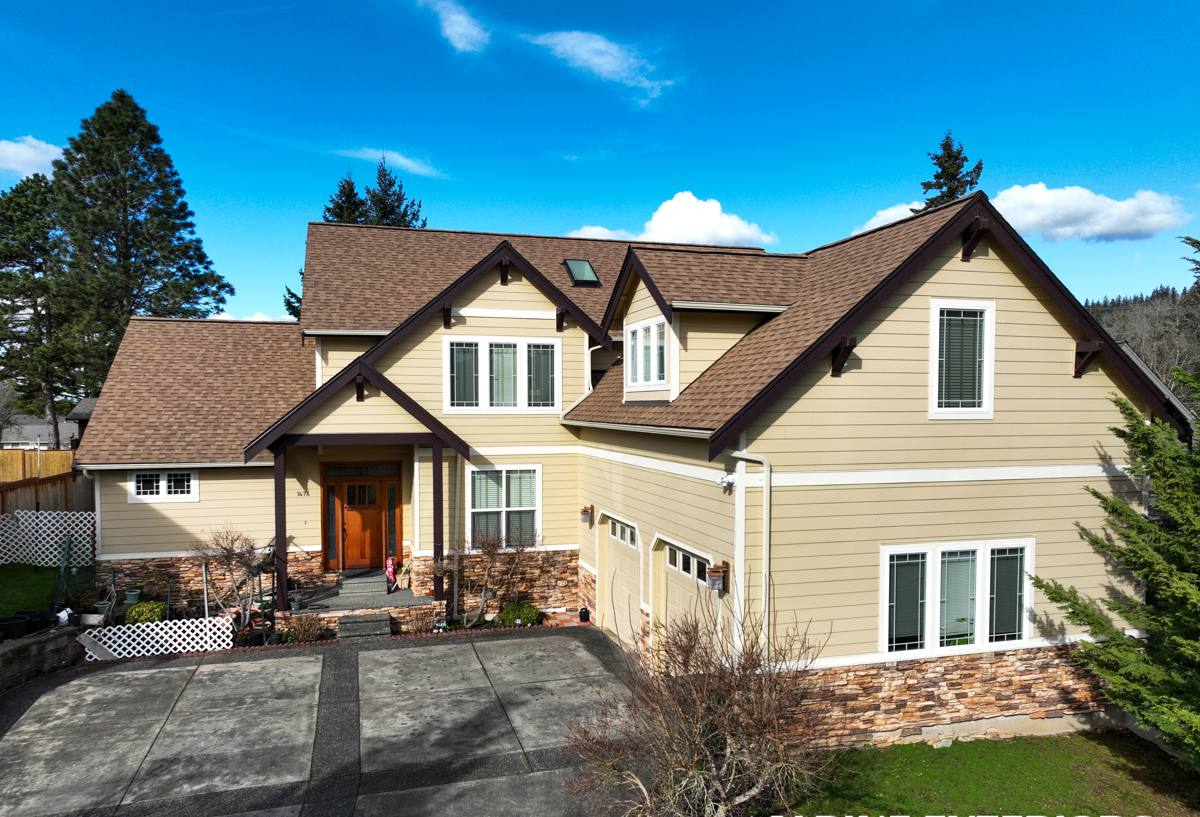
Signs Your Nooksack Home's Windows Are Due for Replacement
Some failure signs are obvious. Others get written off as "just an old house" for years before the underlying damage gets expensive. Worth checking for:
- Fogging or a hazy film trapped between the panes — this means the seal has failed and no amount of cleaning will fix it
- Drafts you can feel with your hand held near the frame, even with the window fully closed and latched
- Soft, spongy, or discolored wood at the sill or lower corners of the frame
- Windows that stick, won't stay open on their own, or need a prop
- Condensation forming on the inside of the glass regularly during cooler months
- A noticeable jump in heating costs without any other explanation
- Paint or finish that won't hold on the window trim, peeling faster there than anywhere else on the house
Any one of these is worth a look. Several together, especially on the same wall, usually points to a window that's past the point of caulk-and-touch-up fixes.
What a Correct Window Replacement Job Actually Involves
"Window replacement" covers two genuinely different jobs, and knowing which one a house needs matters more than the brand of window that goes in.
Full-Frame Replacement vs. Insert Replacement
An insert (or "pocket") replacement fits a new window into the existing, structurally sound frame. A full-frame replacement removes everything down to the rough opening — old frame, trim, and often some of the surrounding wall material — and rebuilds from there. Insert replacements are faster and less invasive, but they only work when the existing frame is square, dry, and free of rot. If it isn't, an insert just seals moisture problems inside the wall instead of solving them.
| Approach | Best For | Trade-offs |
|---|---|---|
| Insert (pocket) replacement | Sound, square, dry existing frames | Faster, less disruption, slightly smaller glass area since it fits inside the old frame |
| Full-frame replacement | Rot, water damage, out-of-square openings, or changing window size/style | More labor and cost, but the only way to actually fix hidden damage and restore proper flashing |
On older Nooksack-area homes, we check the framing condition before recommending either option. Guessing wrong here is how homeowners end up paying twice — once for a window that goes in fine, and again a few years later when rot that was never addressed finally shows through the siding.
Materials That Hold Up in This Climate
Frame material matters as much as installation quality in a climate that stays damp for most of the year. There's no single "best" material for every situation — it depends on the house, the budget, and how much upkeep an owner wants to take on.
| Material | Moisture Behavior | Maintenance | General Cost Tier |
|---|---|---|---|
| Vinyl | Doesn't rot or corrode; performs well in wet, salt-air conditions | Low — occasional cleaning | Lower |
| Fiberglass | Very stable in temperature swings and moisture; holds paint well if color changes are wanted later | Low | Mid to higher |
| Wood-clad | Good performance if the cladding and seals are intact, but the wood core is vulnerable if water gets behind the cladding | Higher — needs attention at joints and sills over time | Higher |
We're upfront about the trade-offs rather than pushing one material for every job. Wood-clad windows can look excellent and perform well, but they're less forgiving of installation mistakes or long-term neglect in a climate this wet — that's a maintenance and moisture-management conversation, not a knock on the product itself.
Our Process for a Nooksack Window Replacement
- On-site assessment. We look at each window individually — frame condition, sill condition, and which walls are taking the worst weather exposure.
- Measurement and options. Exact measurements, plus an honest recommendation on insert vs. full-frame and material based on what we actually find, not a standard package.
- Prep. Interior and exterior areas around the window are protected before anything is removed.
- Careful removal. Old windows come out without tearing up more of the siding or trim than necessary.
- Set and check. The new window is set plumb, level, and square — small errors here cause operation problems and premature seal failure later.
- Flashing and sealing. This is the step that determines whether the window stays watertight through the next twenty winters. More on why below.
- Trim and finish. Interior and exterior trim work is finished to match the surrounding wall.
- Cleanup and walkthrough. We test operation on every window and walk the job with the homeowner before calling it done.
Why Flashing and Sealing Matter More Here Than in a Dry Climate
In a place with occasional light rain, a mediocre flashing job might go unnoticed for years. In Whatcom County, where driving rain hits window walls directly and moss season keeps surfaces damp for months at a stretch, a flashing shortcut usually shows up as hidden rot within a few wet seasons — often discovered only when the siding around the window is opened up for an unrelated repair.
A correct install includes a sill pan to direct any water that gets past the window back outside, flashing tape sequenced properly so water always sheds outward and downward, and sealant chosen to be compatible with the siding material it meets. Skipping or rushing this step is the single most common cause of window "failures" that actually have nothing to do with the window itself — the glass and frame are fine, but water got behind them because the flashing wasn't done right.
Why a Crew That Already Works in Nooksack Matters
A window replacement job is only as good as the judgment calls made on-site — what condition the framing is really in, which wall needs the more careful flashing detail, how a particular style of window trim was originally built. A crew that's worked on homes in this area repeatedly has already seen the common construction patterns and the common failure points, so there's less guesswork and fewer surprises mid-job.
There's also a practical side to being local: weather-dependent scheduling is easier to manage without a long drive built into every trip, and if a question comes up after installation, a callback doesn't mean waiting on a crew from somewhere else in the region to fit you in.
What Affects the Cost of Window Replacement in This Area
| Factor | Why It Matters |
|---|---|
| Frame material | Vinyl, fiberglass, and wood-clad sit at different price tiers, as shown above |
| Insert vs. full-frame | Full-frame involves more labor and material, but is often the only correct fix |
| Number of windows | Whole-house projects typically bring a lower per-window cost than single replacements |
| Size and shape | Custom, oversized, or non-standard shapes cost more than standard sizes |
| Access | Second-story or obstructed windows take more time and equipment |
| Framing condition | Rot repair, if needed, is additional work beyond the window itself |
Without inventing precise numbers that don't hold up project to project, most single-window replacements in this region fall in a broad range depending on the factors above, with full-frame replacements running higher than inserts of the same size. A whole-house quote will always be more useful than a per-window estimate pulled from a table, since access and framing condition vary window to window even on the same house.
Timing Your Project Around Whatcom County Weather
Drier stretches in late spring through early fall make for the easiest install conditions, but window replacement can be done responsibly through the wetter months too — it just takes more careful sequencing, so no opening sits exposed longer than necessary. What we try to avoid is rushing a job to beat weather; a flashing detail done in a hurry is exactly the kind of shortcut that causes problems years down the line. If you're planning ahead, booking before the busier summer season tends to give more flexibility on timing.
If you're weighing whether your Nooksack home's windows need attention, we're happy to take a look and give you a straight answer — including telling you if a window still has good years left in it. Reach out for a free, no-pressure estimate using the form below.