 Glenhaven Siding
 Building Decks for a Neighborhood That Sits Right in the Weather
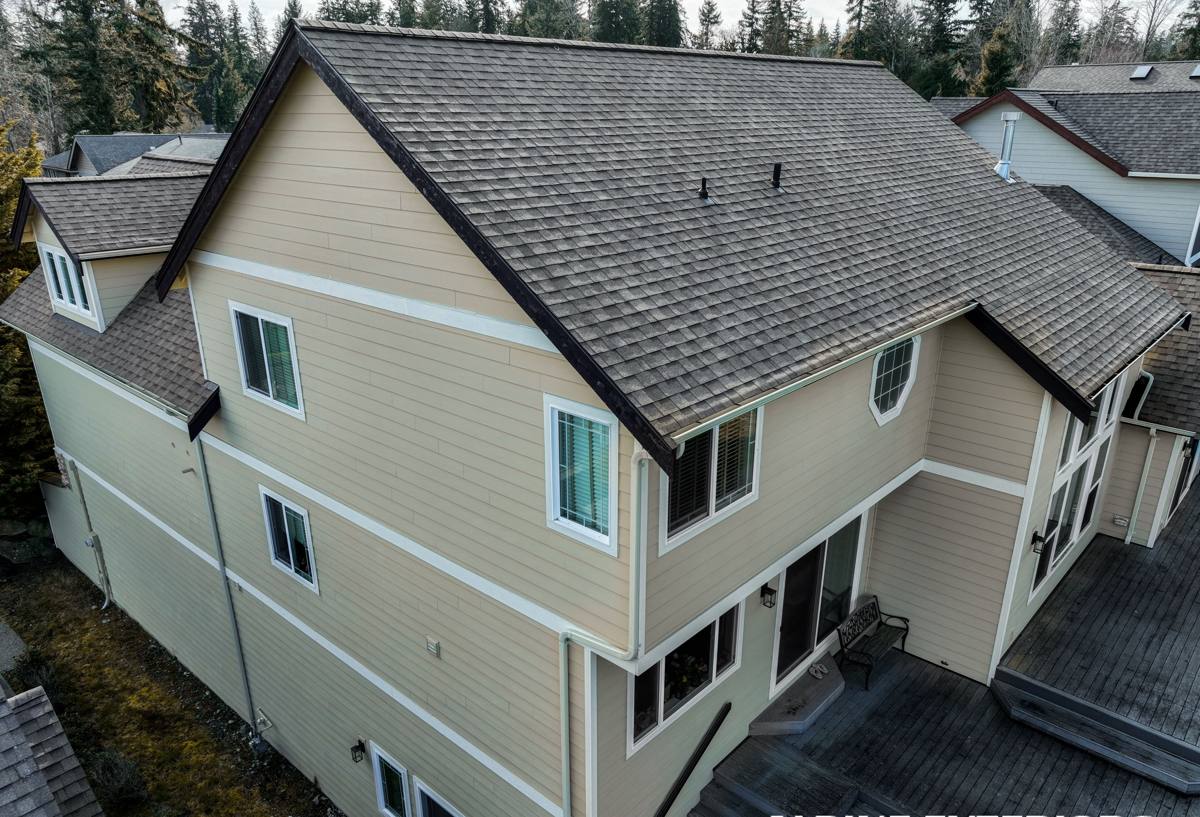
Puget homes get the good side of Whatcom County living — open air, water nearby, mature trees — and the hard side of it too. A deck out here isn't just outdoor furniture with a view. It's a structure that sits exposed to salt-laden air, months of driving rain, and a moss season that can run longer than most homeowners expect. We've built and repaired decks throughout the Glenhaven area long enough to know which shortcuts show up as callbacks two winters later, and which details actually earn their keep.
This page is specifically about custom deck building for the Puget area — not a generic overview of decking in general. The framing choices, fastener grades, and drainage details we use here are shaped by what this particular stretch of Whatcom County throws at a structure year-round.
What Puget's Climate Actually Does to a Deck
Salt air doesn't just affect homes right on the water. It travels, and over years it accelerates corrosion on anything metal — nails, screws, joist hangers, bolts — long before the visible wood shows a problem. By the time a homeowner notices rust streaks or a wobbly rail post, the fastener underneath has often been failing quietly for a season or two.
Driving rain is the second factor. It doesn't just fall straight down here; wind pushes it sideways into ledger connections, under poorly flashed rim joists, and into end grain that wasn't sealed. Wood that stays damp for extended stretches is exactly where rot starts, and it almost always starts from the inside of a joint, not the surface.
Then there's moss. Whatcom County's moss season is long, and it doesn't stay in the lawn — it colonizes deck boards, especially in shaded corners or under overhangs where the sun never fully dries the surface. Moss holds moisture against the board, and on some materials that constant dampness accelerates surface breakdown and makes the deck genuinely slick underfoot.
Why This Matters More in Puget Specifically
Homes in and around Puget often sit with some tree cover and proximity to open water, which is a great combination for the house and a tough one for anything built outdoors. Less direct sun means slower drying after rain. More airborne moisture means faster corrosion. A deck design that works fine on a dry, open lot inland can underperform here if it's built the same way without adjustment.
What a Correctly Built Deck Needs Out Here
A deck that's going to hold up in this environment isn't built differently because we're trying to upsell anything — it's built differently because the alternative fails faster. The core things we control on every project:
- Fasteners and hardware rated for coastal or high-moisture exposure, not standard interior-grade galvanized
- Ledger board flashing that actually sheds water away from the house rim joist, not just a bead of caulk
- Joist and beam spacing sized for the real load and span, not the minimum code allows
- Air gap and drainage planning underneath the deck so water doesn't pool against framing
- Decking material chosen with moss and shade exposure in mind, not just looks
- Footings sized and set below frost depth and clear of standing water
Ledger Attachment and Flashing
The ledger board — where the deck attaches to the house — is the single most common failure point we see on older decks in this area. If flashing is missing, undersized, or was never properly lapped with the house's own water barrier, rain gets driven behind it during storms and rots the rim joist from inside the wall. This is invisible until the deck starts to sag or separate from the house, which is often years after the damage started. We flash every ledger connection to shed water outward and never rely on sealant alone to do that job.
Fastener and Hardware Grade
Standard electro-galvanized hardware is fine in a dry inland climate. It is not what we use on Puget-area decks. Stainless steel or high-grade coated fasteners cost more up front, but replacing corroded joist hangers on a five-year-old deck costs a lot more than the difference would have. This is one of those places where the cheaper material is a false economy.
Choosing Decking Material for This Environment
There's no single "best" decking material — there's a best material for a given budget, sun exposure, and maintenance appetite. For Puget homes specifically, moss resistance and moisture behavior matter more than they would in a drier part of the state.
| Material | Moss/Moisture Behavior | Maintenance | Typical Lifespan Here |
|---|---|---|---|
| Pressure-treated wood | Absorbs moisture; needs sealing to resist moss staining and softening | Annual cleaning and re-sealing recommended | 10-15 years with upkeep |
| Cedar | Naturally moisture-resistant but still needs periodic sealing in shaded areas | Sealing every 1-2 years | 15-20 years with upkeep |
| Capped composite | Won't rot, but shaded/damp spots can still grow surface moss that needs washing off | Occasional cleaning, no sealing or staining | 25-30 years |
| PVC decking | Fully moisture-proof surface; easiest to keep moss from taking hold | Lowest maintenance; periodic cleaning only | 25-30+ years |
Wood costs less initially and can look great, but in a shaded, damp lot it demands the most ongoing attention to stay ahead of moss and moisture. Composite and PVC cost more up front but remove most of that maintenance burden, which matters if the deck sits under trees or gets limited direct sun. We'll walk through the honest trade-offs for your specific lot rather than pushing one product line — the right call depends on how much upkeep you actually want to do.
Structural Details That Get Skipped Elsewhere
Footings and Frost Depth
Whatcom County building code sets minimum footing depth for a reason — frost heave over a shallow footing will slowly rack a deck out of level over a few winters. We set footings to the required depth and away from spots where we can see water tends to collect or drain slowly after storms, which is common on lots with limited slope.
Joist Spacing and Span
Board spacing that's fine for a composite deck can be too wide for wood, and vice versa — every material has different span tables. Undersized framing shows up as bounce and, eventually, sag. We size framing to the decking material actually being installed, not a generic layout reused from a different job.
Ventilation Underneath
A deck built low to the ground with poor airflow underneath stays damp longer after rain, which speeds up both rot and moss growth on the underside of boards. Where grade allows, we build in enough clearance and drainage path to let the structure actually dry out between storms.
Our Process, Start to Finish
- On-site assessment — we look at sun exposure, drainage, existing structure (for replacements), and how the deck will actually be used
- Material and layout discussion — honest trade-offs on wood versus composite versus PVC for your specific lot, budget, and maintenance preference
- Permit handling — we pull the required permits and build to current code, not around it
- Framing and ledger work — the structural work that doesn't show later but determines how long the deck lasts
- Decking, railing, and finish work — installed to manufacturer spec so warranties stay intact
- Final walkthrough — we go over care and maintenance specific to the material you chose
Living With Moss Season
Even a well-built deck needs some seasonal attention here. Moss doesn't mean something was built wrong — it means the deck is doing what any outdoor structure does in this climate. The difference is how much it affects the deck depending on material and design choices made up front.
For wood decks, a yearly wash and inspection before the wet season sets in goes a long way. For composite and PVC, an occasional rinse and brush in shaded corners usually keeps moss from establishing at all. Where a deck sits under heavy tree cover, we sometimes recommend gaps or drainage details specifically aimed at reducing standing moisture in those shaded zones, since that's almost always where moss and slickness show up first.
Permits and Building to Code in Whatcom County
Custom decks in this area generally require a building permit, with inspections tied to footings, framing, and guardrail height and spacing. Skipping this isn't a shortcut worth taking — unpermitted decks can complicate a home sale later and, more importantly, skip the inspection step that catches structural problems before they're buried under decking. We handle the permit process as a standard part of the job rather than treating it as optional paperwork.
Why It Matters That We Already Work in Puget
A crew that mostly builds decks in drier, more inland parts of the state will often use the same specs everywhere. That's not negligence — it's just that they haven't had to watch their own work fail under this specific combination of salt air, wind-driven rain, and long moss season. Having built and repaired decks throughout the Glenhaven area, we've seen which fastener grades actually hold up, which flashing details actually keep ledgers dry, and which materials handle shaded, damp lots without turning into a maintenance chore. That local pattern-matching is worth more than a lower bid from someone building to a generic spec.
Questions Worth Asking Before You Sign a Contract
- What grade of fastener and hardware will be used, and is it rated for coastal/high-moisture exposure?
- How will the ledger board be flashed, specifically?
- Is the footing depth based on Whatcom County's frost depth requirement?
- Will a building permit be pulled, and who handles inspections?
- What's the realistic maintenance schedule for the decking material we choose, given our lot's sun exposure?
- What's included in the written warranty, and what voids it?
If you're weighing a new deck or replacing one that's showing its age, we're happy to walk your property, look at drainage and sun exposure, and give you a straightforward, no-pressure estimate — just fill out the form below to get started.