 Glenhaven Siding
 Deck Repair Built for Puget's Climate
A deck in the Puget area of Glenhaven doesn't fail the way a deck does in a dry inland climate. Here, the damage comes from a combination of salt-laden air off the water, long stretches of driving rain, and a moss season that can stretch across most of the year. Any one of those factors is manageable on its own. Together, they wear down fasteners, framing, and decking faster than most homeowners expect, and they hide the damage until it's further along than it looks from the surface.
We repair decks in this neighborhood regularly, and the patterns repeat: corroded hardware at the ledger board, soft spots where moss has held moisture against the boards, and joists that look fine from below but are soft to the touch once you get a screwdriver into them. This page covers what we actually find on Puget decks, what a correct repair looks like, and how we approach the job.
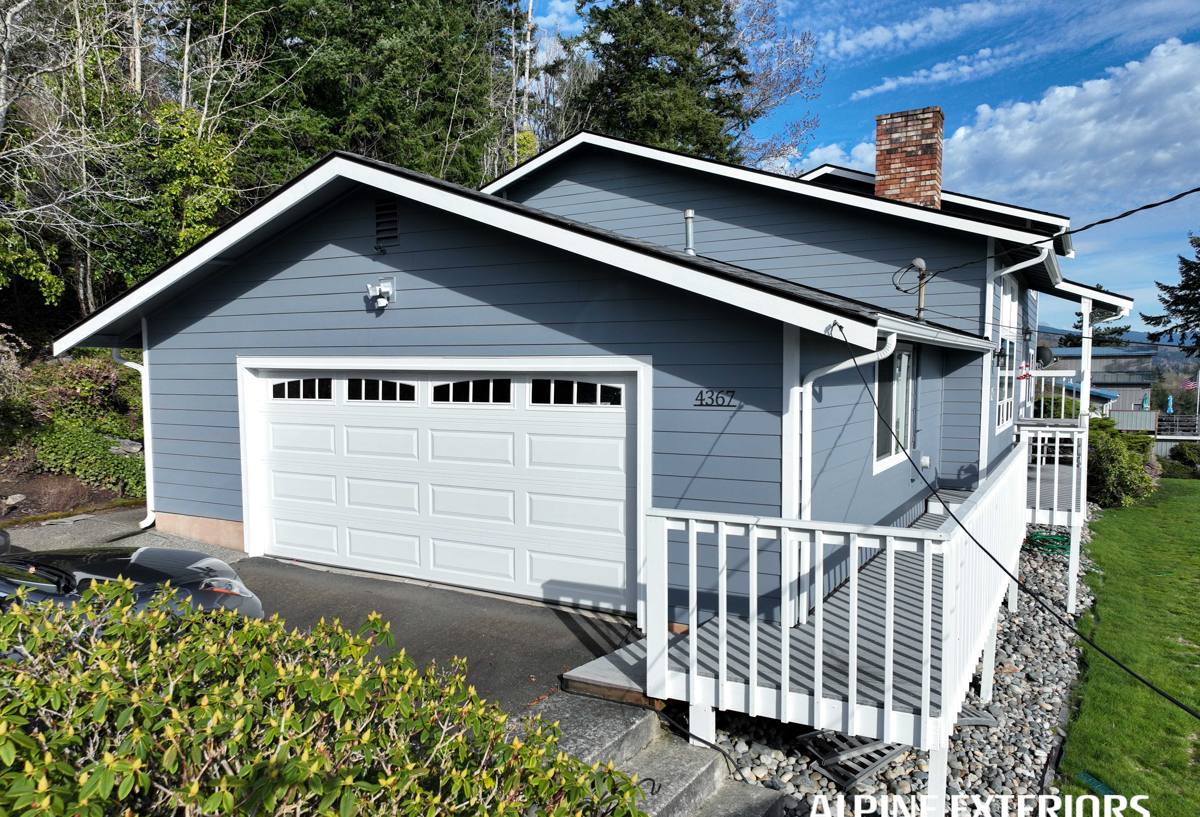
Why Local Decks Take This Kind of Beating
Salt Air and Metal Fatigue
Airborne salt accelerates corrosion on anything metal — nails, screws, joist hangers, bolts, and railing brackets. Corrosion doesn't just make hardware look bad; it weakens the connection between structural members. A joist hanger that's rusted through can still look attached while providing almost none of its original holding strength.
Driving Rain and Water Intrusion
Wind-driven rain gets pushed sideways and upward in ways that vertical rain doesn't. It finds its way under flashing, into end grain, and into any gap where two boards meet. Over time this means moisture reaches places a deck's original construction didn't fully account for, especially around the ledger board where the deck attaches to the house.
The Long Moss Season
Moss doesn't just look bad on decking and stair treads — it holds moisture against the wood surface for extended periods, which is exactly the condition that leads to rot. A deck that's shaded by trees or sits on the north side of the house is especially prone to this, and moss buildup on stairs or ramps also becomes a slip hazard well before it becomes a structural one.
Signs Your Puget Deck Needs Repair
Most deck problems in this area start small and stay hidden until someone notices a soft board or a wobble in the railing. Here's what we tell homeowners to check for:
- Boards that feel spongy, springy, or noticeably different underfoot compared to the rest of the deck
- Rust streaks running down from screws, nails, or metal connectors
- Gaps opening up where the deck meets the house, or daylight visible behind the ledger board
- Railings or stair rails that flex or wiggle when you put weight on them
- Persistent moss or dark staining that keeps coming back after cleaning
- Visible cracking or splitting at the ends of boards, where water tends to soak in fastest
- A musty smell coming from underneath the deck structure
Any one of these on its own doesn't necessarily mean a major repair. But if you're seeing two or three together, it's worth having the structure looked at before the next wet season adds to the problem.
What a Correct Deck Repair Actually Involves
A repair that only replaces what's visible on top often misses what's happening underneath. We evaluate the whole system before deciding what needs to be fixed:
Ledger Board and Flashing
The ledger board — where the deck bolts to the house — is the single most common failure point we see locally. If flashing was installed incorrectly, or has failed over the years, water works its way behind it and into the rim joist of the house itself. This is one of the few deck problems that can affect the home's structure, not just the deck, so it always gets checked first.
Framing Underneath
Joists and beams take on moisture from below, especially on decks with limited airflow or ground clearance. We check for soft spots, cracking, and hardware corrosion at every connection point, not just where the surface damage is visible.
Decking and Stair Treads
Individual board replacement is usually straightforward, but it only solves the problem long-term if the framing underneath is sound and the fasteners going back in are rated for this environment.
Railings and Guards
Railing posts anchor into the framing below, so a wobbly railing is sometimes a sign of a bigger issue at the post base rather than just a loose bracket.
Common Repairs We Handle in Puget
| Repair Type | What Causes It Here | Typical Fix |
|---|---|---|
| Ledger board rot | Failed or missing flashing, driving rain | Remove affected section, correct flashing, rebuild attachment |
| Corroded hardware | Salt air exposure over years | Replace with corrosion-rated fasteners and connectors |
| Soft or spongy boards | Moss holding moisture, poor drainage | Replace affected boards, improve airflow/drainage where possible |
| Loose or wobbly railings | Post base rot, hardware fatigue | Inspect post anchoring, rebuild or reinforce as needed |
| Cracked or split board ends | Water wicking into end grain | Replace individual boards, reseal cut ends going forward |
| Persistent moss and staining | Shade, moisture retention, seasonal buildup | Clean, treat surface, address underlying moisture source |
Repair vs. Replacement
Not every deck problem calls for a full rebuild, and not every deck is worth patching indefinitely. The honest answer depends on where the damage is and how much of the structure it's reached.
| Factor | Favors Repair | Favors Replacement |
|---|---|---|
| Location of damage | Isolated to a few boards or one connection point | Spread across multiple framing members |
| Age of the deck | Structure is relatively recent, damage is localized | Deck is old and multiple systems are near end of life |
| Framing condition | Joists and beams test solid | Framing is soft or compromised in several areas |
| Cost over time | Repair cost is a fraction of full rebuild | Repeated repairs are approaching rebuild cost |
We'll always tell you plainly which category your deck falls into. If a repair is the right call, we won't push a replacement, and vice versa.
Our Process
- Inspection. We check the ledger board, framing, decking, and railings, including areas underneath and behind that aren't visible from the surface.
- Assessment and plan. We explain what we found, what needs to happen, and what it's likely to cost before any work starts.
- Repair. We address the root cause — not just the visible symptom — so the same problem doesn't reappear in the same spot within a season or two.
- Cleanup and walkthrough. We clear the site and walk you through what was done and what to watch for going forward.
Materials and Fasteners We Use
In a salt-air, high-rain environment, the hardware matters as much as the lumber. We use corrosion-resistant fasteners and connectors rated for coastal exposure rather than standard-grade hardware, because the fastener is usually the first thing to fail here — not the wood around it. For framing repairs, we match treated lumber to the load and moisture exposure of the specific area being fixed.
For decking surface material, both wood and composite have a place. Wood is more affordable up front and easier to spot-repair board by board, but it needs regular cleaning and sealing to hold up against moss and moisture in this climate. Composite costs more initially and resists moss staining better, but it isn't repaired the same way wood is — damaged sections typically need full board replacement rather than sanding or spot treatment. We'll walk you through the trade-offs based on your deck's exposure and how much upkeep you want to take on.
Why Hiring a Crew That Already Works in Puget Matters
Deck problems here follow patterns tied to this specific environment — the salt exposure, the rainfall direction, the shade and moss conditions on a given lot. A crew that repairs decks across a lot of different climates might miss the early signs of ledger board flashing failure or underestimate how fast hardware corrodes near the water. Working regularly in Whatcom County means we know what to check first and what tends to get overlooked in a rushed inspection.
It also means we're realistic about timing. Wet-season work requires different sequencing than dry-season work, and a deck repair started right before a heavy rain stretch needs to be planned differently than one done in a drier window.
Keeping Your Deck in Good Shape After Repair
A repair holds up longer with a little routine maintenance, especially in a moss-prone, high-rain area like this one:
- Clean moss and debris off the deck surface and stairs at least once or twice a year
- Keep gutters and downspouts clear so water isn't draining directly onto or under the deck
- Reseal or restain wood decking on the schedule appropriate for the product, not just when it looks worn
- Trim back vegetation that's shading the deck and keeping it damp longer than it needs to be
- Have hardware and the ledger connection checked periodically, since corrosion issues are easier to catch early than after they've spread
If your deck in Puget has soft boards, rust stains, a wobbly railing, or you're just not sure how it's holding up after another wet Whatcom County winter, we're happy to take a look. Fill out the form below for a free, no-pressure estimate — we'll tell you honestly what needs fixing and what can wait.