 Glenhaven Siding
 Puget's Climate Puts Real Demands on Exterior Siding
Homes in the Puget area of Glenhaven sit in a tough spot for exterior materials. Salt-laden air moves in off the water and settles on every north- and west-facing wall. Driving rain doesn't just fall straight down here — wind pushes it sideways into seams, trim joints, and anywhere a siding system has a weak point. And for a good stretch of the year, shaded and north-facing walls stay damp long enough for moss and algae to take hold and spread. Any one of these on its own is manageable. Together, over years, they punish siding that isn't built or installed to handle them.
That combination is why we treat siding work in Puget differently than a job on a dry, sun-exposed lot a few miles inland. The product has to be able to take on moisture without breaking down, and the installation has to manage water at every seam, corner, and penetration — because in this climate, water that gets behind the siding doesn't dry out quickly.
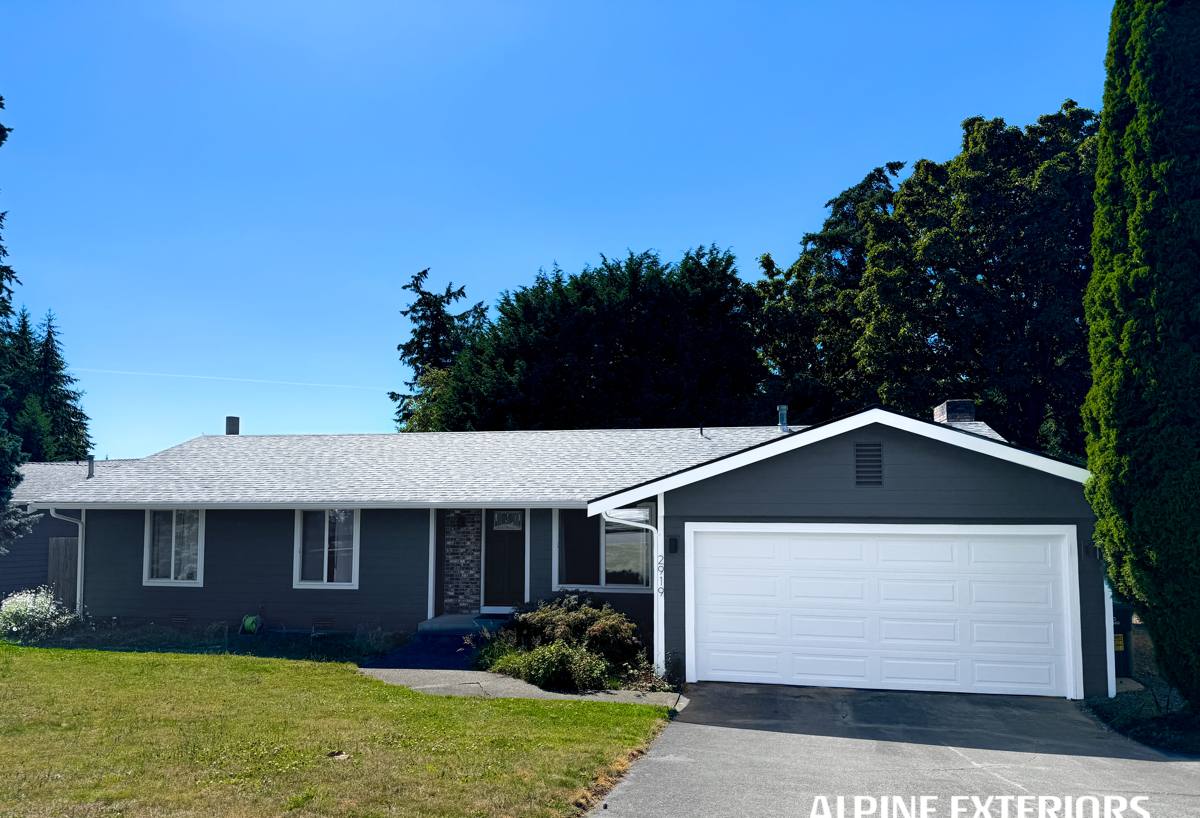
Why James Hardie Fiber Cement Holds Up Where Other Sidings Struggle
James Hardie fiber cement siding is engineered specifically for climate zones like ours. It's manufactured for HZ5 conditions — the designation Hardie uses for regions with the freeze-thaw cycles, sustained moisture, and coastal exposure typical of Whatcom County. Unlike wood-based products, fiber cement doesn't absorb water and swell, and it won't rot or delaminate the way primed spruce or engineered wood siding can once moisture works its way past the surface.
The factory-applied ColorPlus finish matters just as much as the substrate. In a salt-air environment, a field-applied paint job is the first thing to fail — UV, salt, and constant damp-dry cycling break down paint adhesion faster than most homeowners expect. ColorPlus is baked on in a controlled factory process, resists fading, and holds up to the kind of repeated moisture exposure that Puget homes see for months at a time. It's also backed by Hardie's finish warranty, separate from the product warranty on the siding itself, which gives homeowners real recourse if the color does fail prematurely.
None of this means Hardie siding is maintenance-free. It means the material itself isn't the weak link — the installation is.
What a Correct James Hardie Installation Looks Like in This Climate
Fiber cement siding fails prematurely almost exclusively because of installation mistakes, not because of the product. In a high-moisture, wind-driven-rain environment like Puget, the margin for error is smaller than it would be on a drier site.
Flashing and Water Management
Every window, door, and horizontal trim piece needs proper flashing and a drainage plane behind the siding, not just caulk at the seams. Caulk is a secondary defense, not the primary one — it degrades, and in a salt-air, high-rain climate it degrades faster. A correct install assumes water will reach the wall assembly at some point and gives it a path to drain and dry rather than trapping it against the sheathing.
Fastening and Clearances
Hardie's fastening pattern and required clearances — ground clearance, roofline clearance, and gaps at butt joints — aren't optional details. Panels installed too tight to the ground or too close to a roof edge stay wet longer and are far more likely to wick moisture at the bottom edge. Nailing patterns that don't match Hardie's spec can also void the manufacturer's warranty, which matters a great deal if a problem shows up five or ten years down the road.
Correct installation also means matching the right product line and panel profile to the exposure on each side of the house. A wall that takes the brunt of the weather off the water may call for different detailing at seams and corners than a more sheltered elevation on the same house.
Signs Your Current Siding Is Already Losing the Battle
If you're not sure whether your current siding is holding up, these are the signs worth checking for before another wet season sets in:
- Soft or spongy spots when you press on the siding, especially near the bottom edge or under windows
- Dark streaking, green or black staining, or moss growth that comes back soon after cleaning
- Paint that's peeling, bubbling, or chalking heavily on shaded or water-facing walls
- Panels that look warped, bowed, or slightly buckled
- Caulking that's cracked, shrunk, or pulled away from trim and window edges
- Noticeably higher heating bills, which can point to moisture-compromised insulation behind the siding
- Visible gaps opening up at seams or corner boards
Any one of these is worth a closer look. Several together usually mean water has already gotten behind the siding, and the damage is happening where you can't see it.
Cost Factors for a James Hardie Siding Project in Puget
Every home is different, so we don't quote pricing without seeing the job, but these are the factors that move the number most for homes in this area:
| Factor | Why It Matters Here |
|---|---|
| Home size and wall area | Straightforward square footage — larger homes need more material and labor |
| Condition of existing sheathing | Salt air and driven rain can hide rot behind old siding, which has to be repaired before new siding goes on |
| Number of stories and access | Multi-story walls and tight lots near the water often require more scaffolding and staging time |
| Trim, corner, and window detail work | Homes with more architectural detail need more precise flashing and cutting, which adds labor |
| Product line and panel profile | Lap width, shingle-style panels, and panel siding all price differently and suit different exposures |
| Old siding removal and disposal | Tear-off adds cost but is often necessary once moss, moisture, or rot has taken hold |
The one factor we won't cut corners on to save money is water management detailing — flashing, clearances, and drainage. In this climate, that's the part of the job that determines whether the siding lasts 30 years or ten.
Our Installation Process, Start to Finish
- On-site assessment. We walk the exterior, check for existing moisture damage, and evaluate exposure on each side of the house.
- Sheathing and moisture check. Before any new siding goes up, we confirm the wall assembly underneath is sound — repairing or replacing anything compromised.
- Weather barrier and flashing installation. This is the layer that actually keeps water out over the long run, and we install it to spec at every window, door, and horizontal transition.
- Siding installation. Panels go up following Hardie's fastening pattern, clearances, and joint treatment for our climate zone.
- Trim, caulking, and finish work. Final detailing at corners, trim, and penetrations.
- Final walkthrough. We inspect the completed work with you before calling the job done.
Why It Matters to Hire a Crew That Already Works This Area
A siding crew that mostly works drier, more sheltered inland neighborhoods can still do competent work — but they may not default to the extra flashing detail, clearance discipline, and drainage planning that a salt-air, high-rain area like Puget actually requires. A crew that already works this part of Glenhaven knows which elevations take the worst weather, how long moss season really runs here, and where past installs in the area have run into trouble.
That familiarity also matters for permitting and code requirements specific to Whatcom County, and for setting realistic expectations with homeowners about maintenance and timeline given the weather windows we actually get to work in.
Living With James Hardie Siding Through Puget's Moss Season
Even correctly installed fiber cement siding benefits from basic upkeep in this climate. A gentle rinse once or twice a year on shaded, moss-prone walls keeps growth from taking hold and staining the ColorPlus finish. Keeping gutters clear and trimming back vegetation that shades the siding both help reduce how long walls stay damp after a storm. None of this is heavy maintenance — it's the kind of periodic care any exterior material needs in a wet coastal climate, and it's far less demanding than what wood-based or vinyl siding typically requires here.
Done right, James Hardie siding is one of the few products that genuinely holds up to what Puget's weather does to a house year after year — the salt, the sideways rain, and the long stretches where walls just don't get to dry out.
If you'd like a straight assessment of your home's siding and what it would take to do the job right, we're glad to come take a look. Use the form below to request a free, no-pressure estimate.