 Glenhaven Siding
 Windows in Puget Face a Different Kind of Wear
Puget homes sit close enough to the water and the weather patterns that move through Whatcom County that windows here age differently than they do a few miles inland. Salt-laden air works on metal hardware and fastener finishes. Driving rain, pushed sideways by wind off the water, tests every seal and sill detail a window has. And the long stretch of damp, low-light months that lets moss take hold on roofs and siding does the same thing to window frames, trim, and the wood behind them if moisture finds a way in. None of this means windows fail overnight. It means small gaps in the original installation, or in an aging window's seals, get exploited faster and more consistently than they would in a drier, calmer climate.
We work in Puget regularly, which matters more than it sounds like it should. A window that's a perfectly reasonable choice in a sheltered inland neighborhood can be the wrong call on a lot that takes wind and rain straight off the water. Knowing which properties in the area get the harder exposure — and building the replacement accordingly — is the difference between a window that looks fine at installation and one that still performs in year eight.
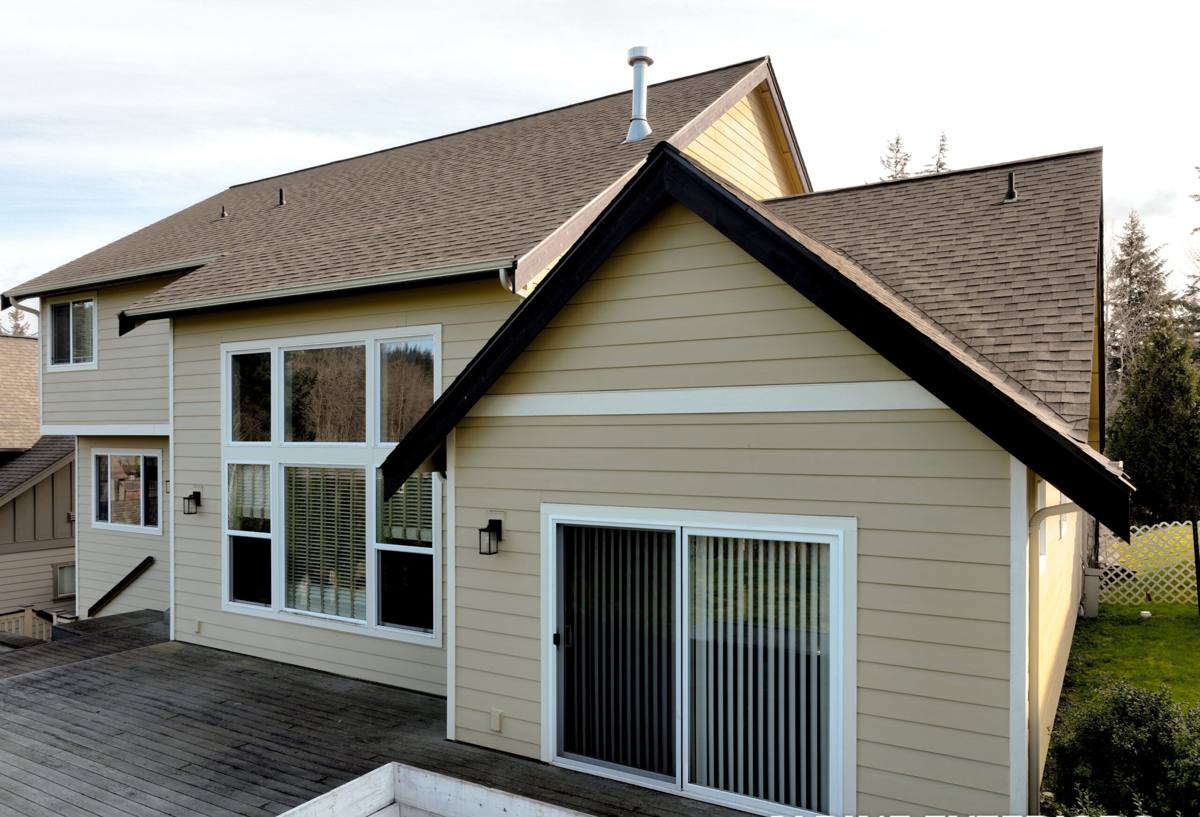
What Salt Air Actually Does to a Window
Salt air is corrosive to exposed metal — window hardware, screen frames, cranks, latches, and especially lower-grade fasteners. Over time this shows up as stiff or sticking hardware, corrosion streaking on sills, and finishes that dull or pit faster than the warranty literature assumes. It's a slow process, which is exactly why it gets missed: nobody notices a lock getting 5% stiffer each year until it won't turn at all.
Where Puget Homes See It First
- Aluminum or lower-grade steel hardware on older windows, especially cranks on casements and hopper-style basement units
- Exposed screen frame corners and clips
- Fasteners in sill tracks and jamb screws, particularly on the weather-facing elevation
- Powder-coat or paint finishes on frames facing prevailing wind and spray
The fix isn't exotic — it's specifying corrosion-resistant hardware and fasteners on any window facing the exposed side of a Puget property, and being honest with homeowners about which elevation of their house takes the worst of it.
Driving Rain and the Water Management Question
A window doesn't have to leak through the glass or the frame itself to cause damage — most water intrusion happens around the window, at the flashing, the sill pan, and the interface between the window and the wall assembly. Driving rain, which is common enough in this part of Whatcom County to plan around rather than hope against, pressurizes those gaps in a way that a light vertical rain never will. Wind-driven rain can travel upward and sideways along a wall surface, which means a sill detail that would be fine in calmer conditions can still let water in during a real storm.
This is why window replacement quality has almost nothing to do with the window unit itself and almost everything to do with what happens at the rough opening. A correctly flashed, correctly pan-sealed window with a mid-grade unit will outperform a premium window installed with shortcuts at the opening, every time, in this climate.
The Installation Details That Matter Most Here
- Sill pan flashing — a sloped, sealed pan under the window that directs any water that does get past the window back outside, rather than into the wall cavity
- Proper flashing sequencing — flashing and building paper (or house wrap) layered so water always sheds downward and outward, never trapped behind a layer
- Continuous sealant beads at the right locations — not a smear of caulk over gaps as an afterthought, but sealant placed where it's designed to work with the flashing, not instead of it
- Backer rod and sealant at the interior and exterior trim joints, sized correctly so the sealant can flex with seasonal movement instead of cracking
- Weep paths kept clear on any window design that relies on them to drain incidental moisture
Moss Season and What It Means for Frames and Trim
Moss doesn't grow on window glass, but the long damp season that makes moss thrive on north-facing roofs and siding creates the same conditions around windows: prolonged surface moisture, reduced drying time between storms, and shaded or sheltered areas that never fully dry out. Wood window frames and trim in those conditions are at real risk of moisture absorption, paint failure, and eventually rot if the original installation didn't account for drainage and ventilation. Vinyl and fiberglass frames don't rot, but a poorly sealed unit of any material still lets moisture into the wall assembly behind it, where the real damage happens out of sight.
Practically, this means we pay close attention to north- and west-facing exposures, shaded elevations near trees or fences, and any window where the original trim already shows staining, soft spots, or peeling paint — these are the locations where moss-season conditions have already been doing quiet damage, and where a replacement needs a more careful approach to the surrounding wood and flashing, not just a new window dropped into the same opening.
Full-Frame vs. Insert Replacement: Which Puget Homes Need
Not every window replacement should be the same type of job, and this is one of the most consequential decisions in the whole process — more consequential than brand or glass package.
| Factor | Insert (pocket) replacement | Full-frame replacement |
|---|---|---|
| What it involves | New window fits inside the existing frame; original frame stays in place | Old window and frame removed down to the rough opening; new flashing and sill pan installed |
| Best used when | Existing frame is solid, square, and dry, with no rot or water history | Frame shows rot, staining, soft wood, or a history of leaks — common on exposed or shaded Puget elevations |
| Water management | Relies on the condition of the existing flashing and sill, which isn't inspected or rebuilt | Flashing and sill pan are rebuilt to current standards, better suited to driving rain |
| Cost | Lower | Higher, due to added carpentry and flashing work |
| Risk if frame condition is misjudged | Traps hidden rot or moisture behind a brand-new window | Low — the opening is opened up and inspected before anything is closed back in |
We don't default to the cheaper option to win a bid. If a frame has already taken on moisture damage from years of moss-season exposure, an insert replacement just seals that problem behind a new window instead of fixing it. We'll tell you plainly which situation you're in and why, including when an insert is genuinely the right, more economical call.
Choosing Materials for This Climate
Vinyl, fiberglass, and clad-wood windows all show up in Puget homes, and each has a legitimate place. Vinyl is the most cost-effective and handles moisture without rotting, though lower-grade vinyl can become brittle with age and UV exposure. Fiberglass costs more up front but resists expansion and contraction well across the temperature swings and damp-to-dry cycles typical here. Clad-wood windows offer the interior wood look many homeowners want, with an exterior cladding that's meant to handle the weather, but the cladding-to-frame seams are exactly the kind of detail that needs careful sealing in a salt-air, driving-rain environment — we're straightforward with clients about that added maintenance attention rather than overselling it as maintenance-free.
Our standard is to spec corrosion-resistant hardware and fasteners on every job here regardless of frame material, since the salt air affects the hardware independent of what the frame itself is made from.
How Our Process Works
1. On-Site Assessment
We look at existing frame condition, sill and flashing history, staining or soft spots, hardware condition, and which elevations of the house take the worst of the wind and rain. This determines whether insert or full-frame replacement is the honest recommendation for each window — not every window on a house needs the same approach.
2. Straightforward Proposal
You get a written scope that specifies replacement type per window, materials, hardware grade, and flashing approach — not just a unit count and a price.
3. Removal and Opening Inspection
On full-frame jobs, once the old window and frame are out, we inspect the rough opening and sheathing before anything new goes in. If there's hidden moisture damage, you'll know before we close it back up, not after.
4. Flashing, Sill Pan, and Installation
This is where driving-rain performance is actually decided — sill pan, flashing sequencing, and sealant placement done correctly, every time, not just on the jobs someone happens to be watching.
5. Interior and Exterior Trim, Final Seal
Trim is reset or replaced, sealant joints are sized to flex with seasonal movement, and hardware is tested before we call the job done.
6. Walkthrough
We walk the finished windows with you, operate each one, and answer questions about care and what to watch for in this climate.
What to Check Before You Hire Anyone for This
- Do they ask about which elevation of your house faces the worst wind and rain, or quote every window the same?
- Do they explain sill pan flashing and installation detail, or only talk about the window brand?
- Do they recommend insert vs. full-frame replacement based on your frame's actual condition, not a blanket default?
- Do they specify corrosion-resistant hardware for this area, or use standard hardware regardless of exposure?
- Are they candid about which of your windows show early moisture or moss-season damage, even if it means a more involved (and costlier) job?
- Do they carry appropriate licensing and insurance for exterior work in Washington?
Signs It's Time to Replace, Not Repair
Sticking or corroded hardware that no longer locks securely, visible staining or soft wood at the sill or lower corners, persistent condensation between glass panes (a sign the seal has failed), noticeable drafts even with the window latched, and any trim that stays damp or spongy longer than the rest of the house after a storm are all signs that repair is a short-term patch, not a real fix, especially on a Puget-facing elevation that's already been absorbing salt air and driving rain for years.
If you're weighing whether your Puget home's windows need attention, we're glad to take a look and give you a straightforward read on what you're dealing with — no pressure, no inflated scope, just an honest assessment and a free estimate using the form below.