 Glenhaven Siding
 Roofing in Geneva Wears Differently Than It Does Inland
Geneva homes sit in a part of Whatcom County where the roof is doing more work than most homeowners realize. Salt-laden air off the water accelerates corrosion on fasteners, flashing, and any exposed metal. Driving rain doesn't just fall straight down here — wind-driven storms push water sideways and upward under shingle edges and around penetrations that would stay dry in a calmer climate. And the long, damp moss season that runs through much of the fall, winter, and spring keeps roof surfaces wet and shaded for weeks at a stretch, which is exactly the environment moss and algae need to take hold.
None of that means a roof in Geneva is doomed to fail early. It means the materials, fastening details, and ventilation choices matter more here than they would in a drier inland town. A roof replacement done with those local conditions in mind will simply outlast one that was installed using generic, one-size-fits-all methods.
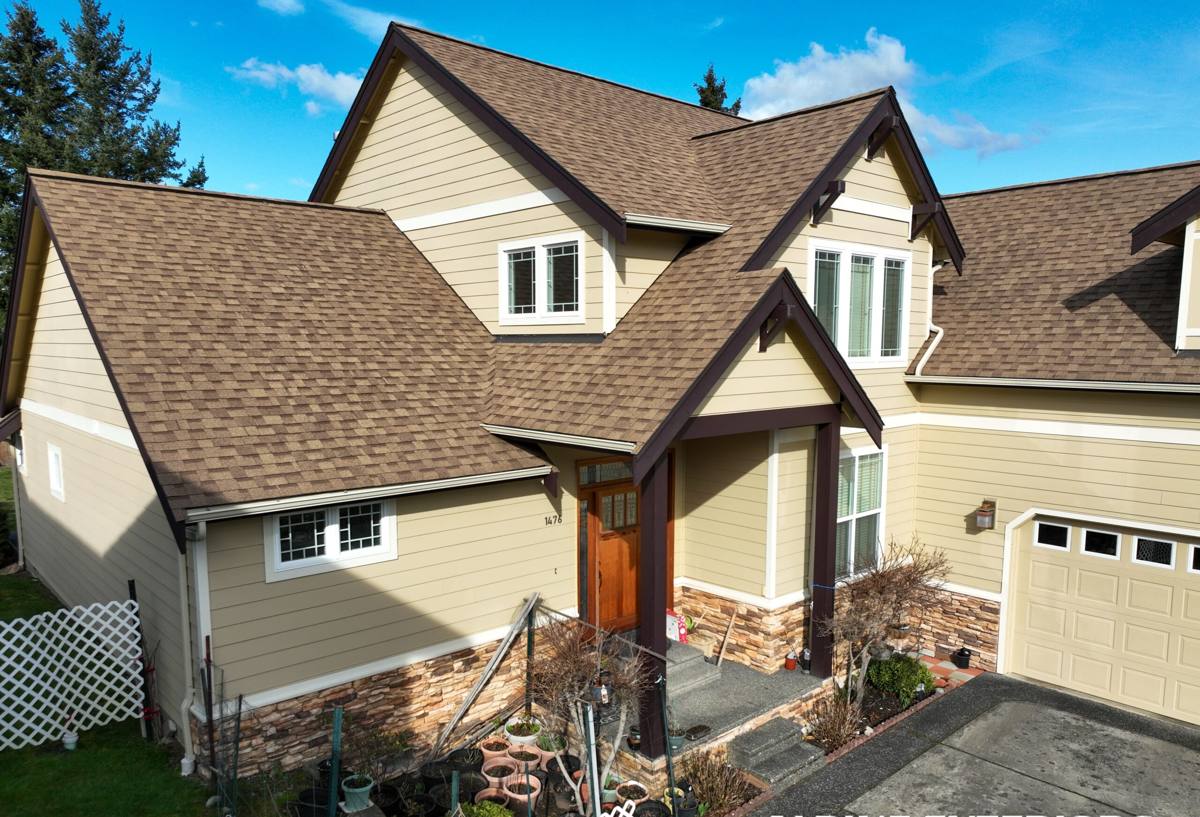
Signs a Geneva Roof Needs Replacement, Not Another Repair
Repairs make sense when a roof has isolated damage and the rest of the system is sound. Replacement becomes the honest recommendation when the underlying materials are failing broadly, or when repeated repairs are just buying a few months at a time. Homeowners in Geneva should treat these as signals worth a professional look:
- Shingles that are cupping, curling, or losing granules in patches rather than just at one spot
- Moss or algae that returns within a season or two of cleaning, especially on north-facing or shaded slopes
- Soft spots in the decking you can feel underfoot when walked (from the inside, via attic inspection) or see as sagging from the ground
- Rusted, pitted, or loose flashing around chimneys, vents, and valleys
- Daylight visible through the roof deck from inside the attic, or water staining on rafters and sheathing
- A roof approaching or past the 20-25 year mark for asphalt composition shingles, given the accelerated wear this climate causes
A roof that shows two or more of these signs at once is usually past the point where patching makes financial sense — the labor to keep chasing individual failures often costs more over a few years than a planned replacement.
What a Correct Roof Replacement Actually Involves
A roof replacement is more than swapping old shingles for new ones. Done correctly, it rebuilds the entire water-management system of the roof, not just its top layer.
Tear-Off and Deck Inspection
The old roofing comes off down to the deck so the sheathing can be inspected directly. This is the only point in the project where soft, delaminated, or water-damaged plywood or OSB can be found and replaced. Skipping a full tear-off — layering new shingles over old, or covering damaged decking — is how roofs fail early, and it's not something a straightforward job in this climate should ever do.
Underlayment and Water Barriers
Given how much driving rain the area sees, the underlayment layer matters as much as the shingle choice. Self-adhered ice-and-water barrier belongs at eaves, valleys, and around every penetration — the places wind-driven rain is most likely to find a way underneath the roof covering. Synthetic underlayment across the rest of the field provides a secondary water barrier if any moisture does get past the primary roofing layer.
Flashing and Penetrations
Chimneys, skylights, vent pipes, and roof-to-wall transitions are where most leaks actually start, not in the open field of the roof. Correct flashing work means new metal, properly lapped with the underlayment and roofing material — not caulk smeared over old, corroding flashing to save a step.
Roof Covering Installation
Whatever material is chosen, it needs to be installed to the manufacturer's nailing pattern and exposure specs, not a faster shortcut version. Under-nailing or over-driving fasteners is one of the most common causes of premature shingle failure in windy, wet climates like this one.
Choosing a Roofing System for Geneva's Climate
There's no single "best" roofing material for every home — it depends on budget, roof pitch, and how much long-term maintenance a homeowner wants to take on. What matters is understanding the real trade-offs for this specific climate.
| Material | Moss & Algae Resistance | Salt Air / Wind-Rain Performance | Typical Lifespan | Relative Cost |
|---|---|---|---|---|
| Architectural asphalt shingle | Moderate; algae-resistant granules help but need periodic cleaning | Good when properly nailed and flashed | 20-30 years | $ |
| Standing seam metal | High; sheds moisture quickly, little surface for moss to grip | Excellent; handles wind-driven rain and coastal exposure well | 40-50+ years | $$$ |
| Synthetic composite (slate/shake-look) | High; engineered surface resists organic growth | Good to excellent, depending on product | 40-50 years | $$$ |
| Cedar shake | Low without diligent upkeep; organic material invites moss | Fair; needs regular treatment in this climate | 20-30 years with upkeep | $$ |
We tend to steer Geneva homeowners away from untreated cedar shake unless they're committed to an ongoing maintenance schedule — it's a beautiful material, but its organic surface is genuinely harder to keep moss-free through a Pacific Northwest coastal winter, and that's a maintenance burden more than a defect in the product itself. Architectural asphalt shingle with algae-resistant granules remains the most common, cost-effective choice for most homes here, while metal and synthetic composites earn their higher upfront cost on homes where the owner wants to minimize moss maintenance and re-roofing frequency over the decades ahead.
Ventilation and Moisture Control Matter More Here
A roof replacement is also the moment to correct ventilation problems, and in a climate with this much sustained moisture, that's not optional. Poor attic ventilation traps warm, humid air against the underside of the deck, which accelerates rot from the inside and can encourage moss and mildew growth on the surface above by keeping the roof warmer and wetter than it should be. A correct system balances intake at the eaves with exhaust at the ridge, sized to the attic's actual square footage — not just whatever vents happened to be there before. We check this on every Geneva replacement, because installing a new roof over an under-ventilated attic just resets the clock on the same underlying problem.
How Our Process Works
We keep the process straightforward and transparent, from the first look at the roof to final cleanup:
- On-site inspection. We walk the roof and check the attic, looking at deck condition, ventilation, flashing, and the extent of moss or wear — not just a drive-by estimate.
- Written estimate. A clear, itemized quote covering materials, labor, tear-off, disposal, and any decking repair that's likely needed, with no vague allowances.
- Material selection. We walk through the trade-offs above in person, based on your budget and how the home is shaded, sloped, and exposed to wind and rain.
- Scheduling and permitting. We handle the permit application where one is required and schedule around weather windows — driving rain makes timing matter more here than in drier regions.
- Tear-off and inspection. Full removal of the old roofing, with photos of the deck condition so you see exactly what we find before anything gets covered up.
- Installation. Underlayment, flashing, ventilation corrections, and the new roof covering, installed to manufacturer spec.
- Cleanup and walkthrough. Full site cleanup including magnetic nail sweep, followed by a final walkthrough so you know exactly what was done.
Keeping Moss From Coming Back
No roofing material is permanently moss-proof in this climate — the goal is to make it easy to stay ahead of, not to pretend it will never grow. A few habits make a real difference between replacements:
- Have gutters cleared at least twice a year so water doesn't back up under the shingle edge
- Trim back overhanging branches to cut down on the shade and debris that keep the roof surface damp longer
- Have moss physically removed (not power-washed, which can strip granules) as soon as it appears rather than letting it establish
- Consider zinc or copper strips near the ridge on shaded slopes, which release trace metals that discourage regrowth as rain washes over them
- Schedule a light annual inspection, especially after major windstorms, to catch lifted shingles or flashing issues early
Why a Crew That Already Works in Geneva Matters
Roofing crews that mostly work inland or in drier parts of the state don't always default to coastal-grade fastener choices, ice-and-water shield placement, or ventilation sizing — because they don't need to where they usually work. A crew that regularly works Geneva and the surrounding Glenhaven area already knows which details can't be shortcut here: where driving rain typically finds its way in, which slopes hold moss longest through the wet season, and how corrosion-resistant the hardware needs to be this close to salt air. That local pattern recognition shows up in fewer callbacks and a roof that performs the way it's supposed to for its full expected lifespan, not just through its first dry summer.
We're also familiar with Whatcom County's permitting process, which keeps the paperwork side of a replacement from becoming a delay.
Get a Straightforward Estimate
If your Geneva home's roof is showing its age, moss keeps coming back, or you're just not sure whether repair or replacement is the right call, we're happy to take a look. The estimate is free, there's no pressure to sign anything on the spot, and you'll get a plain-English explanation of what we find and what it would take to fix it right. Use the form below to get started.