 Glenhaven Siding
 Siding Installation in Cordata: What the Local Climate Actually Demands
Cordata homes sit in a part of Whatcom County where the weather doesn't take a season off. Moist Pacific air carries salt inland, driving rain comes sideways more often than straight down, and the shoulder seasons stretch into a long stretch of gray, damp months where anything organic on a wall — moss, algae, mildew — gets every chance it needs to take hold. Siding here isn't cosmetic. It's the single biggest factor in whether a home's sheathing, framing, and insulation stay dry for the next twenty or thirty years.
That reality shapes everything about how we approach a siding installation in Cordata. We're not installing the same product or the same detailing we'd use on a dry-climate home in a different part of the state. We're building a wall system meant to shed water fast, resist salt-driven corrosion and finish breakdown, and stay clean enough that moss and algae can't get a foothold in the first place.
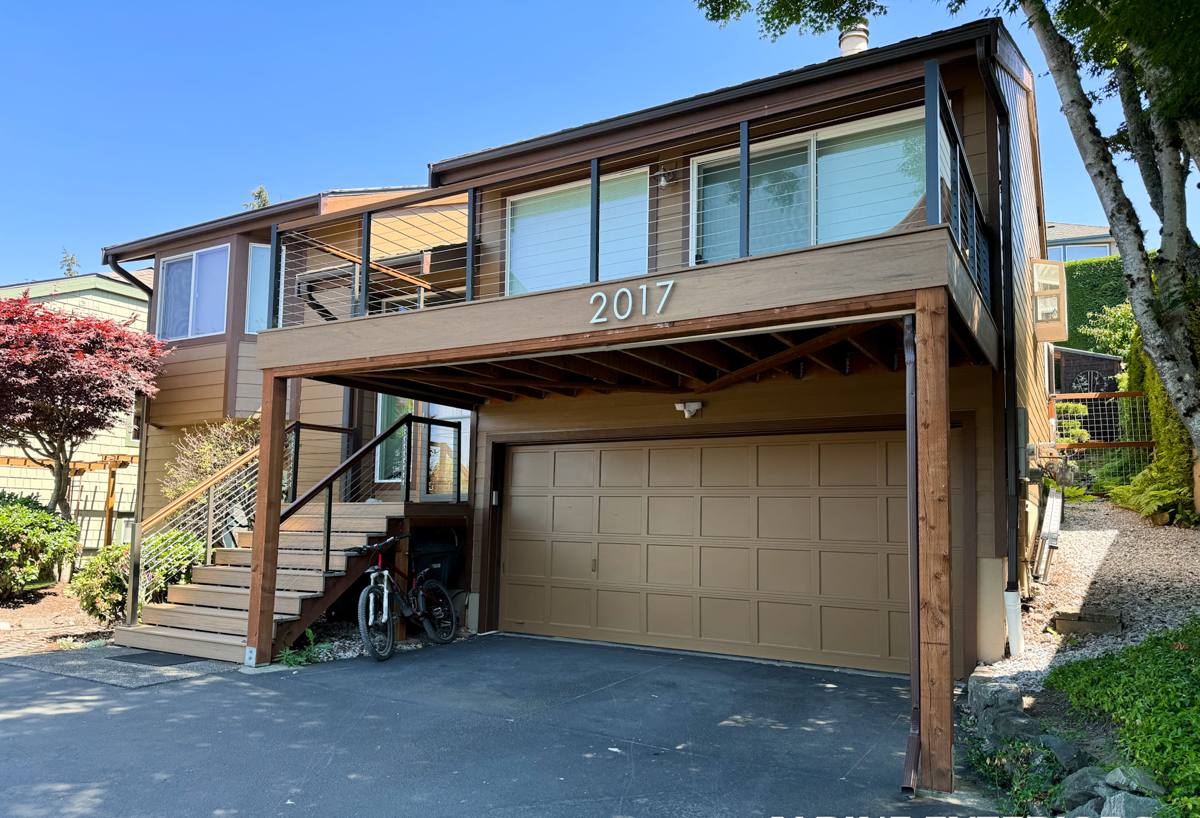
Why Cordata Homes Need a Siding System, Not Just a Product
A lot of siding problems we get called out to fix in Glenhaven and the surrounding Whatcom County communities aren't failures of the siding material itself — they're failures of the system around it. Flashing that was skipped or undersized. House wrap that was lapped the wrong direction. No gap behind the siding to let trapped moisture escape. The siding looked fine on installation day and started failing two or three years later, once enough wet winters had worked on it.
In a climate like this, the things you can't see after the siding goes up matter as much as the siding itself:
- Weather-resistive barrier installed and lapped correctly, shingle-style, so water is always directed outward and down
- Flashing at every window, door, and roof-to-wall intersection, integrated with the house wrap rather than just caulked over it
- A drainage gap or rainscreen behind the siding so any moisture that does get past the cladding can drain and dry instead of sitting against the sheathing
- Proper fastener type, spacing, and penetration depth for the specific siding product being installed
- Correct clearance between the bottom of the siding and grade, decks, and roof lines, so splashback and standing water can't wick into the material
Skip any one of these and it doesn't matter how good the siding brand is — the wall assembly is still vulnerable.
James Hardie: The Only Siding We Install in Cordata
We install James Hardie fiber cement siding exclusively. We don't offer vinyl, LP SmartSide, Cemplank, Allura, or primed wood siding, and that's a deliberate standard, not a limitation of what we're capable of installing. In a climate that combines salt air with sustained moisture exposure, the differences between siding materials show up faster and more visibly than they would in a milder region.
| Factor | Fiber Cement (James Hardie) | Vinyl / Engineered Wood |
|---|---|---|
| Moisture response | Non-combustible, dimensionally stable; doesn't swell, rot, or delaminate when installed correctly | Vinyl can warp with heat/cold cycling; engineered wood is vulnerable to moisture intrusion at cut edges and seams |
| Salt air exposure | Cement composition resists salt-driven degradation of the substrate | Vinyl can become brittle over time; engineered wood needs edge sealing maintained to keep salt-laden moisture out |
| Moss and algae growth | ColorPlus factory finish is dense and cleanable; doesn't feed organic growth the way raw wood fiber can | Vinyl resists growth but shows dirt and staining; wood-based products can feed moss/algae if the finish is compromised |
| Finish life | Factory-applied ColorPlus finish backed by its own warranty, resists fading and chipping | Field-applied or thinner factory finishes generally need repainting or recoating sooner |
| Fire performance | Non-combustible material | Vinyl and engineered wood are combustible |
None of this means the alternatives are junk products — they have real uses and reasonable price points, and plenty of homes around the region wear them fine for years with regular maintenance. It means that for the specific combination of salt air, driving rain, and a long wet season that Cordata deals with, we've standardized on the product line that holds up with the least ongoing maintenance burden and the strongest factory warranty behind the finish.
James Hardie's HZ5 product line is engineered specifically for climate zones like ours, with moisture and freeze-thaw performance built into the formulation rather than added after the fact. Paired with ColorPlus Technology — a factory-baked finish rather than a field-applied paint job — it gives Cordata homeowners a wall that resists fading, chipping, and cracking far longer than site-painted alternatives.
Our Installation Process for Cordata Homes
1. On-Site Assessment
We start by walking the exterior and looking specifically for the conditions that matter in this climate: areas with poor sun exposure and heavy moss growth, spots where siding sits too close to grade or a deck, existing moisture damage around windows and rooflines, and any signs the current wall assembly is missing drainage or flashing.
2. Tear-Off and Substrate Check
Old siding comes off and we inspect the sheathing underneath. Any rot, soft spots, or existing water damage gets addressed before anything new goes up — covering a compromised substrate with new siding just hides the problem for a few more years.
3. Weather Barrier and Flashing
House wrap goes on correctly lapped, and flashing is integrated at every penetration and transition — windows, doors, roof lines, and any wall-mounted fixtures. This is the layer that does the real work when wind-driven rain hits the wall.
4. Drainage Gap
We build in a gap behind the siding so that any moisture that does get past the cladding has somewhere to go, rather than sitting against the sheathing through a wet winter.
5. Hardie Installation
Panels, planks, or shingles go up per James Hardie's fastening and clearance specifications — correct nail type and spacing, proper joint treatment, and clearance from grade, roofs, and decks maintained throughout.
6. Final Walkthrough
We walk the finished exterior with the homeowner, checking trim, caulking at transitions, and overall finish quality before calling the job done.
Installation Mistakes We See on Older Cordata Homes
When we're called out to look at a siding problem on an existing home in the area, a handful of issues come up repeatedly:
- Siding installed tight to the ground or directly against a deck surface, with no clearance for water to drain away
- Caulk used in place of proper flashing at window and door trim
- House wrap taped or stapled but not actually lapped to shed water downward
- No gap behind the siding, so moisture that gets in has nowhere to dry out
- Fasteners driven at the wrong angle or depth, cracking the siding or backing out over time
Every one of these is preventable with correct installation practice, and every one of them gets worse the longer it sits under Whatcom County's wet-season rainfall.
What Affects the Cost of a Cordata Siding Installation
| Factor | Why It Matters |
|---|---|
| Home size and wall complexity | More corners, gables, and dormers mean more cutting, flashing, and labor time |
| Substrate condition | Rot or water damage found during tear-off adds repair work before new siding can go up |
| Siding profile chosen | Lap siding, panel systems, and shingle-style Hardie products differ in material and labor cost |
| Trim and detail work | Window and door trim, corner boards, and fascia detailing add time and material |
| Access and site conditions | Multi-story sections, tight lot lines, or landscaping close to the house can affect staging and labor |
We give a firm, itemized estimate after walking the specific home — broad ranges without seeing the house aren't useful to a homeowner trying to budget accurately.
Why Hire a Crew That Already Works in Cordata
A crew that installs siding across Glenhaven and the surrounding Whatcom County neighborhoods on a regular basis has already seen how this specific climate treats a wall over time — which orientations grow moss fastest, where driving rain tends to find gaps, and which detailing choices actually hold up through a full wet season rather than just looking good on installation day. That local pattern recognition shows up in the small decisions during a job: where to add extra flashing, how tight to run clearances, which details are worth the extra time.
It also means accountability doesn't disappear once the crew packs up. A contractor working steadily in the same community has every reason to install correctly the first time and to stand behind the workmanship warranty if something needs attention later.
Caring for Hardie Siding After Installation in a Climate Like This
Correctly installed James Hardie siding is low-maintenance, not zero-maintenance. In Cordata's climate, a periodic rinse-down to keep moss and algae from establishing on north-facing or shaded walls goes a long way, along with an annual check of caulking at trim and penetrations. Because the ColorPlus finish is factory-applied and warrantied separately from the substrate, homeowners aren't looking at a repaint cycle every few years the way they would with a field-finished product — that's one of the practical, ongoing reasons we point homeowners toward Hardie in the first place.
If you're planning a siding project in Cordata, we're happy to walk the exterior with you, point out anything the current siding or substrate is telling us, and put together a clear, no-pressure estimate. There's a form right below this to get that started.