 Glenhaven Siding
 Siding Repair in Barkley: What Whatcom County Weather Does to Your Walls
Barkley homes take a specific kind of beating. You're close enough to the water to catch salt-laden air, exposed to the driving rain that blows sideways off Bellingham Bay through the fall and winter, and shaded enough by mature trees and marine cloud cover that moss gets a long season to work into anything porous. None of that is dramatic on its own. It's the accumulation — year after year of moisture cycling in and out of your siding — that turns small problems into expensive ones if nobody's looking.
We work Barkley regularly, which matters more than it sounds like it should. A crew that only sees your neighborhood once won't know which sides of a house take the worst weather, which builders were active in the area and what siding they typically installed, or which repair shortcuts tend to fail first in this specific microclimate. We do, because we're back here often enough to see how our own repairs hold up five and ten years out.
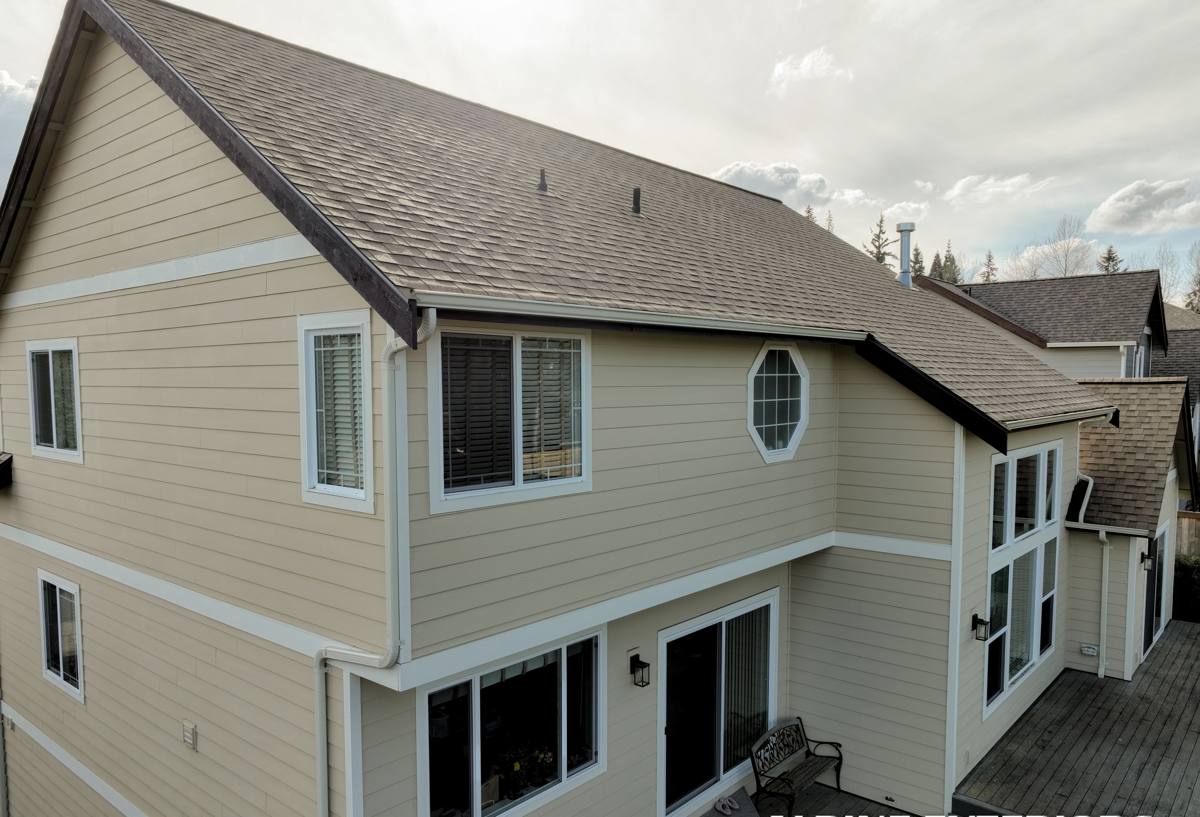
What Siding Repair Actually Means (And What It Doesn't)
"Siding repair" covers a wide range of work, and the right approach depends entirely on what's actually wrong. Before we recommend anything, we're diagnosing — not just patching the symptom you called about.
Common repair scenarios in Barkley
- Moisture-damaged panels or boards — swelling, soft spots, or delamination where water has been getting behind or into the siding over time.
- Moss and algae staining — surface growth on north-facing and shaded walls that, left alone, holds moisture against the material longer than it should sit.
- Cracked or split boards — often from impact, age, or (with some materials) simple weathering and UV exposure.
- Failed caulking and flashing — the unglamorous stuff that's usually the actual root cause behind a "siding" problem.
- Paint and finish failure — chalking, peeling, or fading that signals the protective layer is compromised, not just cosmetically tired.
- Impact damage — storm debris, fallen branches, or accidental damage during other exterior work.
A real repair fixes the cause, not just the visible damage. If we replace a water-damaged board without addressing why water got in — bad flashing, a failed seal, poor drainage — you'll be calling us back in two years for the same spot.
Why Moisture Is the Real Enemy Here
Whatcom County's climate is defined by persistent, low-intensity moisture exposure rather than short intense storms. That distinction matters for siding. A material that can handle an occasional downpour can still fail under Barkley's pattern of near-constant dampness, fog, and slow-drying shade — especially on north- and west-facing walls that don't get much direct sun to dry out between rain events.
This is where the siding material itself becomes the deciding factor in how often you'll need repairs at all.
How different materials actually hold up
| Material | Moisture behavior | Moss/algae resistance | Typical repair pattern |
|---|---|---|---|
| Vinyl | Doesn't absorb water itself, but seams and edges trap moisture behind panels; can warp or crack in temperature swings | Grows on surface if not cleaned; can trap trapped moisture underneath | Cracked/warped panels, faded color, hidden rot behind panels discovered late |
| Cedar | Absorbs and releases moisture readily; needs consistent sealing/staining to stay stable | Prone to moss and algae without regular maintenance | Frequent re-staining, board replacement where finish lapses |
| Primed spruce/wood composite | Vulnerable at cut edges and fastener points where primer coverage is thin | Moderate — depends heavily on paint film integrity | Edge and corner rot, paint failure exposing raw wood |
| James Hardie fiber cement | Non-combustible, dimensionally stable, engineered for wet climates (HZ5 product line) | Factory finish resists moss adhesion better than bare or field-painted wood substitutes | Repairs typically limited to impact damage or installation-error areas, not material failure |
We install James Hardie exclusively, and this table is a big part of why. It's not that other materials are worthless — cedar has real appeal, vinyl is inexpensive, primed wood products have their place — but in a climate like this one, they tend to generate repeat repair calls that fiber cement, correctly installed, largely avoids.
Our Repair Process
Repair work is easy to do badly and easy to do half-right. Here's how we approach it so the fix actually lasts.
1. On-site assessment
We look at the damaged area and its surroundings — not just the spot you noticed. Moisture problems rarely stay contained to one board, so we check adjacent panels, flashing, caulking, and the general drainage path above and below the damage.
2. Root-cause diagnosis
Before quoting a fix, we identify why the damage happened. A cracked board from impact is a different job than a swollen board from years of trapped moisture behind a bad seal. Treating both the same way wastes your money.
3. Matching materials and finish
Where the existing siding is James Hardie, matching is straightforward — same product line, same ColorPlus finish where available, so the repair doesn't stand out. Where the existing siding is a different material, we'll walk you through your options honestly, including whether a full or partial re-side with fiber cement makes more sense than continuing to patch a material that's fighting the climate.
4. Correcting the underlying issue
If flashing, caulking, or drainage caused the failure, we fix that first. Replacing siding over an unresolved moisture path is a repair that's designed to fail again.
5. Final inspection and cleanup
We check the repair against the surrounding wall for fit, seal, and finish before we call it done, and we clean up the site — no scrap boards or debris left behind.
Signs You Shouldn't Wait On
Some siding issues are cosmetic and can sit on a list for a while. Others compound quickly, especially with Barkley's rain exposure. If you're seeing any of the following, it's worth a look sooner rather than later:
- Soft or spongy spots when you press on the siding
- Visible gaps, buckling, or separation at seams
- Paint or finish that's bubbling rather than just fading
- Musty smells near exterior walls, especially inside closets or on interior walls that back to the exterior
- Moss or dark staining that keeps returning shortly after cleaning
- Increased pest activity around specific sections of siding
None of these automatically mean a full re-side. Often they're a localized repair. But the longer moisture sits behind siding, the more likely it spreads to sheathing and framing — and that turns a siding repair into a structural one.
Repair vs. Partial Replacement vs. Full Re-Side
Homeowners often assume any siding damage means a full replacement job. That's rarely true, and we won't push a bigger job than the house needs. At the same time, a full re-side is sometimes the more honest recommendation — particularly on older homes where the existing material is nearing the end of its useful life across the board, not just at the damaged spot.
How we think about scope
- Repair — localized damage, otherwise sound siding, isolated cause (impact, one failed seal).
- Partial replacement — one elevation or section showing widespread wear, usually the side that takes the worst weather exposure, while the rest of the house is still performing fine.
- Full re-side — material at or past its service life across most of the home, recurring repair calls on the same material, or a homeowner decision to upgrade to fiber cement for the long-term maintenance reduction.
We'll tell you which category your situation falls into and why — including if the honest answer is "this is a $400 repair, not a $20,000 project."
Why James Hardie Is What We Recommend for Repairs and Replacements
When a repair area needs new material, or when a homeowner decides a section is due for replacement rather than another patch, we use James Hardie fiber cement. It's the only siding product we install, and in a climate like Whatcom County's, the reasons are practical rather than promotional:
- Non-combustible — fiber cement doesn't burn, which matters increasingly as wildfire smoke seasons extend into the Pacific Northwest.
- Engineered for wet regions — Hardie's HZ5 product line is specifically formulated for climates with high moisture exposure, which describes Whatcom County well.
- Factory-applied ColorPlus finish — a baked-on finish that holds color and resists the chalking and peeling that field-applied paint eventually shows.
- Dimensionally stable — it doesn't swell, warp, or crack from moisture cycling the way wood-based products can.
- Strong transferable warranty — backed by the manufacturer, which matters if you sell the home before the siding's service life is up.
We're not going to tell you every other siding product is a bad choice for everyone. We will tell you why we, as a crew that repairs and replaces siding in this climate every week, stopped installing anything else.
What to Expect From an Estimate
A siding repair estimate from us isn't a sales pitch. It's a straightforward look at the damage, an explanation of what caused it, and a clear recommendation — repair, partial replacement, or full re-side — along with a reasonable range for the work involved. If the fix is small, we'll say so. If it's not, we'll explain why.
| Factor | Why it affects the job |
|---|---|
| Extent of moisture intrusion | Determines whether sheathing or framing needs attention, not just the siding surface |
| Wall exposure | North and west-facing walls in Barkley typically see more moisture cycling and may need more thorough repair |
| Material match availability | Matching existing Hardie profiles and colors is usually simple; matching discontinued or non-Hardie products can be harder |
| Access and site conditions | Height, landscaping, and surrounding structures affect labor time |
| Underlying cause fixes | Flashing, caulking, or drainage corrections add scope but prevent repeat failures |
Ready When You Are
If you're seeing damage, staining, or wear on your Barkley home's siding, we're happy to come take a look. No pressure, no inflated scope — just a clear read on what's happening and what it'll take to fix it right. Use the form below to request a free estimate.