 Glenhaven Siding
 Siding Repair Built for Whatcom Falls Conditions
Whatcom Falls homes deal with a specific combination of punishment: salt-laden air moving in off the water, driving rain that hits siding sideways rather than straight down, and a moss season that can stretch for months at a time. None of these are dramatic events. They're slow, steady pressure that finds every weak seam, every under-caulked joint, and every panel that was never quite installed to spec. By the time a homeowner notices a problem, the damage is usually well past the surface.
We work on siding throughout the Glenhaven area regularly, and Whatcom Falls has its own pattern of failure points we've come to recognize. This page walks through what local siding repair actually involves, what a correct fix looks like, and why we approach it the way we do.
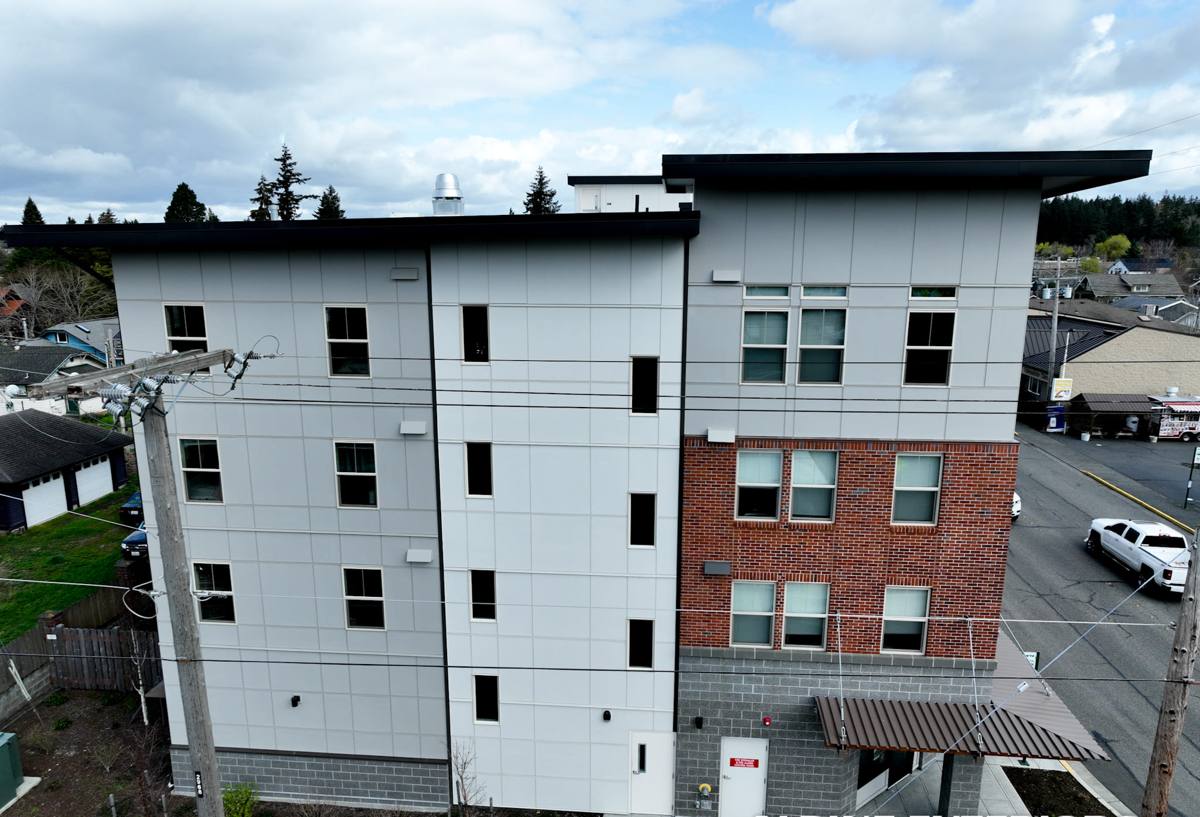
Why Whatcom Falls Siding Fails the Way It Does
Salt Air and Moisture
Coastal and near-coastal air in Whatcom County carries fine salt particulate that settles on exterior surfaces. On its own, salt exposure is a slow corrosive process — it works on fasteners, flashing, and any exposed metal trim faster than it works on the siding material itself. Combined with moisture, it accelerates corrosion at nail heads and joint hardware, which is often where a repair job starts: not with the siding panel, but with what's holding it in place.
Driving Rain
Rain that comes in at an angle behaves differently than rain that falls straight down. It gets pushed up under laps, into butt joints, and behind trim boards that weren't properly flashed or caulked. Over time, this wind-driven moisture finds any gap in the water-management plane and works its way behind the siding, where it can sit against sheathing and framing far longer than anyone on the outside would guess.
Moss and Sustained Dampness
A long moss season means long stretches where siding, trim, and the ground line around a house stay damp. Moss itself doesn't destroy siding material the way it can shorten the life of a roof, but it holds moisture against surfaces and joints for extended periods, which is exactly the condition that lets small gaps become real problems. Moss buildup at the base of walls, around downspouts, and in shaded north-facing sections is a strong early indicator that an area needs a closer look.
What a Whatcom Falls Siding Problem Usually Looks Like
Most repair calls we get in this area fall into a handful of categories:
- Failed caulk joints at trim, corners, and window/door surrounds that have shrunk, cracked, or pulled away, letting wind-driven rain behind the siding plane
- Corroded or backed-out fasteners where salt-air exposure has worked on nail heads or trim screws over years
- Soft or damaged panels near ground level, under downspouts, or in persistently shaded, damp areas where moisture has had time to do its work
- Failed or missing flashing above windows, doors, and horizontal trim, which is one of the most common root causes of hidden water intrusion
- Moss and organic buildup at the base of walls and in low-airflow corners, signaling a spot that stays wet longer than it should
- Impact damage from storm debris or routine wear that's created an opening in the water-management plane
Some of these are cosmetic and low-urgency. Others are early warning signs of moisture getting behind the siding, which is the failure mode that actually costs homeowners money — not the visible crack, but what happens to the sheathing and framing behind it if the crack goes unaddressed through another wet season.
What a Correct Repair Actually Involves
A siding repair that only replaces what's visibly broken and skips the underlying cause is a repair that fails again. Here's what we check on every Whatcom Falls repair call, regardless of how small the job looks at first glance:
1. Diagnose Before Replacing
We pull back the affected area enough to see what's actually happening behind the siding — whether the sheathing is intact, whether the water-resistive barrier is doing its job, and whether the damage is isolated or has spread along a seam or panel run.
2. Address the Water Path, Not Just the Symptom
If a panel failed because of a flashing gap or a caulk joint that let water behind it, replacing the panel without fixing the flashing or joint just resets the clock on the same failure. We fix the entry point first.
3. Match Material and Method Correctly
Repairs need to tie into the existing siding cleanly — proper lap, proper fastening pattern, and joints sealed the way the manufacturer specifies, not just caulked over generically. A patch that doesn't match the original installation method becomes its own future weak point.
4. Reseal and Finish Properly
Trim, caulk, and touch-up finishing all get done to hold up under the same conditions that caused the original failure — driving rain and long damp stretches — not just to look right on a dry day.
Repair vs. Replacement: How We Make the Call
| Factor | Points Toward Repair | Points Toward Replacement |
|---|---|---|
| Extent of damage | Isolated to one panel, joint, or section | Recurring across multiple walls or panel runs |
| Underlying sheathing | Sound, dry, no rot found | Soft, discolored, or showing rot at multiple points |
| Siding material and age | Sound material, isolated installation defect | Original material failing broadly or near end of service life |
| Cause of failure | Single fixable defect (one flashing gap, one joint) | Systemic issue — wrong material for the exposure, widespread poor original installation |
| Cost over time | One repair reasonably solves it | Pattern suggests repeat repair calls are likely |
Most calls in Whatcom Falls end up being legitimate repairs — a section here, a joint there. But if we find rot spreading behind multiple panels or a pattern of failures tied to the original material rather than one bad spot, we'll tell you that directly rather than patch something that's going to call us back out in a year.
Our Process on a Whatcom Falls Repair Call
- Walk the exterior — we look at the whole house, not just the spot you called about, since one visible failure often has a sibling nearby that hasn't shown itself yet
- Open up the problem area — enough to see the sheathing and water-resistive barrier condition, not just the surface
- Give you a straight assessment — what caused it, what it'll take to fix correctly, and whether repair or a larger scope makes sense
- Fix the cause, then the symptom — flashing, sealant, or fastening issues get corrected as part of the repair, not left for next time
- Finish to match — panel, trim, and paint work blended into the existing siding as cleanly as the situation allows
Why We Only Repair With James Hardie Materials
When a repair calls for new siding material — a replacement panel, a trim board, a section that needs to come off and go back on — we use James Hardie fiber cement, the same standard we install on full jobs. It's non-combustible, engineered for the kind of wet, wind-driven climate Whatcom County sees, and finished with a factory ColorPlus finish that holds color and resists the wear that comes with years of salt air and rain exposure. We don't stock or install vinyl, LP SmartSide, or other alternative siding materials, even for small patch repairs, because mixing materials on a wall creates its own long-term problems — different expansion rates, different moisture behavior, and a mismatch that shows over time. If your existing siding isn't Hardie, we'll talk through what that means for a proper repair versus a longer-term plan.
Why Hiring a Crew That Knows Whatcom Falls Matters
Siding repair looks straightforward from a distance, but the difference between a repair that lasts and one that fails again in two years usually comes down to whether the crew understood the actual cause of the damage. A contractor who works this specific pocket of Whatcom County has already seen how salt air affects fastener life here, where wind-driven rain tends to find gaps on this kind of exposure, and which shaded, damp corners tend to hold moss and moisture longest. That familiarity shows up in the diagnosis, not just the patch.
It also matters for follow-through. Local crews aren't driving in from out of the area for a callback — if something isn't right after the repair, we're close enough to come back and make it right without it becoming a logistics problem.
Simple Maintenance Checklist Between Repairs
A few habits go a long way toward catching problems before they need a repair call at all:
- Walk the exterior once or twice a year, especially after the wettest stretch of winter
- Look closely at caulk joints around windows, doors, and trim for cracking or gaps
- Check for moss buildup at wall bases, under eaves, and in shaded corners
- Keep gutters and downspouts clear so water isn't dumping directly onto or behind siding
- Note any soft spots, discoloration, or bubbling paint — these are early signs worth a professional look, not something to wait out
If you're seeing any of these signs on your Whatcom Falls home, or you're just not sure whether what you're looking at is cosmetic or something more, we're happy to take a look. We offer free, no-pressure estimates — we'll tell you honestly what we find and what it would take to fix it right.