 Glenhaven Siding
 Sudden Valley's Climate Is Harder on Siding Than Most Homeowners Realize
Sudden Valley sits in a pocket of Whatcom County where tree cover, lake-driven humidity, and long wet winters combine to create conditions that wear siding out faster than in more open, sun-exposed parts of Glenhaven. Homes tucked under mature evergreens stay shaded and damp for days after a storm passes. That combination of moisture and shade is exactly what moss, algae, and mildew need to take hold, and once they get a foothold on a siding surface, they hold moisture against the wall longer, which accelerates whatever damage is already happening underneath.
Add in driving rain that comes in sideways off the water during winter systems, and you've got a siding assignment that punishes anything less than a correctly detailed installation. Butt joints, corner trim, and window flashing that would hold up fine in a drier inland neighborhood can fail here in a fraction of the time if they weren't built to shed wind-driven water in the first place.
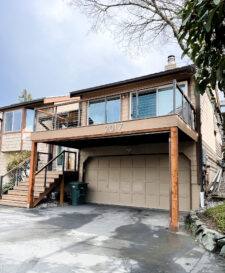
How to Tell Your Siding Has Reached the End of Its Useful Life
Siding failure in this kind of environment doesn't usually show up as one obvious problem — it shows up as a pattern. Homeowners who call us about a "small" issue often find, once we're up on a ladder, that the real story is more advanced than what's visible from the ground.
- Persistent moss or dark green-black staining that returns within weeks of being cleaned
- Soft, spongy, or crumbling spots when you press on the siding, especially near the bottom courses
- Paint that's peeling, bubbling, or won't hold a fresh coat for more than a season or two
- Visible warping, cupping, or gaps opening up at butt joints and corners
- Rising utility bills that suggest the wall assembly behind the siding is no longer doing its job
- Rot or discoloration at the bottom edge of siding boards, particularly under gutters or near ground contact
- Siding that flexes or feels hollow when tapped, a sign the substrate underneath has already broken down
Any one of these on its own might just need a repair. Several at once, especially on the shaded or weather-facing sides of the house, usually means the siding system as a whole has stopped protecting the wall behind it and full replacement is the more honest recommendation.
What a Correct Siding Replacement Actually Involves
Siding replacement is not just stripping old boards and nailing up new ones. In a moisture-heavy environment like Sudden Valley, the work that happens before the new siding goes on matters just as much as the siding itself.
Tear-Off and Substrate Inspection
Every old course comes off so we can see the sheathing underneath. This is where hidden problems usually surface — soft plywood, rot around old flashing, or trapped moisture from a water-resistive barrier that was installed wrong the first time. Any damaged sheathing gets replaced before anything new goes back up. Skipping this step is the single most common shortcut that leads to another failed siding job a few years later.
Water-Resistive Barrier and Flashing
A new weather-resistive barrier goes over the repaired sheathing, lapped correctly from the bottom up so water is always directed outward and down, never into a seam. Flashing gets installed at every window, door, and roofline intersection — the exact spots where driving rain finds its way in if the detailing is sloppy.
Drainage and Ventilation
Behind the new siding, we build in a drainage gap so any moisture that does get past the outer layer can drain and dry out instead of sitting against the wall. This is especially important on shaded, tree-covered lots where walls simply don't get the sun exposure needed to dry out quickly on their own.
Installation to Spec
Fastening schedule, board overlap, caulking at penetrations, and clearance from grade and roof lines all follow the manufacturer's installation instructions, not shortcuts. This is also where correct clearances matter for keeping moss and mildew from re-establishing right away.
Why We Install Only James Hardie Fiber Cement Siding
We made a decision as a company to install one siding system: James Hardie fiber cement. We don't offer vinyl, LP SmartSide, cedar, primed spruce, or other fiber cement brands, and that's a deliberate standard, not a lack of options.
Fiber cement is non-combustible, which matters to insurers and to homeowners thinking long-term. It doesn't feed mold or algae the way wood-based products can, which is a real advantage in a shaded, damp neighborhood where moss pressure is constant. James Hardie's ColorPlus factory finish is baked on under controlled conditions rather than field-painted, which gives it better fade and adhesion performance than a repaint job done on-site in variable weather — and it comes backed by a real finish warranty, not just a promise.
HZ5 Engineering for This Climate
James Hardie engineers its HZ product lines for specific climate zones, and the HZ5 formulation is built for regions that see prolonged moisture, freeze-thaw cycling, and heavy moss and mildew exposure — conditions that describe Sudden Valley and the rest of Glenhaven's lake-influenced weather patterns well. That's not a marketing detail; it's the difference between a product engineered for this environment and one that's simply tolerated in it.
We also stand behind the installation itself, because fiber cement performs exactly as well as the crew installing it. Correct fastening, clearances, and flashing are what make the difference between a 30-year siding system and a 10-year headache — the product and the installation have to both be right.
Our Process for Sudden Valley Projects
- On-site assessment. We walk the exterior, check for soft spots, moisture damage, and problem areas specific to sun exposure and tree cover on your lot.
- Scope and product selection. We determine tear-off extent, sheathing repair needs, and the right Hardie profile and color for the home.
- Written estimate. A clear, itemized quote before any work begins — no surprise change orders for things we could have caught up front.
- Tear-off and substrate repair. Old siding comes off, damaged sheathing is replaced, and the wall is inspected before anything new goes up.
- Barrier, flashing, and installation. Water-resistive barrier, flashing, and Hardie siding installed to manufacturer specification.
- Final walkthrough and cleanup. We review the finished job with you and leave the site clean.
What Drives the Cost of a Sudden Valley Siding Replacement
| Factor | Why It Matters Here |
|---|---|
| Home size and wall complexity | More square footage and more corners, gables, and trim details mean more material and labor |
| Existing layers of siding | Multiple past layers or old siding types add tear-off time and disposal cost |
| Sheathing and moisture damage | Shaded, tree-covered lots often have hidden rot that isn't priced until tear-off reveals it |
| Access and site conditions | Sloped lots, tight lake-area setbacks, and mature landscaping can affect staging and labor time |
| Hardie product line and profile | HZ5 boards, trim complexity, and color selection affect material cost |
| Trim, soffit, and fascia work | Deteriorated trim discovered during tear-off is often bundled in to avoid mismatched future repairs |
Every one of these can shift the final number, which is why we don't quote real projects over the phone. A firm number only comes after we've actually looked at the walls.
Timeline: What to Expect
Most single-family siding replacements in this neighborhood run from a few days for a straightforward re-side to a couple of weeks when tear-off reveals sheathing repairs or the home has significant trim and gable detail. Weather is the biggest variable — we plan around the wet stretches Whatcom County is known for rather than fighting through them, since installing over damp sheathing or in driving rain compromises the whole system.
Why Hiring a Crew That Already Works in Sudden Valley Matters
Siding crews that mostly work drier, sunnier neighborhoods can underestimate what a shaded, lake-adjacent lot in Sudden Valley actually needs. The moisture load is different, the moss pressure is different, and the flashing details that get away with being "good enough" elsewhere don't hold up here. A crew that regularly works this specific pocket of Whatcom County already knows to check clearance at grade, to pay extra attention to north-facing and tree-shaded walls, and to plan installation around the weather windows this area actually gets, instead of assuming conditions that don't apply.
Many homes in Sudden Valley also fall under community design or architectural guidelines, so it's worth confirming what applies to your property before finalizing color and profile choices — something we're glad to help you sort out as part of the estimate rather than after materials are ordered.
Get a Free, No-Pressure Estimate
If your siding is holding onto moss, showing soft spots, or just isn't keeping up with what a Sudden Valley winter throws at it, we're happy to take a look and give you a straight answer about what it needs. Use the form below to request a free estimate — no pressure, no obligation.