 Glenhaven Siding
 Why Fairhaven Decks Take More Punishment Than Most
Fairhaven sits close enough to the water that salt-laden air is a daily fact of life, not an occasional nuisance. Add Whatcom County's driving rain — the kind that comes in sideways off a west wind — and a moss season that can stretch from October well into April, and you have a set of conditions that will find every weak point in a deck within a few years. Salt air accelerates corrosion on fasteners and hardware. Standing moisture works into end grain, fastener holes, and any spot where two boards meet without proper airflow. Moss and algae don't just look bad; they hold moisture against the deck surface and structure far longer than open air would allow.
None of this is unique to any one house in Fairhaven — it's the baseline for anything built outdoors in this part of Whatcom County. A deck that isn't built with these specific pressures in mind will show it early: soft spots, board cupping, corroded fasteners, and a green film that keeps coming back no matter how often it's scrubbed.
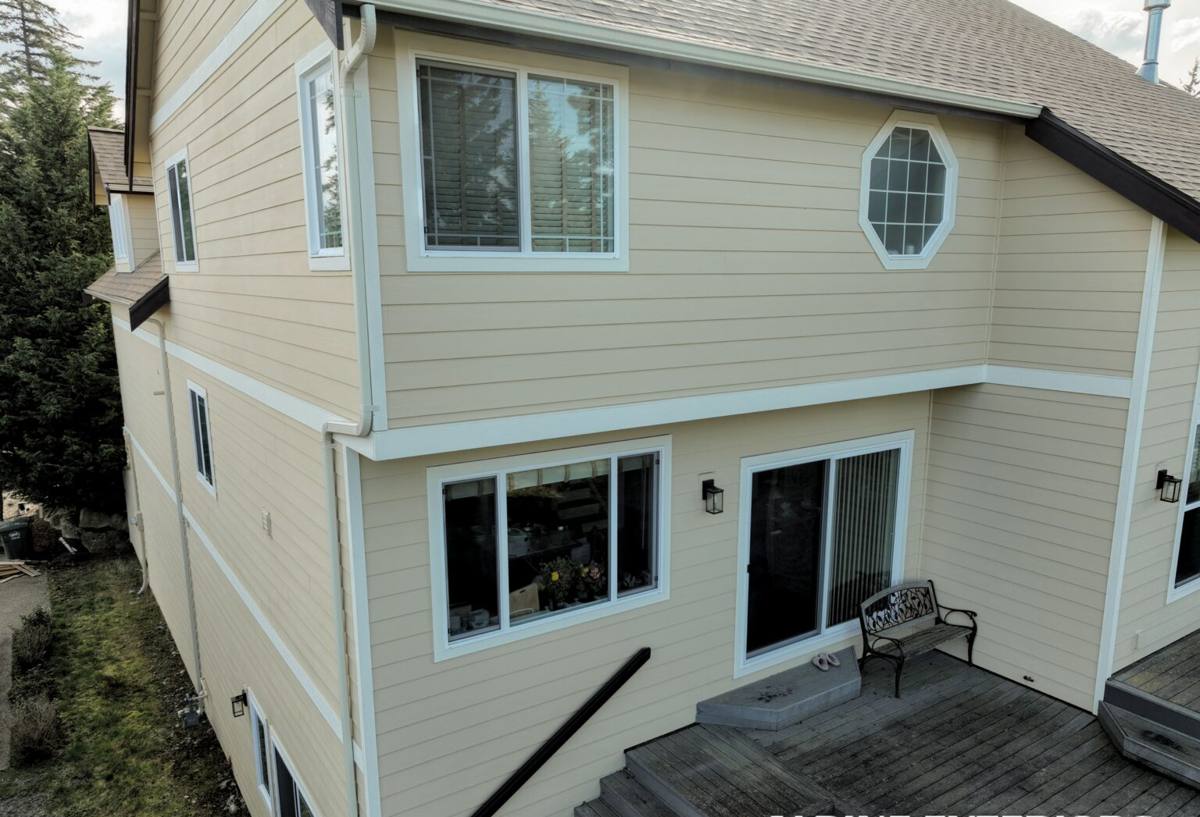
Why Composite Decking Makes Sense for This Climate
Composite decking was developed to solve exactly the problems wood struggles with here. The core material — a blend of wood fiber and plastic, or in some product lines a fully synthetic PVC formulation — doesn't absorb water the way solid wood does, so it isn't prone to the swelling, splitting, and rot that show up on wood decks after a few wet seasons. It also doesn't need annual staining or sealing to keep moisture out, which matters in a climate where there's rarely a long enough dry stretch to do that job properly anyway.
That doesn't mean composite is maintenance-free, and we won't tell a homeowner otherwise. It still needs periodic cleaning to stay ahead of algae and mildew growth, and the quality of the installation — drainage, airflow, fastener choice — matters just as much as the board itself. A good composite product installed poorly will still develop problems. A well-chosen product installed correctly for this climate is what actually delivers the low-maintenance result people are paying for.
What a Correct Composite Deck Build Involves
Substructure and Framing
Composite boards are heavier than wood and have different span ratings, so joist spacing has to match the manufacturer's specifications for that specific product — not generic wood-decking spacing. We use framing lumber rated for ground contact or exposure where it's called for, and we set the frame with a slight slope away from the house so water sheds instead of pooling.
Fasteners and Fastening Systems
In a salt-air environment, fastener choice is not a place to cut corners. We use stainless steel or coated fasteners rated for coastal exposure, and we avoid mixing incompatible metals that can set off galvanic corrosion between hardware and fasteners. Most composite systems today use a hidden-fastener clip system rather than face-screwing, which also reduces the number of penetration points where moisture could otherwise work into a board over time.
Flashing, Drainage, and Airflow
Where a deck attaches to the house, the ledger board needs proper flashing so water is directed away from the structure rather than into it — this is one of the most common failure points on older decks we're asked to look at. Underneath, we make sure there's enough ground clearance and cross-ventilation for air to move, which keeps the underside of the deck from turning into a permanent damp, shaded environment where moss and mildew thrive.
Choosing the Right Composite Product for a Wet, Salty Climate
Not all composite decking performs the same way once it's exposed to years of coastal Whatcom County weather. The biggest distinction is whether a board is capped or uncapped.
| Board Type | Moisture Resistance | Mold/Algae Resistance | Typical Upkeep |
|---|---|---|---|
| Capped composite | High — protective shell resists water intrusion at the surface | Good, though surface cleaning is still needed periodically | Occasional rinse and scrub; no staining or sealing |
| Uncapped composite | Moderate — exposed wood fiber can absorb some surface moisture over time | Lower; more prone to surface mildew in shaded, damp areas | More frequent cleaning to prevent staining and growth |
| Solid PVC / cellular | Very high — no wood fiber content to absorb moisture | Good, similar cleaning needs to capped composite | Occasional rinse and scrub |
For a property exposed to salt air and a long wet season, we generally steer homeowners toward capped composite or solid PVC products. It's not that uncapped boards are a bad product — they're a legitimate, lower-cost option that works fine in many climates — but the added moisture exposure here means they typically need more frequent cleaning to stay ahead of surface staining and mildew.
Permits and Code Considerations in Glenhaven and Whatcom County
Most attached decks require a building permit, and the requirements touch on more than just the decking material. Guardrails are generally required once a deck reaches a certain height above grade, with minimum rail heights and maximum gaps between balusters set by code. Stair rise and run, ledger board attachment method, and footing depth are all reviewed as part of the permitting process, and requirements can vary depending on the specific jurisdiction and the deck's height and attachment method.
Because these details vary by situation, we always recommend confirming current requirements with the local building department before work begins rather than assuming a past project's rules still apply. We handle the permit and inspection process as part of our work, so homeowners aren't left figuring out code requirements on their own.
Our Process for a Fairhaven Composite Deck Project
Every project starts with a site visit, not a phone estimate. We look at drainage patterns around the house, sun exposure, existing structure condition if it's a rebuild, and how the deck will actually be used before recommending a layout or product.
- On-site assessment of the existing structure, grading, and drainage
- Product selection based on budget, sun/shade exposure, and how much upkeep the homeowner wants to do
- A written plan covering layout, framing, fastening system, and railing
- Permit handling and coordination with the local building department
- Installation, followed by a final walkthrough before we consider the job done
Keeping a Composite Deck Looking Good Through Moss Season
Composite decking cuts down on maintenance significantly compared to wood, but "low maintenance" still means some maintenance, especially given how long the damp season runs here. A little regular attention keeps a deck looking like new for years instead of needing a deep-clean rescue every spring.
- Rinse the deck surface periodically through the wet months to keep organic buildup from setting in
- Use a soft-bristle brush and a mild cleaner for any algae or mildew spots rather than a wire brush or harsh chemicals
- Keep gutters and downspouts clear so runoff isn't dumping directly onto the deck surface
- Sweep debris out from between boards where moisture and organic matter tend to collect
- Trim back nearby vegetation to improve airflow and sun exposure on shaded sections
- Check railing hardware and fasteners annually for early signs of corrosion
Why a Crew That Already Works Fairhaven Matters
A deck built to a generic spec sheet and a deck built for this specific stretch of coastline aren't the same project, even if the materials look identical on paper. Knowing how drainage tends to behave on coastal Whatcom County lots, which fastener and hardware choices actually hold up under years of salt air, and what local permitting expects before an inspector shows up all come from doing this work here repeatedly — not from a one-size-fits-all installation manual. That local knowledge is what keeps a deck performing the way it's supposed to five and ten years down the road, not just on the day it's finished.
Cost Factors for a Fairhaven Composite Deck
Every project is different, but the main variables that move the price on a composite deck project are fairly consistent. Composite decking installations broadly run in the range of $30 to $60 per square foot installed, with the specifics below pushing a given project toward the lower or higher end.
| Factor | Impact on Cost |
|---|---|
| Deck size and shape | Larger decks and multi-level or curved layouts increase material and labor |
| Substructure condition | A rebuild that requires new framing costs more than resurfacing sound framing |
| Product tier | Capped composite and solid PVC cost more upfront than uncapped composite |
| Railing type | Composite, cable, or metal railing systems vary significantly in cost |
| Elevation and stairs | Taller decks with stairs and additional guardrail add labor and material |
| Permit and design complexity | Custom layouts or complex site conditions add engineering and permitting time |
If you're weighing a new composite deck or a rebuild of an aging wood deck in Fairhaven, we're happy to walk the site with you and put together a free, no-pressure estimate based on your actual property — not a generic quote. There's a form below to get that scheduled.