 Glenhaven Siding
 Whatcom Falls Homes Face a Tough Combination of Weather
Homes in the Whatcom Falls area sit in one of the more demanding siding environments in Whatcom County. It's not any single weather event that causes the damage — it's the combination, repeated year after year. Salt-laden air drifts in off the water and settles on exterior surfaces. Driving rain, pushed sideways by wind rather than falling straight down, finds its way into every gap, seam, and fastener hole that isn't sealed correctly. And a long moss season, fed by shade, moisture, and mild temperatures, gives organic growth months at a time to take hold on siding that doesn't drain and dry properly.
Individually, siding can handle any one of these. Together, over a decade or two, they expose exactly which products were built for this climate and which were not. That's the lens we bring to every siding replacement we do in this neighborhood — we're not guessing at what holds up here, we're working from what we've already seen fail and what we've seen last.
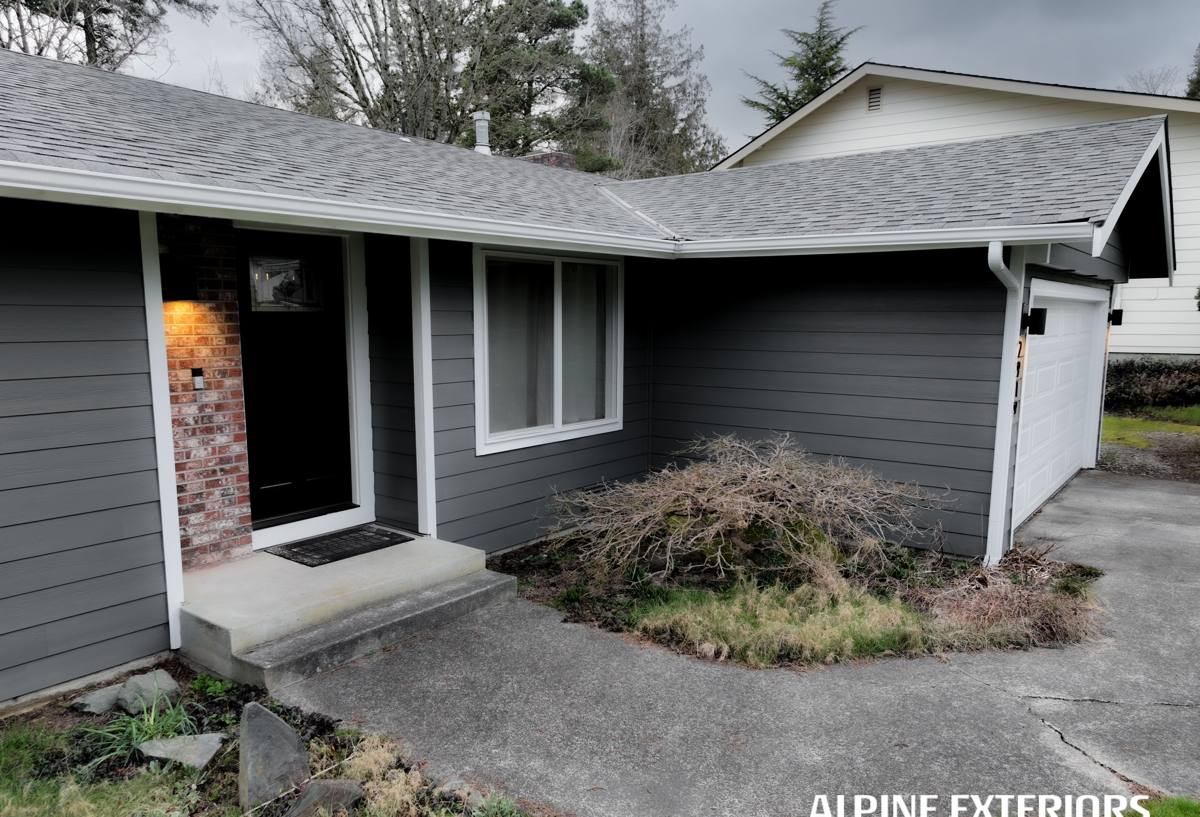
How This Climate Shows Up on Your Siding
Salt Air and Corrosion
Proximity to salt water accelerates the breakdown of fasteners, trim metal, and any siding product that relies on paint film integrity to stay protected. Once that film is compromised — by UV, by abrasion, by age — salt air gets underneath and the damage accelerates instead of slowing down.
Driving Rain and Wind-Driven Moisture
Wind off open water doesn't let rain fall straight down. It drives moisture horizontally into lap joints, butt seams, and anywhere trim meets field siding. Products and installation details that work fine in calmer inland areas can fail here simply because the water is coming from a different angle.
Moss, Algae, and Shade
Mature tree cover is common around Whatcom Falls, and it's a mixed blessing. It's part of what makes the area attractive, but it also means siding stays damp longer after every rain, gets less direct sun to dry out, and picks up moss and algae growth that holds moisture against the surface even longer. Siding that can't shed water quickly or resist organic growth ends up carrying that moisture load for months at a stretch.
Signs Your Siding Has Reached the End of Its Service Life
- Soft or spongy spots when you press on the siding, especially near the bottom courses and around window trim
- Paint that's failing faster than the repaint cycle you're used to, or that won't hold at all in certain spots
- Persistent moss or dark staining that comes right back after cleaning
- Visible warping, cupping, or separation at seams and butt joints
- Cracking or splitting, particularly on south- and west-facing walls that take the most sun and wind
- A musty smell or visible damage on interior walls that back up to exterior siding
- Siding that's swollen at the bottom edge — a classic sign of wicking moisture on wood-based products
Any one of these on its own might be a repair. Several of them together, especially on a home that's had multiple owners or an unknown repaint history, usually points to full replacement being the more honest recommendation.
What a Correct Siding Replacement Actually Involves
Tear-Off and What's Underneath
We don't install new siding over old and hope for the best. Full tear-off lets us see the sheathing, framing, and any hidden rot before it's covered up again. In a climate that drives this much moisture, skipping this step just seals a problem behind new material — it doesn't fix it.
Weather-Resistive Barrier and Flashing
The siding itself is only part of the water management system. Correctly lapped weather-resistive barrier, properly integrated flashing at windows, doors, and penetrations, and attention to how water is directed away from the wall assembly matter as much as the siding brand on the outside. This is where a lot of failures actually start, regardless of what product is installed over the top.
Installation to Manufacturer Spec
James Hardie publishes specific fastening patterns, clearances, and caulking guidelines for a reason — their warranty depends on the installation matching that spec, and the product's real-world performance depends on it too. We install to that spec every time, not to whatever's fastest.
Why We Install Only James Hardie Fiber Cement
We don't offer vinyl, LP SmartSide, primed wood, or cedar siding, and that's a deliberate standard, not a limitation on what we're capable of installing. In a climate defined by salt air, wind-driven rain, and extended damp periods under tree cover, we've made the call that fiber cement is the product worth standing behind.
James Hardie siding is non-combustible fiber cement, which matters for fire risk but also for how the material behaves in constant moisture exposure — it doesn't rot, and it isn't a food source for the moss and algae that thrive in shaded, damp conditions the way wood-based products can be. The ColorPlus factory finish is baked on under controlled conditions rather than field-applied, which gives it better adhesion and UV resistance than a job-site paint job, and it's specifically what stands up to the paint-failure problems that salt air and sun exposure cause on other products. Hardie's HZ5 product line is engineered for regions with cold, wet weather cycles like ours, addressing moisture and freeze-thaw performance directly rather than as an afterthought.
We're not saying every other product is worthless everywhere — LP SmartSide and cedar have real uses, and vinyl has its price point. We're saying that for this specific climate, on this specific coastline, we've decided the trade-offs of those products (paint film dependence, moisture sensitivity, maintenance burden, or shorter realistic service life here) aren't ones we're willing to put our name behind. Hardie's transferable warranty and track record in wet coastal climates are why it's the only thing we install.
How Siding Materials Compare in This Climate
| Factor | James Hardie Fiber Cement | Vinyl Siding | Wood / LP SmartSide |
|---|---|---|---|
| Moisture resistance | Non-combustible, doesn't rot or swell | Won't rot, but seams and J-channels can trap water | Engineered wood/wood is vulnerable to swelling and rot if moisture gets past the finish |
| Performance in wind-driven rain | Rigid, holds tight seams with correct install | Can rattle, warp, or bow under wind and heat cycling | Seams and cut edges are the weak point for water intrusion |
| Resistance to moss/algae staining | Factory finish resists organic growth better than field-painted surfaces | Doesn't feed growth, but staining sits on the surface and is hard to fully clean | Wood fiber content can support moss/algae growth in constant shade |
| Finish durability near salt air | Baked-on ColorPlus finish, warrantied against fading and peeling | Color is throughout the material but can chalk and fade over time | Field-applied paint/primer fails faster under UV and salt exposure |
| Typical service life here | Decades when installed to spec | Long-lived but prone to cracking/warping in temperature swings | Shorter realistic lifespan in constant damp/shade conditions |
Our Process, Start to Finish
- On-site evaluation: We walk the exterior, check current siding condition, and look for signs of hidden moisture damage before quoting anything.
- Honest scope and estimate: You get a clear breakdown of what's included — tear-off, sheathing repair if needed, weather barrier, flashing, and the Hardie product line and color.
- Scheduling around the weather: We plan installation windows with this area's rain patterns in mind so the wall assembly isn't left exposed longer than necessary.
- Tear-off and inspection: Old siding comes off, sheathing gets inspected and repaired as needed, and we address anything we find before it's covered.
- Weather barrier and flashing installation: This step gets done to spec, not rushed, because it's the layer doing the real water management work.
- James Hardie installation: Fastening, clearances, and joint treatment follow manufacturer specification to keep the product warranty intact.
- Final walkthrough: We go over the finished job with you before calling it done.
What Drives Cost on a Whatcom Falls Siding Job
- Extent of hidden sheathing or framing damage found during tear-off
- Home size, wall height, and complexity of the roofline and trim details
- James Hardie product line and profile selected (lap siding, shingle-style panels, board-and-batten)
- Access and site conditions — slopes, mature landscaping, and tight setbacks affect labor
- Amount of trim, fascia, and flashing replacement bundled into the project
- Whether painting or ColorPlus factory finish is used (ColorPlus removes the future repaint cycle from your maintenance list)
We walk through these factors with you during the estimate so there aren't surprises once work starts — and so you understand exactly why the number is what it is.
Why It Matters That We Already Work in Whatcom Falls
A crew that already works this part of Whatcom County knows what this coastline does to a house before the first board comes off. We're not learning the local climate on your project — we've seen how salt air, wind-driven rain, and long stretches of shaded dampness play out on homes nearby, and we bring that into how we scope and install every job. That includes knowing which details around flashing and drainage are worth extra attention in this specific setting, and which corners other crews sometimes cut that don't hold up here.
Local presence also means straightforward accountability — permitting, follow-up, and warranty support from a crew that isn't driving in from out of the area for a one-time job.
If your Whatcom Falls home is showing signs of siding failure, or you'd rather replace it proactively than wait for moisture damage to spread, we're glad to take a look. Reach out for a free, no-pressure estimate using the form below — we'll give you a straight assessment of your siding's condition and what we'd recommend.