 Glenhaven Siding
 Building Decks That Hold Up in Silver Beach
Silver Beach sits close enough to the water that homes here deal with a different set of stresses than decks built further inland. Salt-laden air, wind-driven rain off the water, and a long stretch of gray, damp months that favor moss and algae growth all work against a deck day after day. A composite deck installed here needs to be planned and built with those specific conditions in mind, not just dropped in using a generic approach that might work fine in a drier part of Whatcom County.
We've built and repaired decks throughout the Glenhaven area long enough to know which details matter in a neighborhood like Silver Beach and which ones are just upsells. This page walks through what a composite deck actually needs to survive here, what a correct installation involves, and how we approach the job from first visit to final walkthrough.
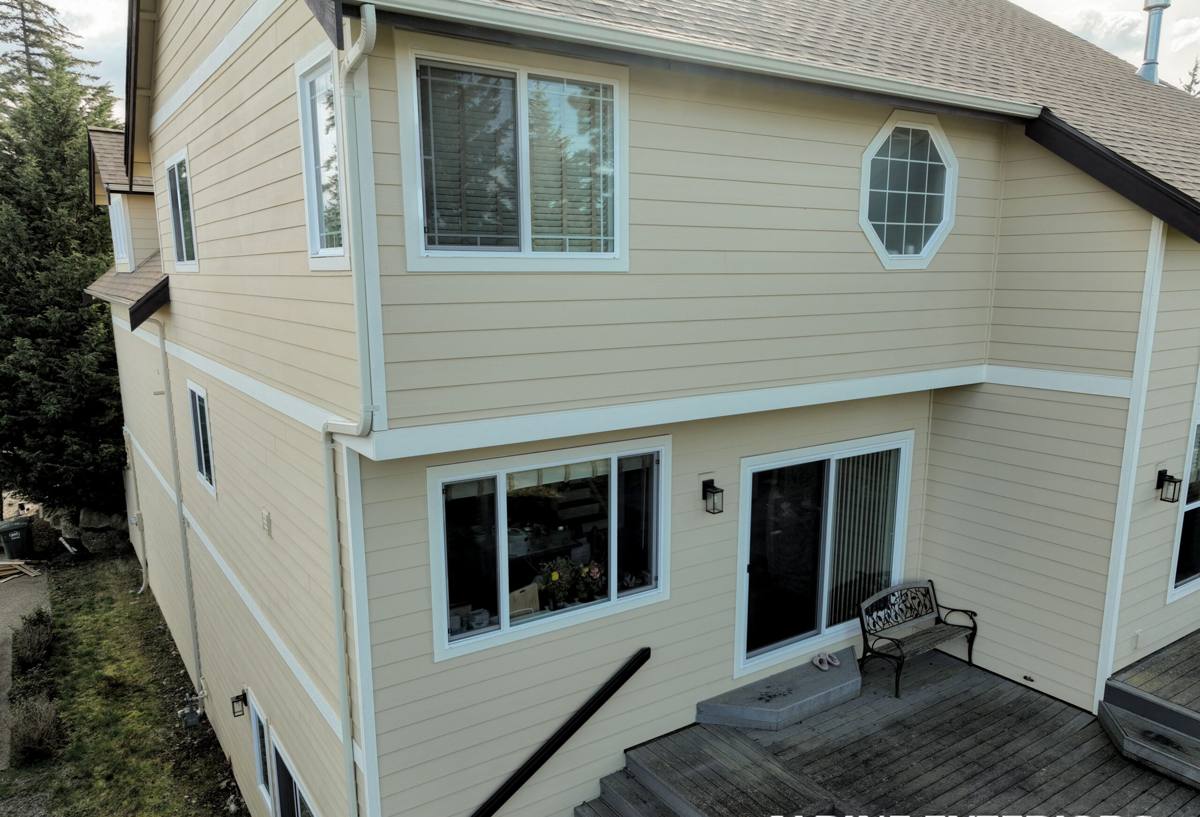
What Silver Beach's Climate Does to a Deck
Salt Air and Metal Fatigue
Proximity to salt water accelerates corrosion on anything metal — fasteners, joist hangers, railing brackets, and structural screws. A deck that looks fine on the surface can have hardware quietly failing underneath if the wrong grade of fastener was used. This is one of the most common shortcuts we see on older or poorly built decks in coastal-adjacent neighborhoods, and it's invisible until something gives way.
Driving Rain and Moisture Intrusion
Rain that comes in sideways during a storm doesn't just fall on the deck surface — it gets pushed into seams, around post bases, and behind ledger boards where the deck attaches to the house. Standing water and trapped moisture are the enemy of any deck structure, composite decking included, because the framing underneath is still typically wood and needs to be able to drain and dry.
Moss, Algae, and a Long Damp Season
Whatcom County's wet season stretches long, and a shaded or partially shaded deck near Silver Beach can stay damp for weeks at a time. That's exactly the environment moss and algae need to take hold. On a wood deck this means ongoing scrubbing, staining, and slip hazards. Composite decking handles this dramatically better than wood, but board selection, ventilation underneath the deck, and surface texture still affect how much moss pressure a given deck will face over the years.
Why Composite Decking Makes Sense Here
Composite decking was developed largely to solve the problems wood decks have with moisture, rot, and surface maintenance — which makes it a strong fit for a location like Silver Beach. It doesn't absorb water the way wood does, it won't splinter or cup from repeated wet-dry cycles, and it resists the kind of surface staining that algae and organic debris cause on wood fibers.
That said, composite decking is not maintenance-free, and we don't sell it that way. It still needs periodic cleaning to stay ahead of algae film in shaded, damp spots, and the substructure underneath still needs to be built correctly — proper flashing, proper drainage, and hardware rated for the environment. A composite deck is only as good as the frame it's sitting on.
What "Correct" Looks Like Underneath the Boards
- Ledger board properly flashed and sealed where it meets the house, so water is directed away from the structure rather than trapped against it
- Stainless steel or coated, corrosion-rated fasteners and joist hangers throughout — not standard galvanized hardware that degrades faster in salt air
- Joist spacing that matches the composite manufacturer's specification, which is often tighter than typical wood-decking spacing
- Adequate ventilation and clearance underneath the deck so air can move and moisture doesn't sit against the framing
- Proper post footings set below frost depth and sized for the soil conditions on the specific lot
- Hidden fastener systems or manufacturer-approved screws installed at the correct spacing to prevent board movement and gapping over time
Choosing the Right Composite Product for a Coastal-Adjacent Lot
Not all composite decking is built the same way, and the differences matter more in an environment like Silver Beach than they would in a drier, more sheltered yard. The main things we walk homeowners through are the capping type, the core material, and how the board handles moisture at the cut ends and fastener points.
| Feature | Why It Matters in Silver Beach |
|---|---|
| Fully capped boards (cap on all four sides) | Blocks moisture absorption at cut ends and edges, which matters more where humidity and rainfall are both high |
| Textured, low-sheen surface finish | Reduces slip risk when the deck stays damp for extended periods and helps hide surface film between cleanings |
| Mold and algae resistance rating | Some composite lines are formulated specifically to resist organic growth — worth prioritizing over color or price alone here |
| Manufacturer warranty on staining/fading | Salt air and UV exposure both accelerate wear; a stronger warranty reflects a product built for tougher conditions |
| Board color (lighter vs. darker tones) | Darker boards show less algae discoloration short-term but run hotter and can highlight surface film differently than lighter tones |
We don't push one brand as the only option. What we do insist on is matching the product to the site conditions — a deck facing prevailing wind and rain off the water gets a different recommendation than one tucked under an overhang.
Our Process for a Silver Beach Composite Deck
1. On-Site Assessment
We walk the lot in person before quoting anything. That means checking sun and shade exposure, wind exposure, existing drainage patterns, and — if it's a replacement — the condition of the current structure underneath. A deck tucked against tree cover behaves very differently than one fully exposed to the water side of a property, even within the same neighborhood.
2. Structural Plan and Permitting
We size footings, framing, and hardware to the actual conditions of the site rather than defaulting to minimum code. Where a permit is required for the scope of work, we handle that as part of the project rather than leaving it to the homeowner to sort out.
3. Framing Built for the Environment
This is where most of the long-term durability of a composite deck actually comes from. Correct flashing, corrosion-resistant hardware, and proper drainage underneath the deck matter more than the decking material choice itself when it comes to avoiding future structural problems.
4. Composite Installation
Boards are installed to the manufacturer's specified fastener pattern and expansion gaps, which is what keeps a composite deck looking flat and tight for years instead of developing waves, gaps, or squeaks. Cut ends are treated or capped where the manufacturer requires it, particularly important near a shoreline environment.
5. Final Walkthrough
We go over care and cleaning expectations before we leave, including what to watch for in shaded areas prone to moss and algae, so there are no surprises in year two or three.
What to Ask Before Hiring Anyone for This Kind of Job
Because so much of a deck's long-term performance depends on what's hidden underneath the boards, it's worth being direct with any contractor bidding the job. A homeowner who asks the right questions upfront avoids most of the problems that show up later.
- What fastener and hardware grade are you using, and is it rated for coastal or high-moisture environments?
- How will the ledger board be flashed where it meets the house?
- What's the plan for drainage and airflow underneath the deck?
- Are you installing to the composite manufacturer's specified joist spacing, or a generic wood-decking spacing?
- What does the manufacturer's warranty actually cover, and does your installation meet the requirements to keep that warranty valid?
- Have you built decks in this specific area before, and do you understand how the local climate factors in?
A contractor who already works Silver Beach regularly should be able to answer these without hesitation, because they've seen firsthand what happens when a deck is built without accounting for salt air, driving rain, and a long moss season.
Common Problems We See on Existing Decks in This Area
When we're called out to inspect or repair an existing deck near Silver Beach, a handful of issues come up repeatedly:
- Corroded fasteners and joist hangers that were never rated for the environment, leading to loose or unstable framing
- Ledger board rot from missing or failed flashing at the house connection
- Persistent moss and algae buildup in shaded corners where airflow underneath the deck is blocked
- Board gapping or buckling from incorrect fastener spacing during the original installation
- Undersized or shallow footings that have shifted over time in wet soil conditions
Most of these are avoidable with correct planning at the outset, which is a large part of why we spend more time on the structural side of a deck project than on the decking material selection alone.
Maintenance Realities for a Composite Deck Here
Composite decking cuts down on maintenance significantly compared to wood, but "low maintenance" doesn't mean "no maintenance," especially in a damp, salt-influenced environment. A realistic maintenance routine for a Silver Beach composite deck includes periodic washing to remove pollen, salt residue, and organic film before it has a chance to establish, particularly in shaded areas. Gutters and downspouts near the deck should be checked to make sure they're not dumping extra water onto the deck surface or framing. Furniture and planters should be moved periodically so moisture and debris don't sit trapped underneath them for weeks at a time.
None of this is heavy labor, but skipping it entirely in an environment like this one will shorten how long the deck looks and performs its best, even with a quality composite product.
Get a Straight-Answer Estimate
If you're weighing a new composite deck or replacing an aging one near Silver Beach, we're happy to walk the property, look at what you're working with, and give you a clear picture of what the job actually involves — no pressure, no inflated recommendations. Reach out using the form below for a free estimate.