 Glenhaven Siding
 Siding in Silver Beach Has to Deal With More Than Most Neighborhoods
Silver Beach sits close enough to the water that homes here take on a different kind of weather load than siding a few miles inland has to handle. Salt-laden air works on fasteners, caulk joints, and paint film year-round. Driving rain off the water pushes moisture sideways into laps and trim, not just straight down. And the long, wet, low-sun stretch of the Pacific Northwest calendar gives moss and algae months at a time to take hold on anything that stays damp and shaded. None of that is unique to any one street or lot in Silver Beach — it's the general character of the area — but it's real enough that siding chosen and installed without it in mind tends to show problems early: swelling seams, peeling paint, streaked and fuzzy growth on north-facing walls, and soft spots where water has been sitting behind the cladding instead of running off it.
This page is about one job in one place: installing James Hardie fiber cement siding on homes in and around Silver Beach. Not a general overview of siding — what this specific climate demands, what a correct installation actually involves, and why the crew doing the work matters as much as the material itself.
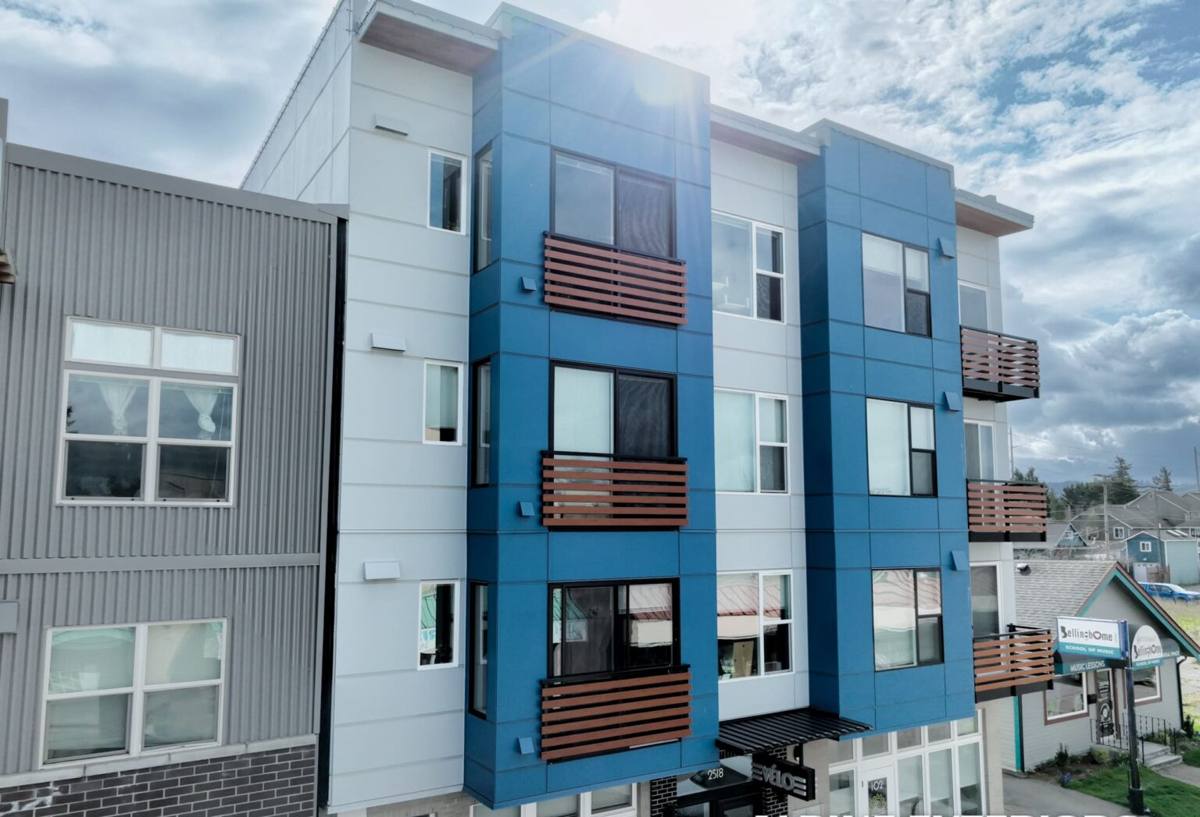
What Salt Air, Driving Rain, and Moss Season Actually Do to a Wall
Salt air
Airborne salt is corrosive to exposed metal — nail heads, flashing, trim fasteners — and it accelerates the breakdown of lower-grade paint films faster than inland exposure does. Over years, that shows up as rust bleed staining, chalking finishes, and fasteners that back out or fail before the siding itself is anywhere near worn out.
Driving rain
Wind off the water doesn't let rain fall straight down — it drives it sideways and up under laps, around window and door trim, and into any gap that wasn't properly flashed or caulked. Siding systems that rely on face-sealing alone (rather than a drainage plane behind the cladding) are more exposed to this kind of wind-driven intrusion than systems installed with a proper water-resistive barrier and rain-screen detailing.
Moss and algae season
Whatcom County's wet season runs long, and shaded, north- and west-facing walls in a tree-lined neighborhood like Silver Beach stay damp for extended stretches. Organic materials and porous or poorly-sealed surfaces give moss and algae something to grip. Once established, that growth holds moisture against the wall even longer, which compounds every other problem on this list.
Individually, each of these is manageable. Together, over a Whatcom County winter after winter, they punish siding materials and installation shortcuts that would hold up fine somewhere drier and calmer.
Why We Only Install James Hardie Fiber Cement
We don't install vinyl, LP SmartSide, Cemplank, Allura, primed spruce, or cedar. That's a deliberate standard, not a sales pitch. Cedar and primed wood need ongoing paint and caulk maintenance to keep water out, and in a climate that stays wet as long as this one does, that maintenance window shrinks. Vinyl can warp and fade, and its seams and channels give moss and grime places to collect. Engineered wood products like LP SmartSide perform well when kept dry and maintained, but wood-based substrates are inherently more moisture-sensitive than a cement-based product, which matters directly here given how much moisture this area sees.
James Hardie fiber cement is cement, sand, and cellulose fiber — non-combustible, dimensionally stable, and engineered specifically for wet coastal and marine-influenced climates through its HZ5 product line, which the Pacific Northwest falls into. It doesn't rot, it resists moisture-driven swelling far better than wood-based sidings, and its factory-applied ColorPlus finish is baked on and warranted against fading and peeling in a way field-applied paint isn't. That's the specific reason it's what we put on homes in Silver Beach.
What a Correct Fiber Cement Installation Involves Here
Fiber cement siding is only as good as the installation behind it. A rushed or generic install can leave a Hardie product just as vulnerable to driving rain and moss as a cheaper material would be. In this climate, a few details matter more than usual.
Water management behind the cladding
A weather-resistive barrier and properly lapped, shingled flashing at every window, door, and penetration comes first — the siding itself is the second line of defense, not the only one. Where conditions call for it, a rain-screen gap gives any moisture that does get past the cladding a path to drain and dry instead of sitting against the wall.
Clearances and fastening
Hardie's own installation specs call for clearance between siding and grade, roofing, decks, and other horizontal surfaces so water and splash-back don't sit against the bottom edge of the boards. Fasteners need to be corrosion-resistant and set to Hardie's specified pattern and depth — over-driven or under-driven nails are one of the most common causes of early paint film failure and water intrusion on fiber cement jobs.
Caulking and sealant joints
Every joint, seam, and trim intersection needs the right sealant, applied correctly, not just a bead run down a gap. In a driving-rain environment, a failed caulk joint is a direct path for water behind the wall assembly.
Cuts, coating, and touch-up
Factory-primed or ColorPlus-coated edges that get field-cut need to be sealed and touched up per manufacturer spec so bare, uncoated fiber cement isn't left exposed to the weather at every cut end.
Choosing the Right Product Line and Finish
James Hardie makes several siding profiles and two finish options, and the right combination for a Silver Beach home comes down to exposure, style, and how much of the upkeep the homeowner wants to hand off to a factory finish versus a field-painted one.
| Factor | ColorPlus Factory Finish | Primed for Field Paint |
|---|---|---|
| Finish warranty | Backed by Hardie's ColorPlus finish warranty | Relies on the paint product and applicator, not Hardie |
| Performance in salt air / driving rain | Baked-on finish holds up well against coastal exposure | Field paint quality varies; more prone to early wear in harsh exposure |
| Color changes down the road | Limited to the ColorPlus palette | Any color, any time, but requires repainting |
| Maintenance | Wash as needed; no repainting cycle | Standard exterior repaint cycle applies |
For most homes in this area, ColorPlus is the stronger long-term match given how much weather the finish has to withstand. Primed boards still make sense for homeowners who want a specific custom color or plan to match existing trim precisely.
How the Job Works, Start to Finish
1. On-site assessment
We look at the existing siding and sheathing condition, wall exposures (especially the sides that take the worst of the wind and rain), trim and window details, and any existing moss or moisture staining before pricing anything.
2. Product and finish selection
We walk through Hardie profiles, textures, and ColorPlus color options against the home's exposure and the homeowner's preferences.
3. Tear-off and sheathing check
Old siding comes off and the sheathing underneath gets inspected for hidden rot or water damage before anything new goes on — no covering up an existing problem.
4. Weather barrier and flashing
Water-resistive barrier, flashing, and rain-screen detailing (where called for) go in before a single piece of siding is hung.
5. Installation to manufacturer spec
Fastening, clearances, and joint treatment follow Hardie's published installation requirements — this is also what keeps the manufacturer's product warranty intact.
6. Final walkthrough
We review the finished job with the homeowner, including care and cleaning guidance specific to this climate.
Keeping Moss and Salt Buildup From Getting a Foothold
Even correctly installed fiber cement benefits from a little seasonal attention in a climate like this one. A simple homeowner checklist:
- Rinse siding with a garden hose or low-pressure wash once or twice a year, focused on shaded and north-facing walls where moss establishes first
- Keep gutters clear so overflow isn't running down the face of the siding
- Trim back trees and shrubs that keep a wall shaded and damp longer than it needs to be
- Check caulk joints around windows, doors, and trim annually for cracking or gaps
- Watch for any soft spots, staining, or bubbling paint, which can signal moisture getting behind the siding rather than running off it
- Avoid high-pressure washing directly into seams and laps, which can force water behind the cladding instead of removing surface growth
Why It Matters That We Already Work in Silver Beach
Installing siding correctly in a driving-rain, salt-air, long-moss-season environment isn't the same job as installing it somewhere drier and more sheltered. A crew that already works Silver Beach and the surrounding Glenhaven area knows which walls on a given lot typically take the worst wind-driven rain, how much clearance actually holds up against local grade and drainage patterns, and what a normal amount of seasonal moss looks like versus a sign that water is getting behind the wall. That familiarity shows up in the flashing details, the fastening, and the sealant work — the parts of the job that aren't visible once it's finished but determine how the siding performs ten and twenty years out.
If you're weighing a re-side or planning ahead for one, we're happy to walk your home, look at what your walls are actually dealing with, and put together a straightforward, no-pressure estimate for a correctly installed James Hardie fiber cement job. There's a form below to get that started.