 Glenhaven Siding
 Why Lake Whatcom Roofs Take a Different Kind of Beating
Homes around Glenhaven and the Lake Whatcom shoreline deal with a roofing environment that's tougher than it looks from the ground. Storms coming through Whatcom County often push wind straight down the lake corridor, gaining speed as it funnels between the ridgelines. That wind carries driving rain that doesn't just fall on a roof — it drives sideways and up under shingle edges, flashing laps, and ridge caps that would stay dry in a calmer storm.
Add in the marine air that moves inland from Bellingham Bay and the Sound during bigger weather systems, and you get a slow, steady corrosion effect on exposed fasteners, flashing, and metal roof edges over the years. Mix that with the heavy tree canopy that shades most lakefront and hillside lots here, and you get a roof that stays damp longer after every storm than a roof out in the open would. That combination — wind-driven rain, salt-tinged air, and shade that never quite lets a roof dry out — is exactly why moss season around Lake Whatcom runs long, and why storm damage here tends to be more about slow water intrusion than dramatic blow-offs.
A roof that's already carrying a moss mat or holding moisture under its shingles is far more vulnerable when a real storm hits. Understanding that local pattern is the difference between a repair that lasts and one that's patched over a problem that keeps growing underneath.
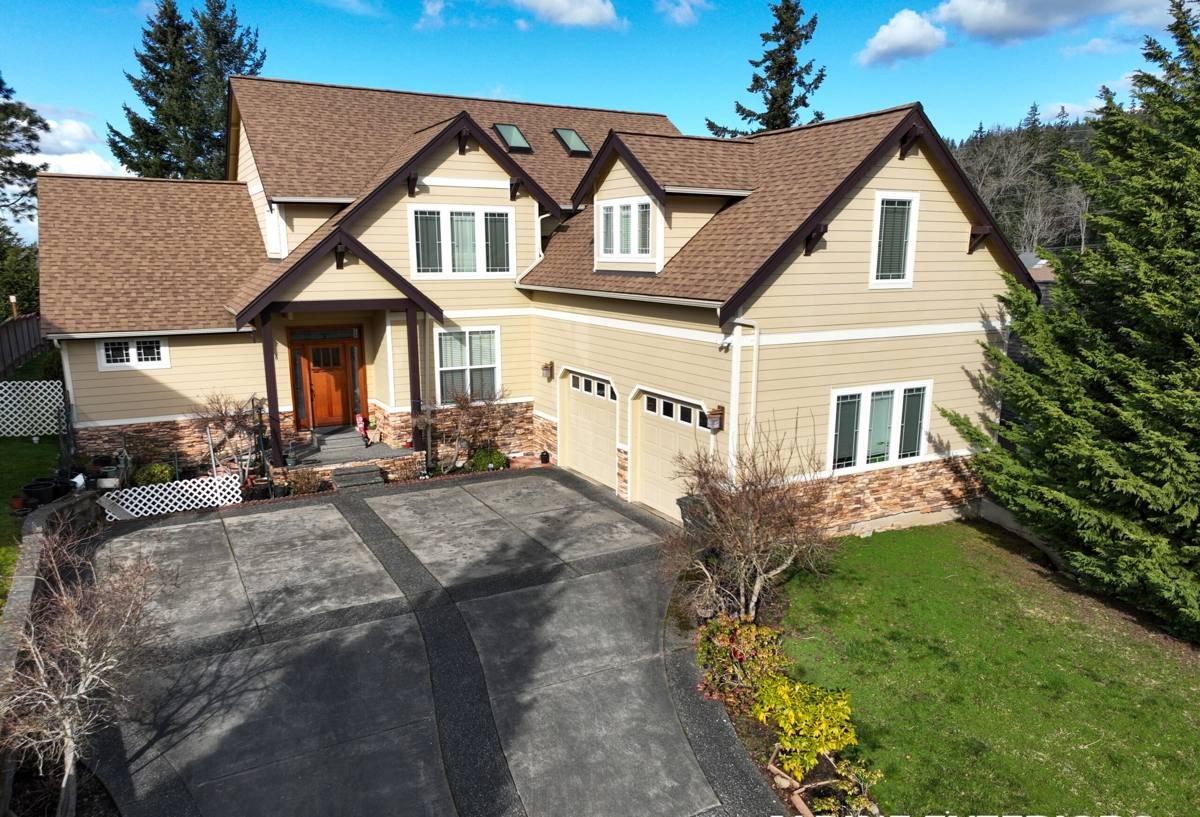
What Actually Counts as Storm Damage
Not every roof problem after a storm is storm damage, and knowing the difference matters for both the repair plan and any insurance claim. We look at three categories on every inspection.
Wind Damage
Lifted, creased, or missing shingles along ridges, hips, and roof edges — the areas that take the brunt of wind uplift. Wind damage often shows up as shingles that are still in place but no longer sealed down, which means they'll leak on the next rain even though the roof "looks fine" from the driveway.
Impact Damage
Branches and limbs coming down off the mature trees that shade most properties in this area are the most common impact damage we see locally, more so than hail. Impact can crack shingles, dent metal flashing, or punch straight through decking depending on the size of the limb and the age of the roofing underneath it.
Water Intrusion
This is the one homeowners miss most. Wind-driven rain doesn't need a hole to get in — it can work its way under a lifted shingle tab, around a chimney or vent flashing, or through a seam that was already compromised by moss growth. The damage shows up later as a stain on a ceiling, not as anything visible on the roof itself.
The Damage That's Easy to Miss From the Ground
Most storm calls we get start with something obvious — a shingle in the yard, a branch on the roof, a new drip inside the house. But the damage that costs homeowners the most is usually the damage nobody sees right away. A section of underlayment that got wet during the storm can stay damp for weeks under intact shingles, especially on the shaded, north-facing slopes common on lake and hillside lots. Fastener heads that back out slightly during high wind won't leak immediately, but they will the next time rain comes in from a different direction.
This is why we don't just look at the spot the homeowner points to. A proper storm inspection covers the whole roof plane, the flashing details, and the attic side if it's accessible, because storm damage rarely stays contained to one shingle.
Our Storm Damage Repair Process
1. Stop the Bleeding
If a storm has left your roof open to the weather, the first priority is a temporary tarp or seal to stop additional water from getting into the decking and insulation. This buys time to do the repair right instead of rushing it.
2. Full Roof Inspection
We walk the roof (weather permitting) and check every plane, not just the damaged area — flashing, vents, valleys, and the moss and debris load that's typically built up in the shaded sections. On steeper or wet roofs we use ladder and safety-line access rather than guessing from the ground.
3. Targeted Repair
Where a section can be properly repaired — matching shingles, resealing flashing, replacing damaged decking — we do that instead of pushing for a full replacement. A patch that's tied in correctly, with proper underlayment overlap and sealed fasteners, holds up fine and costs a fraction of a full re-roof.
4. Documentation
We photograph the damage and the completed repair, which is useful both for your own records and for any insurance claim tied to the storm event.
Repair or Replace? How We Decide
Not every storm-damaged roof needs to come off. The honest answer depends on the roof's age, how widespread the damage is, and what condition the rest of the roofing system is in underneath the visible layer.
| Factor | Leans Toward Repair | Leans Toward Replacement |
|---|---|---|
| Roof age | Under 12-15 years, still within expected shingle life | Near or past manufacturer's expected lifespan |
| Damage spread | Isolated to one slope or a small section | Multiple planes affected, or damage found on inspection beyond the storm area |
| Underlayment condition | Dry, intact where exposed during repair | Saturated, deteriorated, or missing in multiple spots |
| Moss and moisture history | Minor buildup, roof has been maintained | Heavy moss mat, signs of long-term trapped moisture |
| Decking condition | Solid when checked at repair points | Soft, delaminating, or showing rot at multiple points |
We'll always tell you plainly which side of that table your roof lands on, and why — including when a repair is the right call even if replacement would be the bigger job for us.
Materials and Methods for a Repair That Actually Lasts
A storm repair is only as good as what's underneath the new shingles. For every repair we tie into the existing roofing system with underlayment that overlaps correctly into the surrounding dry sections, not just butted against it. Flashing gets resealed or replaced rather than caulked over, since caulk is a short-term fix on a long-term problem. Where moss has undermined a section, we clear it back and address the moisture source, not just the cosmetic buildup, because resealing over a wet mat just traps the problem.
Matching shingles is straightforward when the existing roof is a common style and reasonably current; on older roofs where the exact product is no longer made, we'll talk through the closest match and set honest expectations about a visible color or texture difference in a small repaired section versus the cost of a full replacement to make it uniform.
Why It Matters to Hire a Crew That Already Works Lake Whatcom
Lake and hillside properties around Glenhaven come with access challenges a crew that mostly works flat suburban roofs isn't used to planning for — narrow, winding roads down to the water, steep driveways, limited staging space on smaller lakefront lots, and mature tree canopy that has to be worked around rather than through. Knowing that going in changes how we schedule equipment, where we stage materials, and how long a job realistically takes.
It also means we've already seen how this specific microclimate treats roofs over time — which slopes hold moss longest, which flashing details tend to fail first under wind-driven rain off the lake, and which repairs hold up versus which ones come back in two years. That local pattern recognition is worth more than a generic storm-repair checklist.
Working With Your Insurance Claim
Most storm damage repairs around here involve an insurance claim, and the process goes smoother when the documentation is solid from the start. We can provide photos and a written scope of the damage and the repair for your adjuster, and we'll point out anything we find that should be included in the claim — but we don't inflate a scope or claim damage that isn't there. An honest, well-documented repair estimate holds up better under adjuster review than an exaggerated one, and it's simply the right way to do this work.
Storm Damage Checklist for Homeowners
After a storm passes through, here's what's worth checking or having checked before the next rain arrives:
- Look for shingles in the yard, gutters, or on the ground near the house
- Check gutters and downspouts for granule buildup, which can indicate shingle wear or damage
- Note any new ceiling stains, even faint ones, and when they first appeared
- Look for visibly lifted or missing shingles along ridges and roof edges from ground level
- Check for fallen branches or limbs resting on or near the roofline
- Photograph anything visible before cleanup, for your own records and any insurance claim
- Avoid climbing onto a wet or storm-damaged roof yourself — leave the inspection to a crew with proper safety gear
If you're seeing any of these signs on a Lake Whatcom-area home, it's worth getting a professional look before minor damage turns into a bigger repair. We offer free, no-pressure estimates — use the form below to get one scheduled.