 Glenhaven Siding
 Roofing in Sudden Valley Takes More Than a Standard Install
Sudden Valley sits in a pocket of Whatcom County where tree cover, lake-effect moisture, and the county's broader marine climate all combine to put extra stress on a roof. Homes here often sit under a fuller tree canopy than roofs closer to open town lots, which means more shade, slower drying, and more organic debris landing on the shingle field year-round. An asphalt shingle roof that would hold up fine in a drier, more exposed part of the state can start showing problems early here if it wasn't installed with this specific setting in mind.
That's the gap we work to close. Asphalt shingle roofing is still one of the most practical, cost-effective roofing choices for this region — but only when the underlayment, ventilation, flashing, and shingle class are all matched to what a shaded, moisture-heavy lot actually demands, not just to a generic spec sheet.
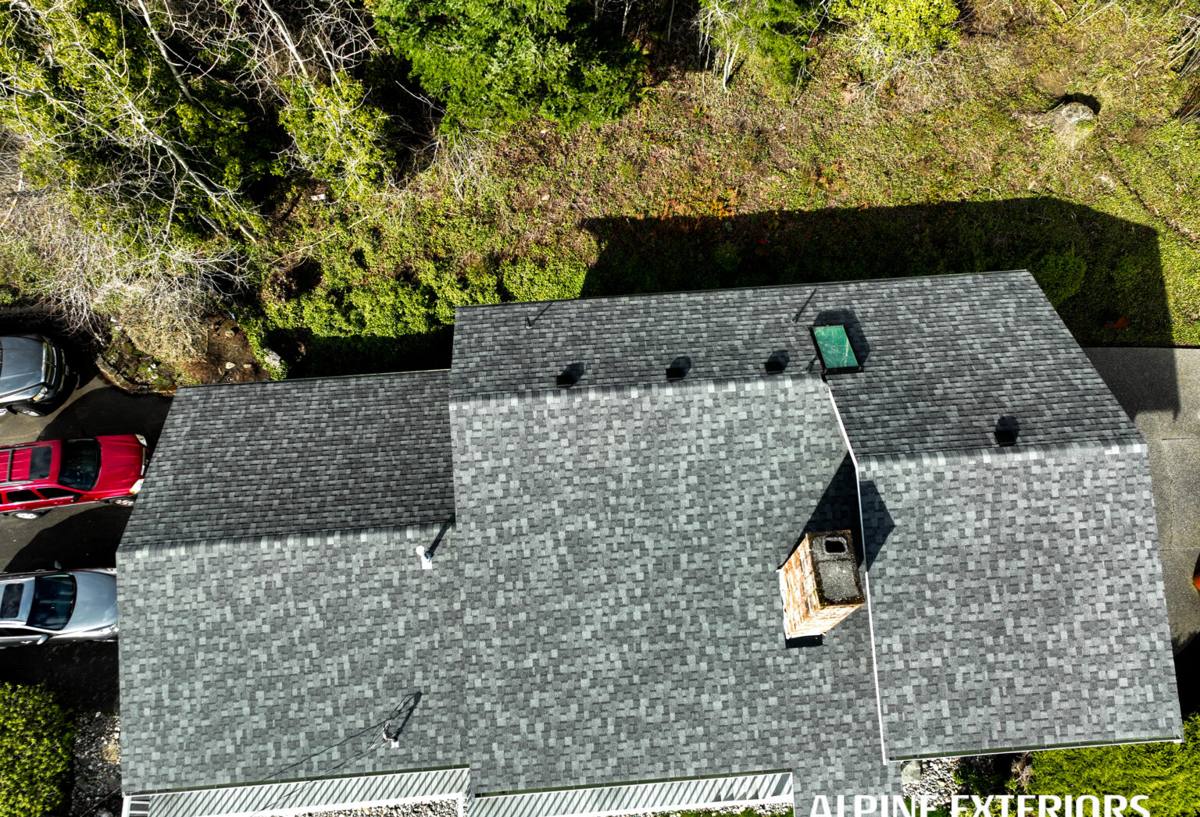
What This Climate Does to a Shingle Roof
Whatcom County's marine climate brings salt-tinged air, long stretches of driving rain, and a moss season that can run more than half the year in shaded spots. On a Sudden Valley roof, that plays out in a few predictable ways:
- Moss and algae take hold faster under tree cover where shingles stay damp longer between storms.
- Granule loss accelerates once moss roots start lifting shingle edges and holding water against the mat.
- Wind-driven rain finds gaps at valleys, chimney flashing, and roof-to-wall transitions that a fair-weather install might get away with elsewhere.
- Needle and leaf litter clogs valleys and gutters, backing water up under the shingle courses above.
- Freeze-thaw cycles, while less severe here than in the mountains, still stress cracked or moss-lifted shingles during cold snaps.
None of this means asphalt shingles are the wrong choice for Sudden Valley — they're not. It means the install and the maintenance plan both need to account for shade and moisture from day one.
Signs Your Roof Needs a Closer Look
Most asphalt shingle failures we find in this area don't happen suddenly. They build slowly, often hidden by tree cover from the ground. Worth checking for, or having checked, on a regular basis:
- Dark streaking or green-black patches, especially on north-facing slopes
- Moss clumps at the shingle edges or in the valleys
- Granules collecting in gutters or at downspout outlets
- Curling, cupping, or cracked shingle tabs
- Soft or discolored ceiling spots inside the home, particularly after a heavy rain
- Visible daylight or gaps at flashing points from the attic
Catching these early is almost always cheaper than waiting. A roof with isolated moss and a few damaged shingles is a maintenance job. The same roof left two more seasons can turn into a deck-level repair or a full tear-off.
What a Correct Asphalt Shingle Install Looks Like Here
Deck and Underlayment
We inspect the roof deck for soft spots or rot before anything goes down — a common find on older Sudden Valley homes where slow leaks have gone unnoticed under moss. Any compromised sheathing gets replaced, not covered over. From there, we use a synthetic underlayment rated for this climate, with self-adhered ice-and-water membrane at the eaves, valleys, and any low-slope transitions where wind-driven rain is most likely to work its way under the shingle field.
Flashing
Flashing failures, not shingle failures, cause most of the leaks we get called out for. Chimneys, skylights, sidewalls, and roof-to-wall intersections all get new step, counter, or apron flashing as part of a proper install — reused or patched flashing is a shortcut we don't take on a full roof.
Ventilation
A shaded, damp lot needs a roof that can actually dry out between rain events. Balanced intake and exhaust ventilation keeps the underside of the deck from staying damp, which protects both the shingles and the wood structure underneath, and helps keep the attic from running warm and speeding up moss regrowth on the shingle surface above it.
Shingle Installation
Proper nailing pattern and placement, correct exposure, and starter/ridge details done to the manufacturer's specification — this is what actually earns the warranty, not just the shingle brand printed on the wrapper. We follow manufacturer installation requirements closely because it's the difference between a roof that performs for its full rated life and one that develops problems in year eight or nine.
Repair, Re-Roof, or Full Tear-Off?
Not every roof problem needs a full replacement, and not every roof is worth patching further. The right call depends on the roof's age, how much of it is affected, and what condition the deck is in underneath.
| Situation | Likely Fit | Why |
|---|---|---|
| Isolated moss, a handful of damaged shingles, roof under 15 years old | Targeted repair + cleaning | Deck and underlayment are still sound; the damage is localized |
| Widespread granule loss, multiple soft spots, roof 20+ years old | Full tear-off and replacement | Patching won't address deck-level moisture or underlayment past its service life |
| One or two leak points, otherwise solid roof | Flashing repair | Leaks are frequently a flashing failure, not a shingle-field failure |
| Heavy, persistent moss returning yearly despite cleaning | Re-roof with ventilation upgrade | Recurring moss usually points to a ventilation or shade problem the old roof was never built to handle |
We'll always tell you honestly which category your roof falls into, including when a repair is the smarter money — a roof doesn't need to be replaced just because it has a problem somewhere on it.
Choosing the Right Shingle for a Shaded, Damp Lot
Not all asphalt shingles perform the same way under tree cover. For Sudden Valley homes, we generally steer clients toward:
- Algae-resistant (AR) shingles — copper- or zinc-infused granules that slow algae and moss growth, a meaningful upgrade on shaded roofs
- Laminated architectural shingles over basic 3-tab — the extra mat thickness holds up better to moss root penetration and handles wind-driven rain more reliably
- Manufacturer-matched ridge vents and starter strips, so the ventilation system and the shingle warranty stay aligned
We don't push a specific brand as the only option — several manufacturers make a comparable algae-resistant architectural shingle, and the right pick often comes down to color availability, warranty terms, and what matches the rest of the neighborhood. What matters more than the label is that the product is rated for this climate and installed to spec.
Maintenance That Actually Extends Roof Life Here
An asphalt shingle roof in Sudden Valley isn't a set-it-and-forget-it system the way it might be in a drier climate. A little regular attention goes a long way:
- Clear valleys, gutters, and downspouts of needle and leaf litter each fall
- Have moss treated and gently removed before it roots into the shingle mat — not pressure-washed, which strips granules
- Trim back overhanging limbs to cut down on shade and debris where it's practical to do so
- Get flashing and penetrations checked every few years, especially after a hard winter
- Address small leaks immediately — deck rot from a slow, unnoticed leak is the most expensive outcome on this kind of lot
Why a Crew That Knows Sudden Valley Matters
A roof crew that mostly works drier, more exposed parts of the state can miss what matters most in a shaded, lake-adjacent setting like this — the moss cycle, the drying time between storms, the ventilation needs of a tree-covered lot. We work throughout Glenhaven and the surrounding Whatcom County communities, and we bring what we've learned on similar roofs to every estimate: what tends to fail first here, what holds up, and where it's worth spending a little more up front to avoid a repeat problem in five years.
That also means straight talk. If your roof needs a repair, we say repair. If it's past the point where patching makes sense, we'll explain why in plain terms, walk you through the deck condition, and give you options rather than a single high-pressure quote.
Questions Worth Asking Before You Hire a Roofer
- Are you licensed and insured to work in Washington, and can you provide proof?
- Will you inspect and document the roof deck condition before quoting a full replacement?
- What underlayment and ice-and-water shield do you use, and where does it go on the roof?
- Is flashing replacement included, or just shingles?
- What ventilation will the finished roof have, and does it match the shingle manufacturer's requirements for warranty coverage?
- Do you offer a written estimate that separates repair options from full replacement?
A contractor who can answer all of these clearly, without hedging, is one worth trusting with a roof over your home.
If you're seeing moss buildup, granule loss, or a leak on a Sudden Valley roof, or you're just due for an honest look at where things stand, we're happy to come take a look. Estimates are free, there's no pressure to sign anything on the spot, and you'll get a straight answer about whether you need a repair or a full replacement — just fill out the form below.