 Glenhaven Siding
 Building Decks for Whatcom Falls Conditions
Whatcom Falls sits close enough to the water and the tree cover that decks here take a different kind of beating than decks in drier parts of the state. Salt-tinged air off the Sound corrodes hardware faster than most homeowners expect, driving rain finds its way into every gap and seam that isn't properly flashed, and the long, damp moss season keeps horizontal surfaces wet for weeks at a stretch. A deck built without those three factors in mind will look fine for a year or two and then start showing problems — soft spots, black streaking, loose fasteners, slippery boards — right when you'd expect it to still be new.
We build and repair decks in and around Glenhaven and Whatcom County, and Whatcom Falls is one of the neighborhoods where we've seen firsthand how the local climate shortens the lifespan of a deck that wasn't built to handle it. This page covers what actually matters for a deck in this specific area: material choices, structural details, drainage, and the maintenance rhythm that keeps a deck sound for decades instead of years.
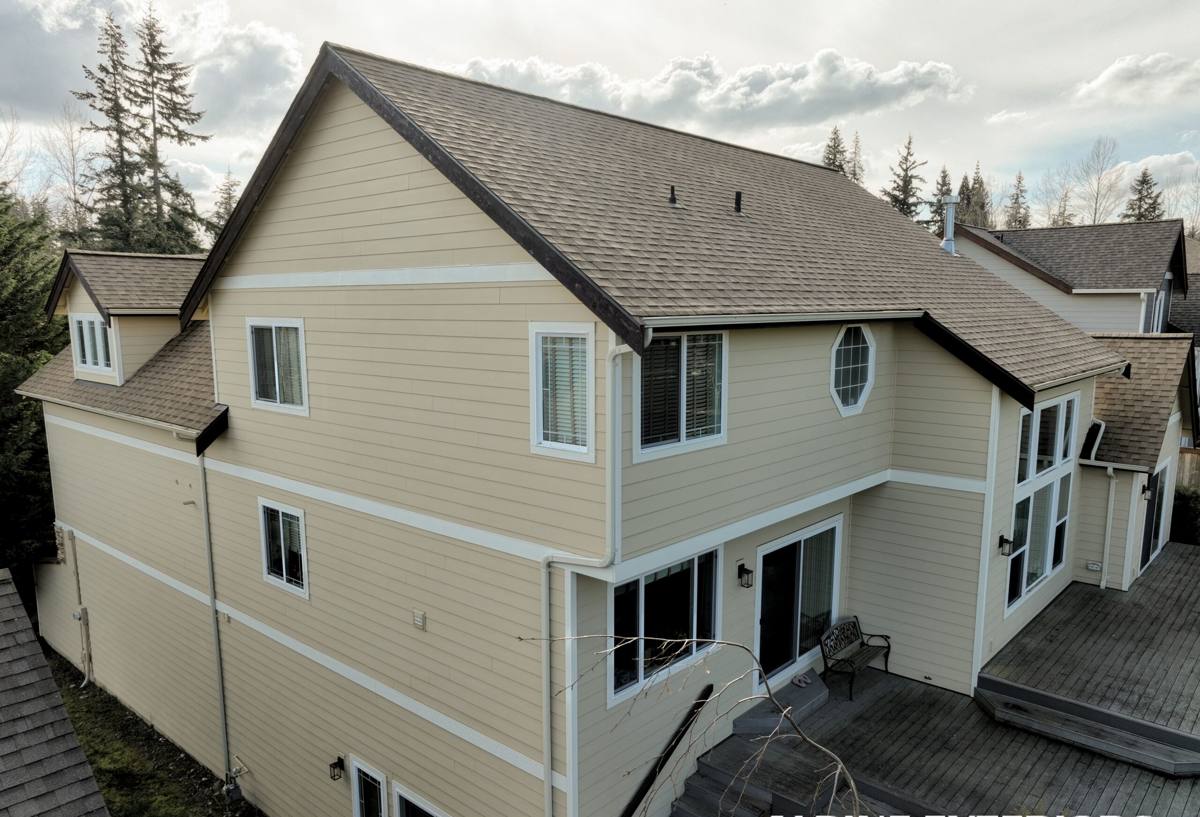
What the Local Climate Does to a Deck
Salt Air and Hardware Corrosion
Even a few miles inland from open water, airborne salt accelerates corrosion on anything metal — nails, screws, joist hangers, bolts, and railing hardware. Standard galvanized fasteners can start rusting within a few seasons in a coastal-influenced climate like this one. Once a fastener rusts, it loses holding strength long before it looks obviously bad, which is part of why deck hardware failures often catch homeowners by surprise.
Driving Rain and Water Intrusion
Whatcom County storms don't just fall straight down — wind-driven rain gets pushed sideways into ledger boards, under railing posts, and into any seam where flashing was skipped or done poorly. Water that gets behind a ledger board or into a post base doesn't dry out quickly in our climate, and that's where rot starts, usually hidden from view until the damage is advanced.
Moss, Algae, and Extended Dampness
Shaded yards and a long wet season mean deck surfaces here can stay damp for much longer stretches than they would in a sunnier climate. Moss and algae take hold on any surface that doesn't shed water and dry quickly, and beyond being a slip hazard, sustained moisture buildup is exactly the condition that breaks down wood fiber and traps water against fasteners.
What a Correctly Built Deck Needs Here
None of this means a deck can't hold up well in Whatcom Falls — it means the build has to account for these conditions from the ground up rather than relying on a coat of sealant to fix problems later. The essentials we treat as non-negotiable:
- Stainless steel or heavy-duty coated fasteners and hardware rated for coastal/marine-influenced exposure, not standard galvanized
- Proper ledger flashing with a drainage gap and moisture barrier where the deck meets the house
- Post bases that keep wood off standing water and allow drainage underneath
- Decking material and spacing that lets water shed and airflow reach the underside
- A structural layout that avoids trapping debris and organic buildup in joints and corners
- Railing systems using hardware that won't seize or streak with rust within a few years
Choosing the Right Decking Material
There's no single "best" decking material for every homeowner — it depends on budget, maintenance appetite, and how much moss/algae exposure the site gets. Here's how the common options actually perform under Whatcom Falls conditions:
| Material | Moss/Algae Resistance | Maintenance | Notes for This Climate |
|---|---|---|---|
| Pressure-treated wood | Moderate — needs regular cleaning | Annual cleaning and re-sealing recommended | Lowest upfront cost; requires the most upkeep to avoid moss buildup and graying |
| Cedar | Good natural resistance, fades over time | Periodic cleaning and oiling to maintain color and protection | Naturally rot-resistant but still needs seasonal attention in a wet climate |
| Composite decking | Good — depends on brand/formulation | Occasional washing, no sealing or staining | Higher upfront cost, much lower long-term maintenance; a common fit for shaded, damp lots |
| PVC/capped polymer | Very good — non-porous surface | Occasional washing | Highest upfront cost; performs well where moss and algae are a persistent problem |
We'll walk through these trade-offs honestly during your estimate — the right call depends on how much shade and moisture your specific lot gets and how much maintenance you actually want to do each year.
Structural Details That Matter Most
Ledger Attachment and Flashing
The ledger board — where the deck attaches to your house — is the single most common source of hidden rot on decks in wet climates. It has to be properly flashed with a drip cap and moisture barrier that directs water away from the house framing, not just fastened and caulked. Caulk alone fails; flashing done right doesn't rely on it holding forever.
Footings and Post Bases
Footings need to be set below frost depth per local code, and post bases should hold the post above grade and standing water with a gap that allows airflow and drainage. Wood sitting directly in contact with damp soil or pooled water is one of the fastest ways to shorten a deck's life in this climate.
Joist Protection
Joist tape or a comparable moisture barrier over the tops of joists prevents water from wicking into end grain through deck board fastener holes — a slow, hidden failure point that's easy to prevent during the build and expensive to fix afterward.
Fastener Selection
We use fasteners and structural hardware rated for the corrosion exposure this area actually sees, not the minimum code allows. It costs a bit more upfront and saves you from replacing rusted-out hardware in year four or five.
Our Deck Building Process
- Site evaluation — we look at sun/shade exposure, drainage, soil conditions, and how the site has handled moisture historically
- Design and material selection — sized to your home and budget, with an honest conversation about maintenance trade-offs
- Permitting — we handle the permit and inspection process required by local jurisdiction for structural deck work
- Framing — footings, posts, ledger flashing, and joist layout built to shed water and resist corrosion
- Decking and railing installation — proper spacing for drainage and airflow, hardware matched to the material
- Final walkthrough — we go over maintenance basics specific to the material you chose and this climate
Moss Prevention and Long-Term Maintenance
Even a well-built deck needs some seasonal attention in a climate that stays damp this long. A little routine care goes a long way toward avoiding the slippery, blackened surfaces that show up on neglected decks by late winter.
- Sweep debris and leaves off the deck regularly, especially in fall — trapped organic matter holds moisture and feeds moss
- Rinse or wash the surface periodically to interrupt algae and moss growth before it takes hold
- Trim back overhanging branches where possible to let more sun and airflow reach the deck
- Check railing hardware and fasteners annually for early rust or looseness
- Reseal or restain wood decking on the schedule appropriate to the product — don't wait until it's visibly gray and dry
- Keep gutters and downspouts near the deck clear so runoff isn't draining directly onto or under it
Why a Crew That Knows Whatcom Falls Matters
A deck contractor who mostly works drier inland climates may not default to marine-grade hardware or think twice about ledger flashing details — because in their usual conditions, shortcuts like that take longer to show up as problems. Working regularly in Glenhaven and the surrounding Whatcom County neighborhoods means we're not guessing at what this climate does to a deck over time; we're building around it from the start, and we're still around locally if something needs a look years down the road.
We're also familiar with the permitting and inspection expectations for deck construction in this jurisdiction, which keeps the project moving instead of stalling on paperwork or rework.
What Affects Your Deck Building Cost
| Factor | Why It Matters |
|---|---|
| Deck size and footprint | More square footage means more material, framing, and labor |
| Decking material | Wood costs less upfront; composite and PVC cost more but reduce long-term maintenance |
| Height and structure | Elevated decks need more substantial framing, footings, and often stairs or additional railing |
| Site accessibility and drainage | Sloped, shaded, or poorly draining lots may need extra grading or footing work |
| Railing style and hardware | Corrosion-resistant hardware and certain railing materials add cost but reduce future maintenance |
| Permitting requirements | Structural decks generally require permits and inspections, which factor into project timeline and cost |
We give straight, itemized estimates so you can see exactly what you're paying for and where the trade-offs are — no vague allowances or surprise add-ons partway through the job.
Get a Free Estimate for Your Whatcom Falls Deck
Whether you're planning a new deck, replacing an aging one, or want a second opinion on a deck that's showing early signs of trouble, we're happy to take a look. Reach out for a free, no-pressure estimate using the form below, and we'll walk the site with you and talk through what makes sense for your home and budget.