 Glenhaven Siding
 Why Whatcom Falls Homes Need Siding Built for This Climate
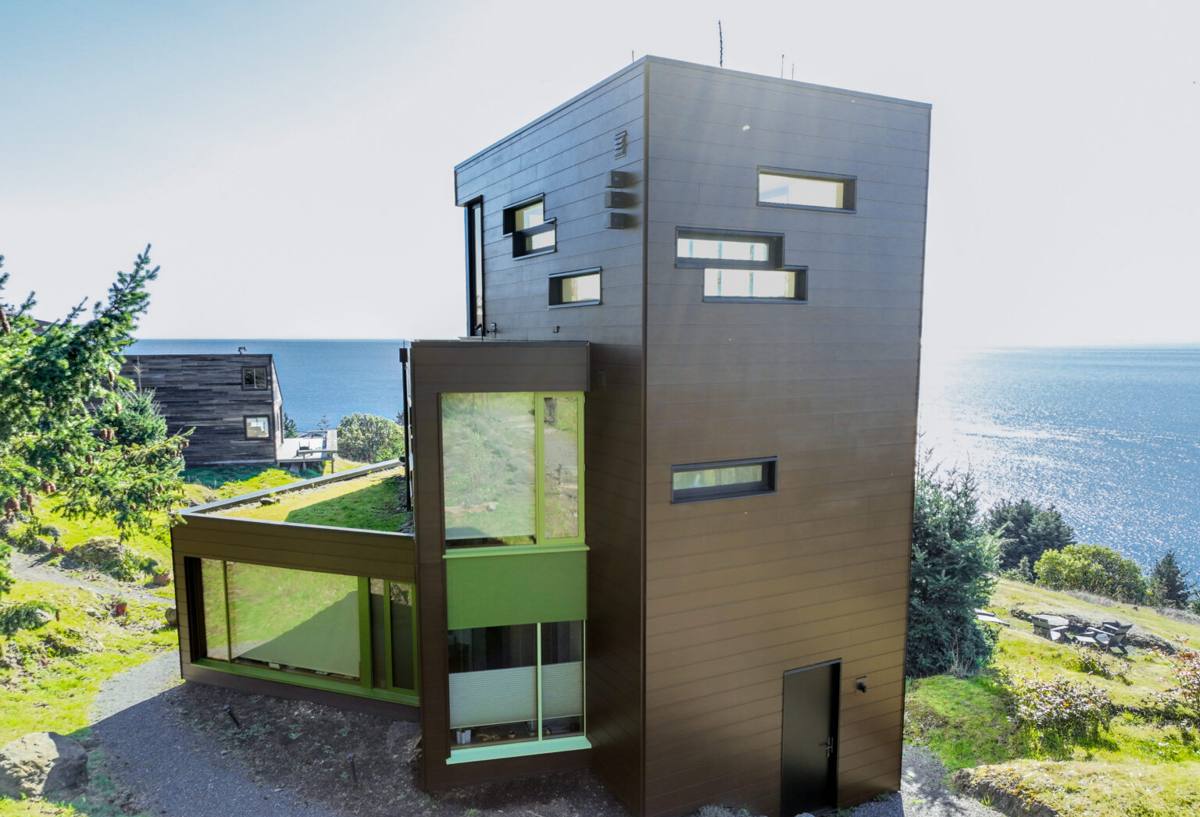
Whatcom Falls sits in one of the more punishing microclimates for exterior building materials in western Washington. Homes here deal with a combination that few siding products are actually engineered to survive long-term: salt-laden air moving in off the water, driving wind-driven rain that hits walls at an angle rather than falling straight down, and a moss season that can stretch across most of the wet months. Any one of these on its own is manageable. Together, they accelerate the failure of the wrong siding choice by years.
Salt air is corrosive to fasteners and finishes, and it holds moisture against exterior surfaces longer than dry inland air does. Driving rain finds every gap, seam, and under-lap in a siding system that wasn't installed with weather direction in mind. And moss — which thrives in the shaded, damp, slow-drying conditions common on north- and west-facing walls in this area — holds water against the siding surface for extended periods, which is exactly the condition that causes wood-based and wood-fiber products to swell, delaminate, or rot from the inside out.
This page is specifically about fiber cement siding for Whatcom Falls properties — what the climate demands, what a correct installation actually involves, and why the crew doing the work matters as much as the material itself.
What This Climate Does to Siding Over Time
Salt Air and Metal Fasteners
Homes closer to the water see faster corrosion on exposed or undersized fasteners, trim flashing, and any metal component that wasn't specified for coastal exposure. Over years, corroding fasteners can loosen siding panels, stain the face of the siding with rust streaks, and create small entry points for water.
Driving Rain and Wall Assembly Gaps
Wind-driven rain doesn't behave like a garden hose aimed straight at a wall — it pushes water sideways and upward into laps, seams, and butt joints. A siding system with generous manufacturer-rated lap coverage and correctly flashed penetrations sheds that water. A system installed to minimum spec, or with shortcuts at window and door transitions, will eventually let water track behind the cladding.
Moss, Shade, and Slow-Drying Walls
North-facing and tree-shaded walls in Whatcom Falls can stay damp for days after a storm. Moss and algae growth on a siding surface isn't just cosmetic — sustained moisture contact is the single biggest driver of premature siding failure, particularly on products with wood content that can absorb and hold water.
How Different Siding Materials Hold Up Locally
| Factor | Fiber Cement (James Hardie) | Wood-Fiber Composite (e.g., LP SmartSide) | Vinyl | Untreated Wood/Cedar |
|---|---|---|---|---|
| Moisture/moss exposure | Non-combustible, dimensionally stable, resists moisture-driven swelling | Wood content can swell or delaminate under sustained moisture | Doesn't absorb water, but can trap moisture behind panels if installed poorly | Absorbs water readily; needs regular sealing/staining to resist rot |
| Salt air / fastener corrosion | Compatible with corrosion-resistant fastener specs | Same fastener concerns as any lap product | Fasteners hidden but panel itself can become brittle over time | Same fastener concerns; wood movement can work fasteners loose |
| Finish durability in wet climate | Factory-baked ColorPlus finish resists fading and moisture intrusion at the finish layer | Field-applied or factory finishes vary; edges are a common failure point | Color molded through, but can chalk and fade over decades | Requires recurring refinishing to keep water out |
| Typical long-term maintenance | Periodic washing, repaint only if desired | Regular inspection of seams and edges for moisture entry | Low maintenance but limited repair options if damaged | Recurring sealing, staining, or painting |
Why We Install Only James Hardie Fiber Cement
We made a deliberate decision to install one siding system — James Hardie fiber cement — rather than offer a menu of products with different risk profiles. That's not a marketing position, it's a maintenance and callback position. In a climate like Whatcom County's, the products that struggle are the ones with wood content that can wick and hold moisture, or systems that depend heavily on perfect field conditions to perform. Fiber cement is non-combustible, doesn't feed moss and mildew the way wood-based products can, and holds its factory finish through the freeze-thaw and constant-damp cycles typical of this region.
James Hardie also engineers specific product lines (their HZ5 and HZ10 designations) for different climate zones, which lets us match the product to the exposure a given wall actually sees rather than installing a one-size-fits-all panel. Combined with a strong transferable warranty, that gives Whatcom Falls homeowners a siding system built for the conditions it's actually going to face, not just the conditions it performs well in on a spec sheet.
What Correct Fiber Cement Installation Involves
Fiber cement is only as good as the installation behind it. The material itself is durable, but siding failures we get called to inspect almost always trace back to installation shortcuts, not product defects. A correct job includes:
- A properly detailed weather-resistive barrier (housewrap) installed shingle-style so water is directed outward and down, not trapped behind the siding
- Rain screen or drainage gap installation where wall assembly and exposure call for it, giving water a path to drain and walls a chance to dry
- Manufacturer-specified fastener type, spacing, and penetration depth — undersized or over-driven fasteners are a common cause of premature panel movement
- Correct minimum lap coverage on horizontal siding, sized for wind-driven rain exposure rather than the bare code minimum
- Properly flashed and sealed penetrations at windows, doors, hose bibs, and vents — the most common entry points for water intrusion
- Factory-cut and factory-primed panel edges wherever possible, with field cuts sealed per manufacturer spec
- Correct clearance from grade, decks, and roof lines to keep siding out of standing water and splash-back zones
Every one of these details matters more in a climate that sees prolonged wet seasons and driving rain than it would in a drier region. Skipping any one of them doesn't necessarily cause an immediate problem — it just shortens the number of years before one shows up.
Our Process for Whatcom Falls Projects
1. On-Site Assessment
We walk the property, look at current siding condition, note which walls see the most moss, shade, and wind-driven rain exposure, and check the state of trim, flashing, and any visible moisture damage.
2. Product and Line Selection
Based on exposure, we recommend the appropriate James Hardie product line and profile (lap, shingle, or panel) and color from the ColorPlus factory finish palette.
3. Written Scope and Estimate
We provide a clear, itemized estimate covering tear-off (if applicable), house wrap and drainage detailing, fastening spec, trim, and flashing work — not just a per-square-foot number.
4. Installation to Manufacturer Spec
Our crews install to James Hardie's published installation instructions, which is also what keeps the manufacturer's warranty intact — a warranty that can be voided by out-of-spec installation regardless of who did the work.
5. Final Walkthrough
We walk the finished job with the homeowner, review the work, and go over any care and maintenance recommendations specific to that property's exposure.
Maintenance Expectations for Whatcom Falls Properties
Fiber cement is low-maintenance, not no-maintenance. Homeowners in this area should expect to:
- Rinse siding periodically (garden hose pressure is usually enough) to remove moss spores, pollen, and salt residue before they build up
- Keep gutters clean and functioning so overflow doesn't run directly down wall surfaces
- Trim back vegetation and tree cover where practical to reduce prolonged shade and damp conditions on north-facing walls
- Have caulking at trim and penetrations inspected every few years, since sealant is the one component that ages faster than the siding itself
Cost Factors for Whatcom Falls Projects
| Factor | Why It Affects Cost |
|---|---|
| Existing siding removal | Tear-off of old wood, vinyl, or composite siding adds labor and disposal cost versus a bare-wall install |
| Wall exposure and complexity | Homes with multiple stories, dormers, or extensive trim require more cutting, flashing, and labor time |
| Product line selection | Different James Hardie lines and profiles (lap vs. shingle vs. panel) carry different material costs |
| Moisture damage repair | Rot or sheathing damage found during tear-off needs to be repaired before new siding goes on |
| Drainage/rain screen detailing | Walls with heavy rain or shade exposure may warrant additional drainage detailing, which adds labor |
We don't quote a flat per-square-foot number over the phone for this reason — the exposure and condition of a given Whatcom Falls property genuinely changes the scope of correct work.
Signs Your Current Siding May Already Be Failing
If you're noticing any of the following, it's worth having the siding looked at before a small problem becomes a sheathing or framing repair:
- Soft or spongy spots when pressed, especially near the bottom courses or below windows
- Persistent moss or algae staining that returns quickly after cleaning
- Visible gaps, warping, or separation at panel seams and butt joints
- Peeling or bubbling paint, particularly on shaded or north-facing walls
- Rust staining running down from fastener heads or trim
Get a Free, No-Pressure Estimate
If you're planning a siding project in Whatcom Falls or want a straight answer on whether your current siding is holding up to this area's salt air, rain, and moss exposure, we're happy to take a look. Use the form below to request a free estimate — no pressure, just an honest assessment of what your home actually needs.