 Glenhaven Siding
 Windows Built for Blaine's Coastal Climate
Blaine sits right on the water at the northern edge of Whatcom County, and that location shapes what a window has to survive here. Salt-laden air off the coast works its way into hardware, weep holes, and unprotected fasteners year-round. Add in the driving, wind-pushed rain that comes through in fall and winter storms, plus a long, damp moss season that keeps siding and trim wet for weeks at a stretch, and you have a climate that is genuinely harder on windows than most of the country ever deals with. Homes a mile inland don't see the same combination of salt exposure and sustained moisture that Blaine properties do.
None of this means Blaine homeowners need to over-spend on exotic products. It means the installation itself — flashing, sealants, drainage paths, fastener choice — has to be done correctly, every time, with materials rated for this kind of exposure. Most window failures we're called out to inspect in this area aren't glass failures. They're installation failures that the local climate eventually exposed.
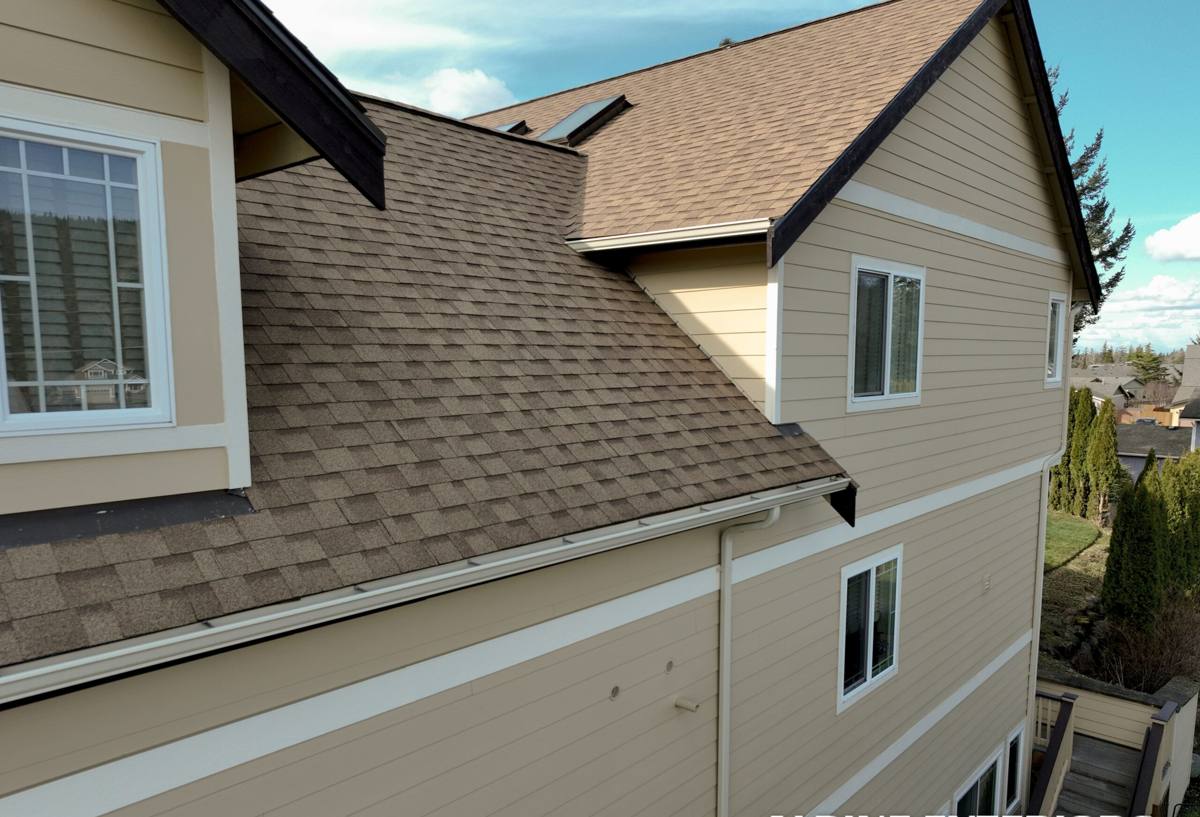
What Correct Window Installation Actually Involves
Swapping an old window for a new one sounds simple, and the window itself is the easy part. The part that determines whether the job lasts is everything around the window: how water is directed away from the opening, how the frame is sealed to the wall assembly, and how the whole unit is anchored so it doesn't shift or rack over time.
Water Management Comes First
A correctly installed window is built like a shingled roof in miniature — every layer overlaps the one below it so water is always directed outward and down, never trapped behind the trim. That means a sloped sill pan under the window, properly lapped flashing tape at the jambs and head, and a drainage path that lets any water that does get past the exterior cladding find its way back out rather than pooling against the framing.
Sealant Is a System, Not a Bead of Caulk
In a climate with this much sustained moisture, sealant quality and placement matter as much as the window itself. We use exterior-grade sealants rated for marine and coastal exposure, and we're deliberate about where sealant is used to seal and where it's deliberately left open to let the assembly drain and dry. Sealing every gap solid sounds thorough, but it can trap moisture inside the wall — which causes more rot than it prevents.
Fasteners and Hardware
Salt air corrodes standard fasteners faster than most homeowners expect. We install with corrosion-resistant fasteners and hardware appropriate for coastal exposure, not whatever ships in the box as a generic default.
Common Problems We See on Blaine Replacement Jobs
A lot of the window replacement work we do in Blaine isn't cosmetic — it's addressing damage that built up slowly behind an older or poorly installed window.
- Soft or discolored wood framing around the window opening, usually from years of small water intrusion at the corners
- Fogged or failed double-pane glass where the seal between panes has broken down
- Windows that are hard to open and close because the frame has racked slightly out of square
- Visible moss or algae staining on trim and sills, a sign the area stays damp longer than it should
- Drafts or cold spots near the frame even when the window is fully closed and locked
- Corroded or seized hardware — latches, cranks, and balances — from long-term salt exposure
Any one of these can usually be traced back to how water was (or wasn't) managed at the original installation. Catching it early, before the framing underneath is compromised, keeps the job a straightforward window replacement instead of a larger repair.
Choosing the Right Window for a Blaine Home
There's no single "best" window material — the right choice depends on the home, its exposure to wind and salt air, and the homeowner's priorities on maintenance and budget. We walk through these trade-offs honestly rather than pushing one product line.
| Frame Material | Coastal Performance | Maintenance | Typical Trade-Off |
|---|---|---|---|
| Vinyl | Good — won't corrode or rot; UV-stable formulations hold up well | Low — no painting, occasional cleaning | Frame flexes more in temperature swings than fiberglass |
| Fiberglass | Very good — dimensionally stable, resists salt and moisture well | Low | Higher upfront cost than vinyl |
| Aluminum | Fair — durable but conducts cold and can show salt corrosion over time without proper coatings | Moderate | Better for commercial or contemporary looks; less thermally efficient |
| Wood (clad exterior) | Fair to good depending on cladding — interior wood needs protection from any moisture intrusion | Higher — cladding and seals need periodic inspection | Warmest interior appearance; more sensitive to installation errors |
For most Blaine homes directly exposed to marine air and wind-driven rain, we steer people toward vinyl or fiberglass for the frame, paired with dual- or triple-pane glass and a low-E coating to manage both moisture performance and energy loss. Wood-frame windows can still be the right call on homes where the architecture calls for it, but they need more disciplined maintenance in this climate to protect the exterior cladding and any exposed wood.
Glass Package Considerations
Beyond frame material, the glass package affects comfort and condensation resistance. Argon-filled dual-pane glass is the practical standard for this region; triple-pane adds further insulation value but at a real cost premium that makes more sense on north- or west-facing walls that take the brunt of Whatcom County's weather.
Our Installation Process
The process is the same discipline on every job, whether it's one window or a full-house replacement.
- On-site assessment. We inspect existing framing, sills, and any signs of prior water intrusion before quoting anything, so surprises don't show up mid-job.
- Accurate measurement and ordering. Windows are ordered to the actual opening, not a generic stock size, so the fit is tight and consistent.
- Careful removal. Old units are removed without unnecessary damage to surrounding siding or trim, and we check the framing underneath before anything new goes in.
- Framing repair if needed. Any soft, rotted, or water-damaged framing is repaired or replaced before the new window goes in — installing a new window over damaged framing just hides the problem.
- Sill pan and flashing installation. Sloped sill pan, jamb and head flashing installed in the correct shingled order to direct water outward.
- Window set, leveled, and anchored. Shimmed and fastened per manufacturer spec so the frame stays square and the window operates smoothly for years.
- Sealing and insulation. Low-expansion foam or backer rod and sealant where appropriate, sized correctly for the gap — never overfilled.
- Exterior trim and finish work. Trim reinstalled or replaced, caulked at the appropriate joints, and finished to match the home.
- Final walkthrough. Every window is opened, closed, and locked to confirm smooth operation before we call the job done.
What Window Installation Costs — And What Drives the Range
Every Blaine home is different, so we don't quote sight unseen — but homeowners planning a project deserve to know what actually moves the price up or down.
| Cost Factor | Why It Matters |
|---|---|
| Number of windows and access | Ground-floor swaps are simpler than second-story or hard-to-reach openings |
| Frame material and glass package | Vinyl runs less than fiberglass; triple-pane costs more than dual-pane |
| Condition of existing framing | Rot or water damage found during removal adds repair time before the new window goes in |
| Full-frame vs. insert replacement | Full-frame replaces the whole assembly and flashing system; inserts fit into a sound existing frame at lower cost |
| Trim and exterior finish work | Matching existing siding or trim profiles takes more labor than a straightforward swap |
We'll walk the property, look at the existing windows and framing condition, and give a clear written quote — no pressure, no inflated "today only" pricing tactics.
Why a Local Blaine Crew Matters
Window installation isn't something that should be learned on your project. A crew that already works Blaine and the surrounding Whatcom County coastline knows which walls take the worst of the wind-driven rain, understands how long moss season actually runs in this area, and plans installation timing and sealant cure times around that reality instead of a generic schedule. We're not guessing at how a house on this coastline behaves — we've seen how these homes age and where problems tend to start.
Being local also means we're accountable after the job is done. If a question comes up six months or two years later, we're not a crew that drove in from out of the area and moved on — we're a short trip away and stand behind the work.
Maintaining Your Windows After Installation
A correctly installed window still benefits from basic upkeep in this climate. A few habits go a long way toward protecting the investment:
- Rinse frames and hardware periodically to clear salt residue, especially on homes with direct water exposure
- Check exterior caulk lines once a year for cracking or separation and address it early
- Keep gutters and downspouts clear so roof runoff isn't dumping extra water near window heads
- Clear moss or debris buildup on sills and trim before it holds moisture against the frame
- Test operation of locks and cranks seasonally — hardware that's stiff or slow to move is worth a look before it seizes
- Watch for condensation between panes, which signals a failed seal rather than a cleaning issue
If your Blaine home has windows showing their age, drafts you can feel, or trim that stays damp longer than it should, we're happy to take a look. Reach out for a free, no-pressure estimate using the form below — we'll give you an honest read on what your home actually needs.