 Glenhaven Siding
 Window Installation in Deming Isn't a Generic Job
Deming sits in the Nooksack River valley, tucked against the foothills that lead up to Mount Baker, and that setting shapes what a window installation needs to survive here. This isn't a dry-climate market where a window just needs to look good and seal a draft. Whatcom County homes deal with long stretches of wet weather, humidity that lingers in the valley air, driving rain that comes in sideways off passing fronts, and a moss season that seems to run most of the year. Add in the marine-influenced storm systems that move inland off the Sound carrying salt-laden moisture, and you've got a set of conditions that will find every weak point in a window installation — usually within a few wet seasons, not decades.
We install windows across Glenhaven and the surrounding Whatcom County communities, and Deming jobs come with their own set of considerations: older rural homes with settled framing, a mix of siding types installed over the years, and a climate that punishes shortcuts around flashing and sealing. This page is about what that actually means for your project — not a generic rundown of window installation you'd read on any national contractor's site.
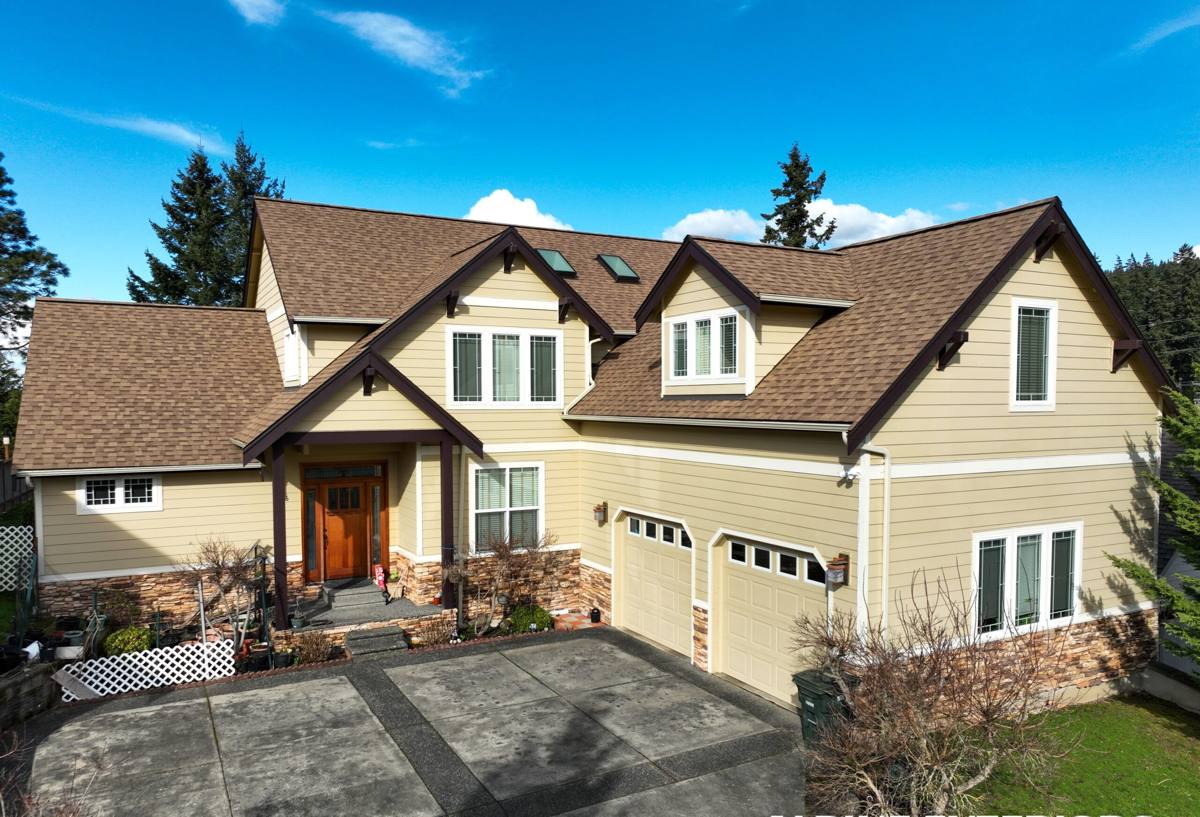
What This Climate Does to Windows Over Time
Wind-Driven Rain Intrusion
Rain that falls straight down is easy to manage. Rain that gets pushed sideways by wind — common during fall and winter storms in this region — finds its way behind trim, under sills, and into any gap in the flashing. Over years, that moisture works its way into the wall cavity long before you ever see a stain on the interior drywall.
Moss and Organic Growth
Moss doesn't just grow on roofs. It takes hold on window sills, in the corners of frames, and anywhere debris and moisture sit without enough sun or airflow to dry out. Once moss establishes itself against a window frame, it holds moisture against the material around the clock, which accelerates rot in wood trim and breaks down caulk faster than it would in a drier climate.
Condensation and Interior Humidity
Valley air holds a lot of moisture, and homes that are well-insulated but poorly ventilated can build up interior humidity that condenses on window glass and frames. That condensation, left unaddressed, contributes to the same rot and mold issues as exterior water intrusion — just from the other direction.
Freeze-Thaw Cycling
It doesn't need to be brutally cold here for freeze-thaw damage to matter. A window frame that's already saturated from months of rain, then hit with a cold snap, expands and contracts in ways that stress seals, caulk lines, and any wood components — widening small gaps into real leaks.
Signs a Deming Home Needs New Windows — Not Just a Repair
Some window problems are cosmetic and some point to a bigger issue behind the wall. Here's what we look for during an assessment:
- Soft or discolored wood trim around the window frame, especially at the bottom corners
- Visible moss or persistent green staining on sills or frames that comes back after cleaning
- Fogging or moisture between panes of double-glazed glass — a sign the seal has failed
- Drafts or noticeably cold spots near the window even when it's fully closed and locked
- Difficulty opening, closing, or latching windows — often a sign the frame has shifted or swollen
- Peeling paint or bubbling on interior sills or the wall surface just below the window
- Visible gaps between the window frame and the siding or trim around it
A window with one or two of these signs might just need better sealing or a repair. Several of them together, especially soft wood or fogged glass, usually mean it's time to replace rather than patch.
What a Correct Window Installation Actually Involves
Sloped Sill Pans and Drainage
Every window opening needs a way for water that gets past the exterior finish to drain back out instead of sitting against the framing. A properly sloped sill pan, installed before the window ever goes in, is one of the most important — and most often skipped — steps in a quality installation.
Flashing Sequence
Flashing has to be layered correctly — sill, then jambs, then head — so that water moving down the wall always drains over the layer below it, never behind it. This is the step that separates an installation that holds up through a Whatcom County winter from one that starts leaking within a year or two.
Shimming, Fastening, and Level
A window that isn't shimmed square and plumb will operate poorly and stress its own seals over time. Fasteners need to hit solid framing, not just trim, and be set so the frame isn't bowed or racked during installation.
Insulation and Air Sealing
The gap between the window frame and the rough opening needs to be filled with a material that stays flexible and doesn't compress or crumble over time — never just stuffed with fiberglass batting, which does nothing to stop air or moisture movement.
Trim and Siding Integration
The window installation isn't finished until the surrounding trim and siding are tied back in correctly, with proper caulking at the right joints and no exposed seams for wind-driven rain to exploit.
Choosing a Window Frame Material for This Climate
Frame material matters more here than in drier parts of the country, because it's dealing with sustained moisture exposure, not just occasional rain.
| Frame Material | Moisture Resistance | Maintenance | Typical Lifespan |
|---|---|---|---|
| Vinyl | Very good — won't rot, resists moisture well | Low — occasional cleaning | 20-30+ years |
| Fiberglass | Excellent — dimensionally stable in wet/dry cycles | Low | 30-40+ years |
| Wood (unclad) | Poor without diligent upkeep — prone to rot in this climate | High — regular painting/sealing | Varies widely with maintenance |
| Wood-clad (aluminum or vinyl exterior) | Good on the exterior face, but cladding seams need careful detailing | Moderate | 20-30 years |
We generally steer homeowners in this area away from unclad wood exteriors unless they're committed to an ongoing maintenance schedule — it's not that wood windows are a bad product, it's that this climate is unforgiving toward any material that depends on paint and caulk staying perfect year after year. Vinyl and fiberglass hold up with far less upkeep, which matters on a rural property where nobody wants to be re-caulking window trim every couple of seasons.
Our Installation Process
- On-site assessment — we check existing framing condition, look for hidden water damage, and measure each opening individually since older homes are rarely perfectly square
- Product selection — we walk through frame material, glass package, and style options based on your home and budget, without pushing a single brand
- Careful removal — old windows come out without tearing up more of the surrounding wall or siding than necessary
- Sill pan and flashing installation — done before the new window goes in, not as an afterthought
- Window setting — shimmed level and plumb, fastened into solid framing
- Sealing and insulation — proper flexible sealant and insulation around the frame perimeter
- Trim and siding integration — tying the finished opening back into your home's existing exterior cleanly
- Walkthrough — testing every window for smooth operation and a tight seal before we call the job done
Why It Matters That We Already Work in Deming
A crew that mostly works in dry climates or dense suburban builds doesn't automatically know how to handle a rural Whatcom County property. Homes out along the valley often have their own quirks — additions built at different times, a mix of siding materials from past updates, well-established landscaping close to the walls, and driveways or access that isn't always straightforward for equipment and material staging.
We also plan installation timing around the weather here rather than working against it. Pulling a window and leaving an open wall cavity exposed during a heavy rain event is how water damage happens mid-project, not just after. Knowing the rhythm of the local weather, and building the schedule around it, is part of doing this job right in this area — not an extra service, just what it takes.
After Installation: Keeping Windows Performing in This Climate
New windows still need some basic upkeep to get their full lifespan out of them here:
- Clear moss, leaves, and debris off sills and tracks a couple of times a year, especially before winter
- Check exterior caulk lines annually for cracking or separation, particularly on the sun-exposed side of the house
- Keep gutters and downspouts clear so roof runoff isn't sheeting down across upper window openings
- Run a dehumidifier or exhaust fan in rooms that see heavy interior moisture, like bathrooms and kitchens, to reduce condensation load on the glass
None of this is complicated, but skipping it is how even a well-installed window starts showing problems earlier than it should in a climate like ours.
Get a Straight Answer on Your Windows
If you're dealing with drafty, foggy, or moss-stained windows on your Deming property, we're happy to take a look and give you an honest read on whether you need full replacement or just better sealing and maintenance. There's no pressure and no pushy sales pitch — just a straightforward assessment from a crew that already knows what this climate does to a window installation over time. Fill out the form below for a free estimate.