 Glenhaven Siding
 Window Installation Built for Sudden Valley's Conditions
Sudden Valley sits in one of the wetter, more heavily wooded pockets of Whatcom County. Homes here are shaded by tall conifers for much of the year, sit close to Lake Whatcom's humidity, and take the same driving rain and long moss season that hits the rest of the region — just with less direct sun to dry things out between storms. That combination is hard on windows in ways that don't show up right away. A window that's slightly out of level, under-flashed, or sealed with the wrong material can look fine for a year or two and then start letting water into the wall cavity where nobody sees it until the trim starts to soften.
This page covers what window installation actually requires on a Sudden Valley property, what we look at before we ever quote a job, and why hiring a crew that already understands this neighborhood's lots — tree cover, shade patterns, older housing stock — matters more here than it would on a dry, open lot elsewhere.
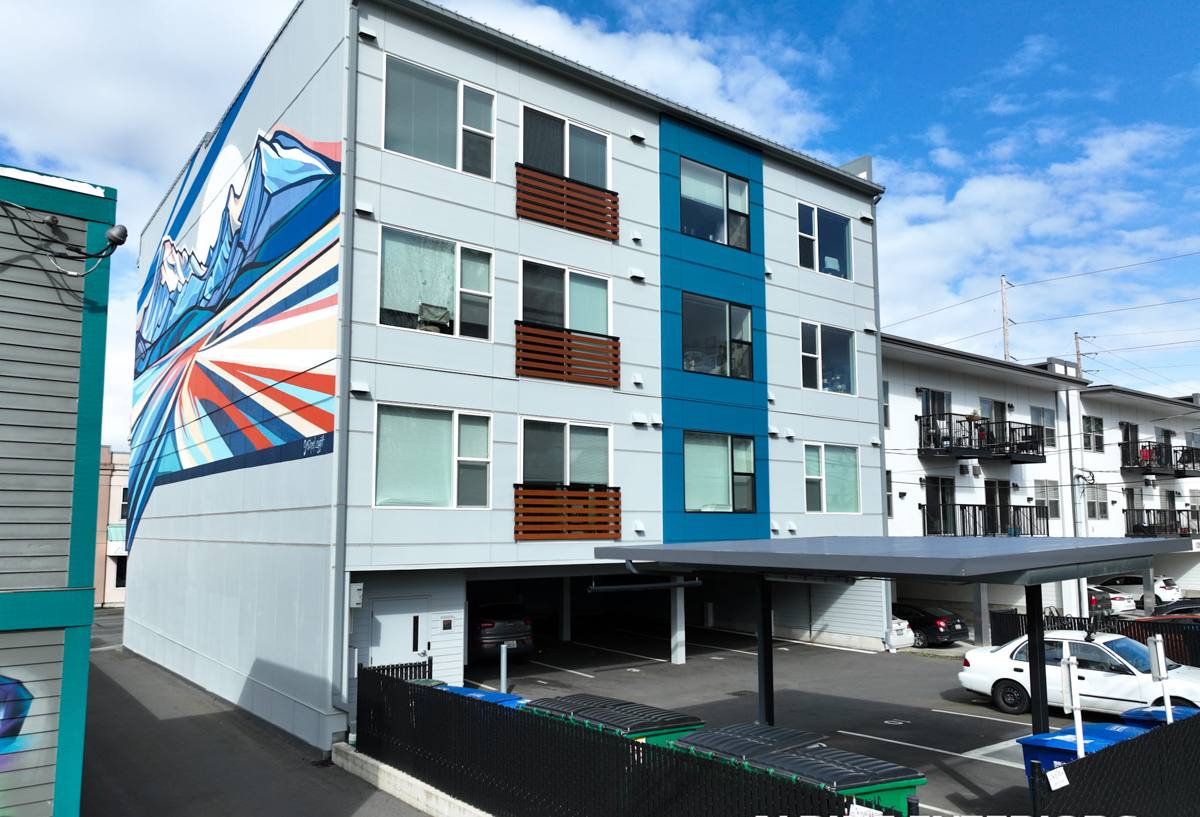
What the Local Climate Does to Windows Over Time
Whatcom County's marine climate means near-constant low-grade moisture in the air for months at a stretch, punctuated by hard, wind-driven rain events. Around Sudden Valley, tree cover and lake-adjacent humidity add to that — siding, trim, and window frames stay damp longer than they would on a more exposed lot, and that extended dry-out time is exactly what feeds moss and mildew growth on north- and shade-facing walls.
For windows specifically, the failure points we see most often are:
- Failed or missing flashing that lets wind-driven rain track behind the window and into the framing
- Old caulk-only seals that have shrunk, cracked, or pulled away from the frame
- Wood sills and jambs that have absorbed moisture over years of shade and slow drying, softening from the inside out
- Condensation buildup on older single-pane or poorly sealed dual-pane units, which keeps trim and sills wet even when it isn't raining
- Moss and organic buildup on window sills and horizontal trim that holds moisture against the wood far longer than a clean, dry surface would
None of these are dramatic on their own. Together, over several wet seasons, they're how a window opening ends up with rot in the sill or sheathing behind it.
Signs a Window Is Ready for Replacement
Homeowners usually notice one of a few things first: a window that's hard to open or close, visible fogging between the panes, drafts near the frame in winter, or soft, discolored wood at the sill or bottom corners. Any of those is worth a look before it becomes a bigger repair. Fogging between panes in particular means the seal has already failed — that's not something that gets better on its own, and once moisture is inside the glass unit, the window needs to be replaced rather than repaired.
Soft wood at the sill or jamb is the one we take most seriously, because it usually means water has already gotten past the window and into the wall assembly. In those cases, the job isn't just "swap the window" — it's opening up the area, confirming how far the damage extends, and rebuilding the opening correctly before a new window goes back in.
What a Correct Installation Actually Involves
Setting a window is straightforward. Setting it so it stays watertight through a Whatcom County winter is where the details matter.
Flashing and the Water Management Path
Every opening needs a proper flashing sequence — sill pan flashing at the bottom, house wrap or building paper integrated with the flashing at the sides and top, and the window's nailing fin lapped correctly so water is always directed outward and down, never trapped behind the siding. This is the single most important part of the job and the part that's invisible once the siding goes back on. It's also the part that's easiest to shortcut, which is why it's worth asking any contractor directly how they flash a window opening before they start.
Sealing and Insulation
Around the frame, we use a combination of low-expansion spray foam or backer rod and sealant — never foam alone, and never caulk alone — to control both air leakage and moisture without over-compressing the frame. Exterior sealant beads get tooled properly so they shed water instead of holding it.
Fit and Level
An out-of-level or racked window stresses its own seals over time and can bind at the sash. We shim and check plumb, level, and square before final fastening, not just at first set.
Choosing a Window for a Shaded, Wet Lot
Material choice matters more here than it would in a drier climate. We generally steer homeowners toward vinyl or fiberglass frames for Sudden Valley properties — both handle sustained moisture and shade without the maintenance burden that wood-frame windows carry in this environment. Wood-clad windows can still be the right call for a specific architectural look, but we're upfront that they come with a real ongoing maintenance commitment in a shaded, damp setting, not a one-time install-and-forget purchase.
| Frame Material | Moisture Tolerance | Maintenance | Typical Fit |
|---|---|---|---|
| Vinyl | Very good — won't rot or absorb water | Low — occasional cleaning | Most Sudden Valley homes, budget-conscious replacements |
| Fiberglass | Excellent — dimensionally stable, won't warp | Low | Larger openings, homes wanting a longer-term investment |
| Wood / wood-clad | Requires diligent upkeep in shade and humidity | High — periodic refinishing, seal inspection | Specific architectural or historic look |
| Aluminum | Prone to condensation in cold, damp conditions | Moderate | We generally don't recommend for this climate |
Beyond frame material, we also pay attention to glass package. A dual-pane, low-E unit with a reasonable U-factor is standard for this area — it cuts down on the condensation problems that come with older single-pane glass sitting in a cold, humid environment for months at a time.
Our Process, Start to Finish
A typical replacement project runs through the same steps whether it's one window or a whole house:
- On-site assessment of each opening, including a look at the surrounding siding and trim for existing moisture damage
- Written estimate covering window selection, flashing and sealing scope, and any framing repair if damage is found
- Removal of the old window and a full check of the sheathing and framing underneath before anything new goes in
- Correct flashing installation — sill pan, side and head flashing, integrated with the existing water-resistive barrier
- New window set plumb, level, and square, insulated and sealed properly inside and out
- Exterior trim and siding restored to match, and a final walkthrough with the homeowner
If we find rot or damage during removal, we stop and talk to the homeowner before proceeding — that's not scope creep we spring on people after the fact, it's a conversation about what we found and what it takes to fix it correctly.
What Affects the Cost
Every job is quoted individually, but a few factors consistently move the price up or down:
| Factor | Effect on Cost |
|---|---|
| Frame material (vinyl vs. fiberglass vs. wood-clad) | Vinyl is typically the most affordable; fiberglass and wood-clad cost more upfront |
| Window size and opening count | Larger openings and more windows increase material and labor |
| Existing moisture or rot damage | Framing repair adds cost but is not optional if damage is present |
| Access and site conditions | Second-story or hard-to-reach openings take more time |
| Trim and siding restoration | Matching existing trim profiles or siding can add scope |
We'd rather walk a homeowner through these factors on-site than throw out a number that doesn't hold up once we open the wall.
Why Local Sudden Valley Experience Matters
A crew that hasn't worked this specific area can still install a window correctly in general terms, but they won't necessarily know what to expect from a shaded, lake-adjacent lot with mature tree cover — where moss tends to build up first, which orientations take the worst wind-driven rain, or how older Sudden Valley homes were originally flashed and sided. That local pattern recognition is what lets us catch a problem during the estimate instead of discovering it mid-project. We work throughout Whatcom County and the broader Glenhaven area, and Sudden Valley's combination of shade, humidity, and older housing stock is a set of conditions we've seen enough times to plan for up front rather than react to.
Keeping New Windows Performing
A correctly installed window still benefits from basic upkeep, especially in this climate:
- Clear moss and organic debris off sills and horizontal trim before it holds moisture against the frame
- Check exterior sealant beads once a year for cracking or separation and have them re-caulked if needed
- Keep gutters and downspouts clear so roof runoff isn't sheeting down across window openings
- Wipe down interior sills after heavy condensation events, particularly in colder months
- Trim back branches or vegetation that keep a window in constant shade and slow drying
None of this is difficult, but it's the difference between a window installation that performs for decades and one that starts showing the same problems the old one had.
If you're dealing with a drafty, fogged, or soft-sill window in Sudden Valley, we're happy to take a look and give you a straightforward, no-pressure estimate — no obligation, just an honest read on what your windows actually need. Use the form below to get started.