 Glenhaven Siding
 Window Replacement Built for Geneva's Coastal Conditions
Geneva homes sit close enough to the water and the tree line that windows take a beating most inland houses never see. Salt-laden air corrodes hardware and finishes faster than manufacturers' warranties assume. Driving rain off Puget Sound finds every gap in old flashing and worn weatherstripping. And the long, damp moss season that defines a Whatcom County winter keeps wood sashes and sills wet for months at a stretch. If your windows are original to the house, or if they're a builder-grade replacement from a couple decades back, there's a good chance they're no longer doing the job they were built for.
We install replacement windows in Geneva regularly, and the failures we see are consistent: fogged double-pane glass from a blown seal, soft or discolored sills where water has been sitting, sashes that won't stay up without a prop, and drafts you can feel standing a few feet away on a windy day. None of that is cosmetic. Every one of those symptoms means moisture or air is getting past a barrier that's supposed to stop it, and the longer that continues, the more it costs to fix downstream.
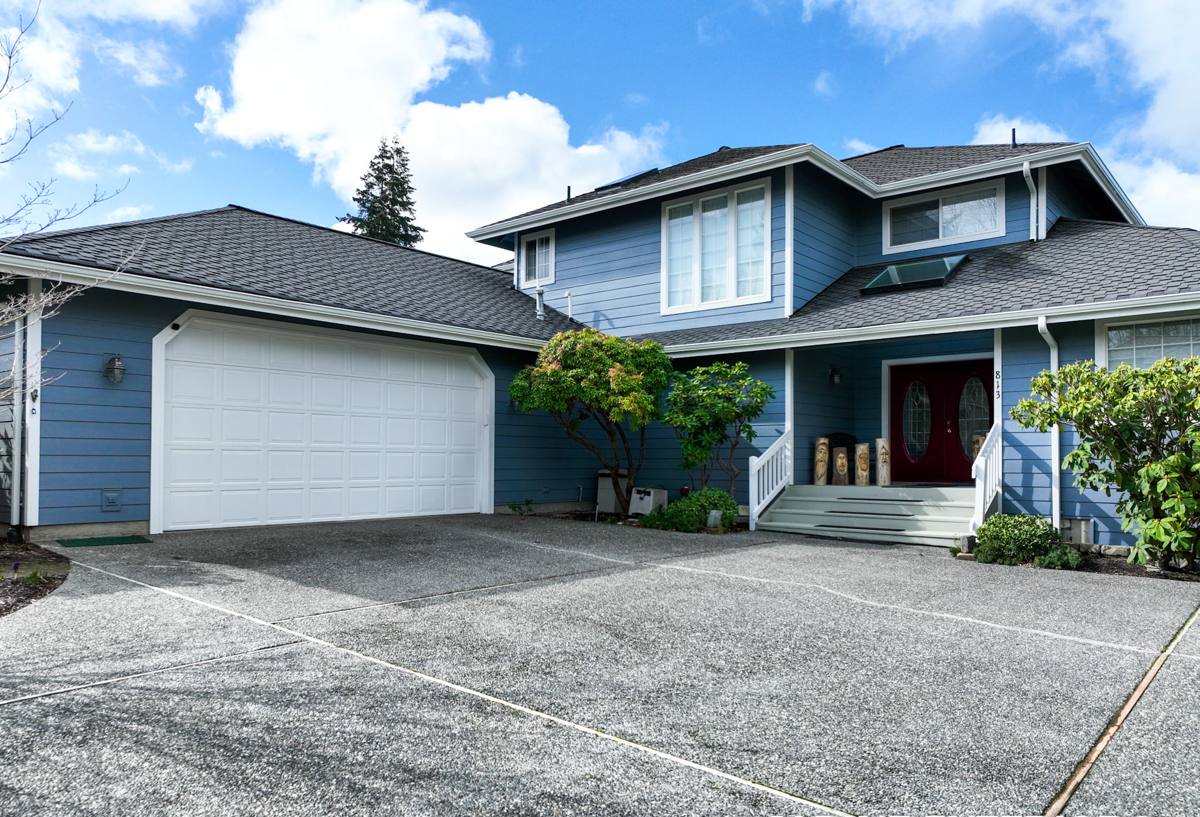
What Geneva's Climate Actually Does to a Window
Salt Air and Metal Components
Aluminum cladding, hinges, cranks, and locking hardware all corrode faster near the water. Once corrosion starts on a lock or hinge, the window stops sealing tightly even when the frame itself is fine, which lets in both air and moisture. This is one reason we pay close attention to hardware quality, not just glass and frame, when we spec a replacement for a Geneva property.
Driving Rain and Wind-Driven Water
Rain here doesn't just fall straight down — wind pushes it sideways into wall assemblies, especially on exposed or elevated lots. A window that's caulked well but flashed poorly will still leak, because the water gets behind the frame rather than in through the sash. Flashing detail matters more here than in a drier climate, and it's the part of a window install that's easiest to shortcut and hardest to inspect after the fact.
The Long Moss Season
Extended damp periods keep any wood trim, sills, or exposed sash material wet for days at a time. Wood that never fully dries between rain events is where rot gets a foothold, and it usually starts at the sill or the bottom corners of the frame before it's visible anywhere else. Vinyl and fiberglass don't rot, but the wood trim and framing around them still can if water is getting where it shouldn't.
Signs a Geneva Home Needs Window Replacement, Not Just Repair
- Fogging or a hazy film between panes that won't wipe away — the gas seal has failed and the glass unit itself needs replacing
- Visible gaps between the sash and frame, or daylight showing through a closed window
- Soft, spongy, or discolored wood at the sill or bottom corners
- Windows that won't stay open on their own, or that are difficult to lock
- Noticeably colder air near the window even with it fully closed
- Paint or finish that's peeling or bubbling on the interior sill, often a sign of trapped moisture
- A noticeable jump in heating costs with no other explanation
- Condensation forming on the inside of the glass regularly during cooler months
If you're only seeing one or two of these and the frame is otherwise solid, a repair might be the right call. If you're seeing several at once, or the frame itself is compromised, replacement is usually the more cost-effective path — repeated repairs on a failing frame add up fast and don't address the underlying moisture problem.
What a Correct Window Replacement Involves
Swapping glass into an old frame, or dropping a new window into an opening without addressing the surrounding wall assembly, is how leaks get built back into a house. A proper replacement in a climate like ours has a few non-negotiable steps:
- Remove the old unit and inspect the opening. This is where hidden rot or past water damage shows up. Any soft framing or sheathing gets addressed before a new window goes in — installing over a compromised opening just hides the problem for a few more years.
- Confirm proper sizing and select the right product. Whether it's a like-for-like fit or a full-frame replacement depends on the condition of the existing opening, not just what's cheaper up front.
- Install correct flashing, before the window goes in. Flashing tape and pan flashing at the sill direct any water that does get past the window back out, rather than into the wall. This step is invisible once the job is done, which is exactly why it's the one worth asking about.
- Set the window plumb, level, and square. A window that's slightly out of square will bind, won't seal evenly, and will wear out its hardware faster.
- Seal and insulate the gap around the frame properly. Too little insulation leaves drafts; overpacking the gap can bow the frame and cause the sash to bind. This is a place where experience shows.
- Finish trim and caulk as the final weather barrier, not the only one. Caulk fails eventually. A well-flashed window keeps working even after the caulk needs a refresh.
Choosing Materials for a Salt-Air, High-Moisture Climate
There's no single "best" window material for every house — it depends on your home's exposure, your budget, and how much upkeep you want to take on. Here's how the common options compare for a Geneva property specifically:
| Material | Moisture & Salt Air Performance | Maintenance | Typical Fit |
|---|---|---|---|
| Vinyl | Doesn't rot or corrode; performs well in coastal moisture | Low — no painting, occasional cleaning | Most homes; best value for performance |
| Fiberglass | Excellent — very stable in temperature and moisture swings | Low | Higher-end replacements, larger openings |
| Aluminum-clad wood | Good exterior protection, but interior wood still needs a dry environment | Moderate — interior wood finish upkeep | Homes prioritizing a wood interior look |
| Solid wood | Weakest option here — most vulnerable to our extended damp season | High — regular repainting and sealing | Historic homes where wood is required for character |
We don't push one brand or material on every job. Our standard is matching the product to the exposure — a window on a sheltered wall doesn't need the same spec as one facing prevailing wind and rain. Where a homeowner wants a wood interior look, we'll say plainly what the upkeep commitment looks like in this climate rather than let that surprise them later.
Glass and Performance Options Worth Understanding
Beyond frame material, the glass package makes a real difference in comfort and condensation control:
- Double-pane vs. triple-pane: Double-pane with a good low-E coating is sufficient for most Geneva homes; triple-pane adds cost and weight for a marginal gain unless you're on an especially exposed or noisy site.
- Low-E coatings: Reduce heat loss and help limit interior condensation on cold, damp mornings — a genuine benefit in our climate, not a marketing add-on.
- Argon or krypton gas fill: Improves insulating performance between panes; argon is the standard, cost-effective choice for most installs.
- Warm-edge spacers: The material separating the panes at the edge of the glass affects how much condensation forms on the interior edge of the glass in cold weather — worth asking about on any quote.
Our Process for a Geneva Window Replacement
We keep the process straightforward and try not to make it more complicated than it needs to be:
- On-site assessment. We look at each window's exposure, the condition of the surrounding wall and trim, and what's actually failing before recommending anything.
- Written estimate. You get a clear breakdown of scope, product, and price — no pressure to decide on the spot.
- Scheduling around the weather. Window replacement is weather-sensitive work; we plan install windows with our local rain patterns in mind so openings aren't left exposed longer than necessary.
- Removal, inspection, and any needed repair. If we find rot or damage once the old window is out, we'll show you before proceeding, not after.
- Installation with proper flashing and sealing, as outlined above — this is where the real difference between a good and a poor install shows up years later.
- Final walkthrough. We check operation, seal, and finish on every window before calling the job done.
What Affects the Cost of a Window Replacement
Every house is different, but the main cost drivers on a Geneva job tend to be the same:
| Factor | Why It Matters |
|---|---|
| Number of windows and openings | Larger projects have some economy of scale per window |
| Frame material and glass package | Vinyl is typically the most economical; fiberglass and upgraded glass packages cost more |
| Condition of the existing opening | Rot or water damage found during removal adds repair scope |
| Full-frame vs. insert replacement | Full-frame costs more but is often necessary when the existing frame is compromised |
| Window size and type | Custom shapes, large picture windows, and specialty operating styles cost more than standard sizes |
| Trim and finish work | Matching existing interior or exterior trim adds labor |
We'd rather walk you through these factors on your specific house than quote a number that doesn't hold up once we're actually looking at the openings.
Why Local Experience in Geneva Matters
A crew that works this specific area regularly knows what to expect before they even start the assessment — which sides of a house typically take the worst of the driving rain, how moss and moisture behave on this kind of lot, and what corrosion looks like on hardware that's been exposed to salt air for years. That's not something you get from a crew that mostly works inland or in a different climate zone. We're a Whatcom County company, and Geneva's conditions are conditions we plan for as a matter of course, not something we're improvising around.
We're also around after the install. If a window needs adjustment as it settles, or you have a question about maintenance a year or two down the road, you're calling a local company that did the work — not chasing down a manufacturer's call center.
Questions to Ask Before You Hire Anyone
- Will you inspect the opening for rot or water damage before installing the new window?
- What flashing method do you use, and is it appropriate for a high-rain-exposure wall?
- Is this a full-frame replacement or an insert, and why is that the right call for my house?
- What's covered under warranty — the product, the labor, or both — and for how long?
- Can you walk me through the glass package and why you're recommending it for my exposure?
If you're weighing window replacement for a home in Geneva, we're happy to take a look and give you a straight answer about what your windows actually need — no pressure, no inflated scope. Fill out the form below and we'll set up a free estimate.