 Glenhaven Siding
 Building New in Barkley? The Windows Are Where Most Callbacks Start
If you're framing a new home or a major addition in Barkley, the windows are one of the few components that touch almost every other trade on the job — framing, house wrap, siding, trim, and interior finish all key off how the window openings are prepped and how the units go in. Get that sequence wrong and you don't find out for a year or two, when water shows up somewhere it shouldn't. Get it right and the windows become one of the most trouble-free parts of the house for decades.
We install new-construction windows for builders and homeowners working in Barkley and the rest of Glenhaven. This page covers what that job actually involves and why the details matter more here than they would somewhere dry.
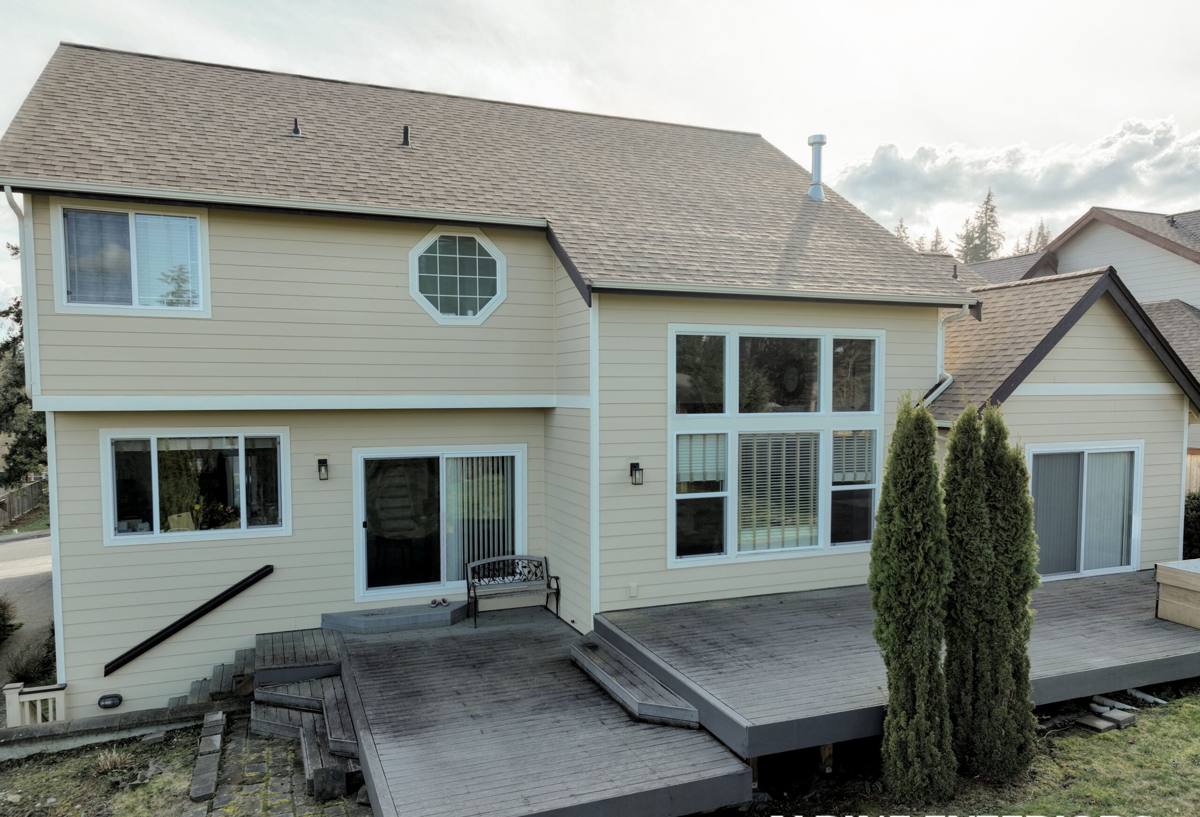
Why Whatcom County's Climate Changes the Job
New-construction window installation looks similar on paper anywhere in the country — set the unit, fasten the nailing fin, flash it, done. In practice, the margin for error is much smaller here than in a dry climate. A few things about this region push the standard higher:
- Salt air: Proximity to Puget Sound means airborne salt accelerates corrosion on cheap fasteners, unprotected flashing, and lower-grade hardware. Materials that would last decades inland can degrade faster here if the wrong products are used.
- Driving rain: Wind-driven rain doesn't just fall on a window, it pushes against it and finds any gap in the flashing sequence. A window that would be fine under still rainfall can leak here if the water management isn't layered correctly.
- Long moss season: Extended damp periods mean anything that traps moisture against wood — poor flashing laps, missing sill pans, gaps in house wrap integration — stays wet longer and gives rot and moss more time to take hold.
None of this means new-construction windows are risky in Glenhaven. It means the installation has to be done to the standard the climate demands, not the minimum standard that happens to pass a quick inspection.
What a Correct New-Construction Window Install Actually Involves
Rough Opening Prep
Before a window ever gets set, the rough opening needs to be square, level, and sized correctly with the right margin for shimming. We check this rather than assuming the framing crew got it perfect — on a new build, that's a normal part of the handoff, not a criticism of anyone's work.
Sill Pan Flashing
A sill pan gives any water that gets past the window a way out instead of a place to sit. This is one of the details that's easy to skip and impossible to see once the siding is on, but it's often the single biggest factor in whether a window opening stays dry over the life of the house.
Flashing the Sides and Head
Flashing tape and house wrap have to be layered in the right order — generally sides before head, with each layer overlapping the one below it — so that water is always directed outward and downward, never trapped behind a lap. This is standard water-shedding logic, but it only works if every layer is actually installed in sequence, not just present somewhere in the assembly.
Setting and Fastening the Window
The unit gets set plumb, level, and square in the opening, then fastened through the nailing fin per the manufacturer's schedule — the right fastener type, spacing, and count. Skipping fasteners or using the wrong type is a common shortcut that doesn't show up until the unit starts racking or leaking.
Sealing and Insulating
The gap between the window frame and rough opening gets insulated (typically low-expansion foam, not standard high-expansion foam, which can bow window frames) and the interior air seal is completed. A window can be perfectly flashed on the outside and still perform poorly if the interior air seal is sloppy.
Integration With House Wrap and Siding
The window has to tie cleanly into the house wrap so the whole building envelope acts as one continuous water barrier. When we're also doing the siding, this is straightforward because we control both steps. When another crew already hung the wrap, we make sure our flashing laps correctly with what's there before we move forward.
Our Process on a Barkley New-Construction Job
- Site visit and opening review: We check rough openings against the window schedule and flag any framing issues before installation day, not during it.
- Material verification: We confirm the units on site match the order — size, glazing package, and hardware — before they go in the wall.
- Flashing and sill pan installation: Done in the correct order, unit by unit, with attention to how each opening interfaces with the house wrap.
- Setting and fastening: Plumb, level, square, and fastened to the manufacturer's schedule.
- Interior and exterior sealing: Low-expansion foam and air sealing on the interior, sealant details on the exterior per the manufacturer's instructions.
- Final walkthrough: We check operation on every unit — smooth opening, closing, and locking — before we consider the install done.
Why Hiring a Crew That Already Works Barkley Matters
New-construction window installation isn't exotic work, but a crew that's already used to Barkley conditions brings a few real advantages over a crew learning the area on your job:
- They already know which flashing details matter most given the salt air and driving rain typical of this part of Whatcom County, instead of applying a generic detail that works fine in a drier climate.
- They're used to sequencing window installation with siding work in wet-weather windows, so the house isn't left exposed longer than necessary during the damp months.
- They understand local permitting and inspection expectations, so scheduling doesn't get held up by avoidable surprises.
On a new build, the window crew is one of several trades touching the envelope. A crew with local experience coordinates better with framers, wrap installers, and siding crews because they've done that handoff before, in this climate, more than once.
Window Types and Fit for New Construction
New-construction windows differ from replacement windows in one key way: they have a nailing fin designed to be installed before the siding goes on, fastened directly to the wall sheathing and then flashed over. That makes them the right choice for new builds and full-tear-off additions, where the wall assembly is open and the flashing can be done correctly from the framing out.
| Factor | What to Consider in Barkley |
|---|---|
| Frame material | Vinyl and fiberglass both hold up well against salt air when properly finished; wood requires more upkeep in this climate unless clad. |
| Glazing | Double-pane with a good low-E coating is standard for our winters and helps with condensation control during long damp stretches. |
| Hardware finish | Corrosion-resistant hardware is worth the upgrade this close to the Sound — cheaper hardware shows pitting and stiffness sooner here than inland. |
| Fin type | Nailing fin units only make sense before siding goes on; if siding is already up, you're looking at a retrofit or block-frame product instead. |
| Sizing tolerance | Rough openings should be built to the manufacturer's tolerance, not "close enough" — undersized shim gaps make correct flashing difficult. |
A Practical Checklist Before Your Windows Go In
- Rough openings are framed square, level, and to the correct dimension for the ordered units.
- House wrap is installed and ready to integrate with window flashing, not just stapled up loosely.
- Window units on site match the approved schedule for size, style, and glazing.
- A sill pan flashing plan is in place for every opening, not just the most exposed ones.
- Weather forecast allows for openings to be closed in within a reasonable window, minimizing exposure time.
- Fastening schedule and low-expansion foam are confirmed against manufacturer specs before installation starts.
What to Expect Cost-Wise
Costs on new-construction window jobs vary by unit count, size, glazing package, and how many openings need extra flashing attention (bay windows, large picture units, and openings near rooflines typically take more labor). Rather than quote a number that won't reflect your specific plan set, we walk the window schedule with you and give a clear, itemized estimate before work starts — no surprises once the crew is on site.
Get a Free Estimate for Your Barkley Build
If you're planning a new home or addition in Barkley or elsewhere in Glenhaven, we're happy to look over your window schedule and rough opening plans and give you a straightforward, no-pressure estimate. Fill out the form below and we'll get back to you to talk through your project.