 Glenhaven Siding
 Custom Windows Built for Bellingham's Weather, Not Just Its Look
Bellingham sits close enough to the water that salt air, driving rain off the Sound, and a long gray moss season are just part of owning a home here. Windows take more abuse than almost any other part of the exterior envelope — they're penetrations in the wall, they get direct wind-driven rain, and they're the first thing to show it when a house isn't breathing right. When we talk about "custom windows" for a Bellingham home, we don't mean fancy shapes. We mean windows sized, flashed, and specified correctly for a specific wall, a specific exposure, and the way Whatcom County weather actually behaves through the fall and winter.
A lot of window trouble we get called out for in this area isn't a bad window. It's a window that was never properly integrated into the wall — wrong flashing order, gaps behind trim, or a frame that was never really squared to the rough opening. Glenhaven Siding Company's crew works this specific area regularly, so this page walks through what actually matters for a Bellingham custom window job, not a generic national checklist.
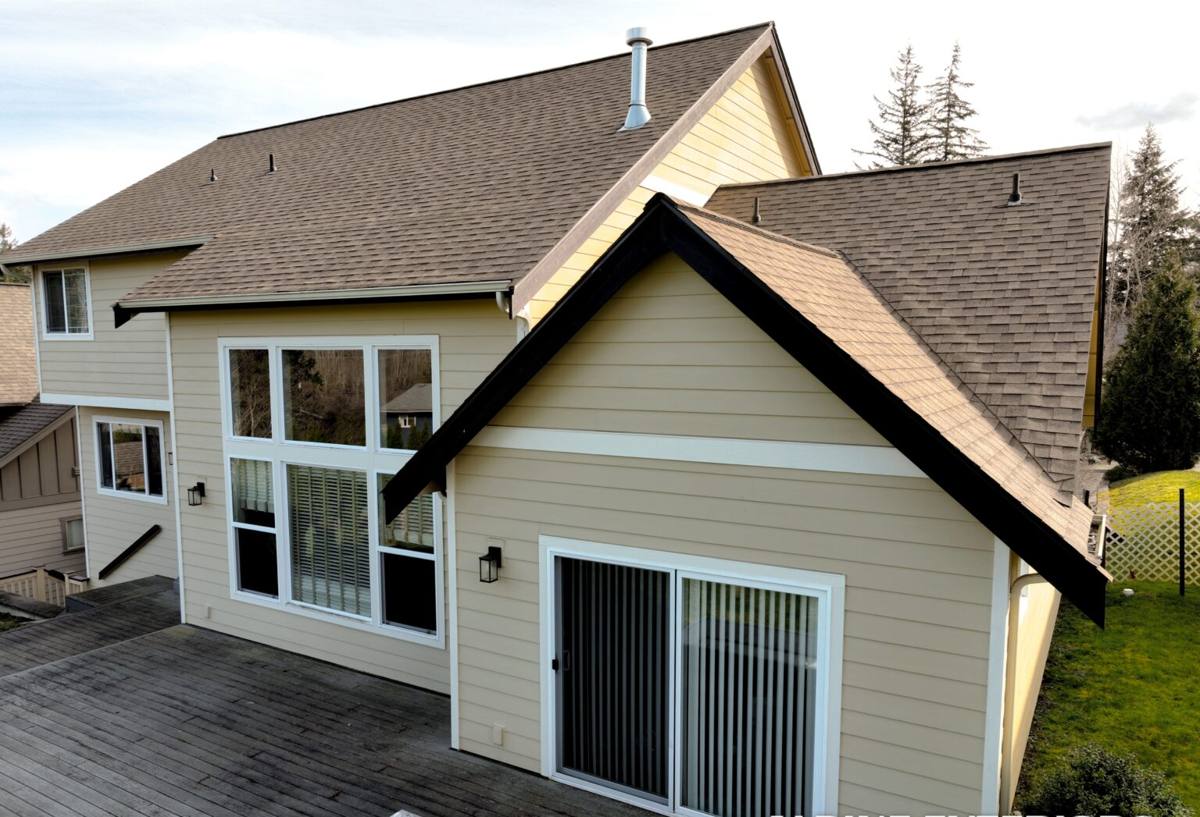
What Bellingham's Climate Does to Windows Over Time
Salt Air and Metal Fatigue
Proximity to Bellingham Bay means airborne salt reaches siding, trim, and window hardware even a few miles inland, especially on west- and southwest-facing walls that catch onshore wind. Salt accelerates corrosion on unprotected fasteners, weep hole screens, and lower-grade cladding on vinyl or aluminum-clad frames. It's rarely dramatic — it shows up as chalky residue, pitted hardware, or a window that starts sticking a few years earlier than it should.
Driving Rain, Not Just Rain
Whatcom County doesn't just get a lot of rain — it gets a lot of wind-driven rain, where water is pushed sideways into the wall rather than falling straight down. That matters enormously for window installation because it means static waterproofing (caulk alone) isn't enough. The installation needs a real drainage plane: flashing tape, a sill pan, and a water-resistive barrier that are lapped correctly so any water that gets past the window sheds back out, not into the wall cavity.
Moss, Algae, and Prolonged Dampness
The long wet season here means anything horizontal or shaded stays damp for extended stretches — window sills, the tops of trim boards, and the transition where siding meets the window frame. Wood that isn't properly primed and back-primed, or trim that traps moisture instead of shedding it, will grow moss and soft rot faster in Bellingham than in a drier climate. This is one of the biggest reasons material choice and detailing around the window opening matters as much as the window unit itself.
What "Custom" Actually Means on a Window Job
Custom doesn't have to mean an unusual shape or a premium product line. On most Bellingham homes, custom simply means the window is manufactured to the exact rough opening rather than forcing a stock size to fit, and the installation detailing is matched to that specific wall assembly. That distinction matters more here than in a milder climate because a poor fit is exactly where wind-driven rain finds its way in.
- Exact-measure manufacturing instead of standard stock sizing, so there's no oversized gap to pack and flash
- Frame material matched to sun/rain exposure on that specific elevation of the house
- Flashing and sill pan detail designed for the existing wall assembly (siding type, sheathing, WRB condition)
- Trim and casing profiles that shed water instead of holding it against the frame
- Hardware and glazing options selected for the home's actual sun exposure and street noise, not upsold by default
Frame Material Trade-Offs for This Climate
| Material | How it handles Bellingham's climate | Maintenance |
|---|---|---|
| Vinyl | Good moisture resistance, no corrosion risk from salt air; can look less refined on higher-end homes | Low — occasional cleaning |
| Fiberglass | Very stable in wet/cold swings, holds paint well, strong resistance to warping | Low to moderate |
| Aluminum-clad wood | Attractive interior wood look; exterior cladding needs correct fastener grade to avoid salt-air corrosion over time | Moderate |
| Solid wood | Best traditional look, but most exposed to Bellingham's rot and moss risk if not maintained | High — regular paint/seal upkeep |
We'll tell you honestly which of these fits your specific exposure and budget rather than pushing whatever we have the most margin on. For a west-facing wall that takes direct rain, that steer often looks different than it would for a sheltered, covered porch elevation.
Our Process for a Bellingham Custom Window Job
1. On-Site Assessment
We look at each opening individually — current flashing condition, sill slope, sheathing moisture, and how that wall has historically handled water. On older Bellingham homes, we often find the original flashing was minimal or has degraded, which changes the plan even if the window itself is otherwise fine.
2. Precise Measurement and Ordering
Openings are measured to the actual rough opening, not assumed from a stock chart. This is what makes the window "custom" in the meaningful sense — a correct fit that doesn't need to be forced or overpacked with shims and caulk to make up the difference.
3. Removal and Opening Prep
Old units are removed carefully to protect surrounding siding and trim. We check the sheathing behind the old window for any signs of moisture damage before closing anything back up — this is the point where hidden problems get caught or missed for good.
4. Flashing and Drainage Detail
This is the step that separates a window that lasts through Bellingham winters from one that leaks in three years. Sill pan flashing, jamb flashing, and head flashing are installed in the correct shingle-lap order so water is directed out and down, never trapped behind the frame.
5. Window Installation and Air Seal
The unit is set plumb, level, and square, secured per manufacturer spec, and sealed with the right combination of flashing tape and low-expansion foam or backer rod and sealant — not caulk used as the only line of defense.
6. Trim, Finish, and Final Water Test
Exterior trim is reinstalled or replaced with material suited to the wet exposure, caulked at the right joints only (not everywhere), and the finished opening is inspected for any path water could take in a driving rain.
Signs a Bellingham Home's Windows Need Attention
- Soft or discolored trim/casing around the window, especially at the bottom corners
- Fogging or moisture between panes on double- or triple-glazed units — a failed seal
- Drafts you can feel even with the window fully latched
- Moss or algae staining concentrated right at the window-to-siding transition
- Paint or finish peeling specifically around the frame while the rest of the wall looks fine
- Difficulty opening, closing, or locking that's gotten worse over a year or two
Any one of these on its own might just be cosmetic. Several together, especially near the sill, usually points to a flashing or drainage problem rather than the window unit itself — which is why we assess the whole opening, not just sell a replacement unit.
Cost Factors for Custom Window Projects
| Factor | Why it moves the price |
|---|---|
| Frame material | Vinyl is typically the most affordable; fiberglass and clad-wood cost more upfront but can outlast vinyl in harsh exposure |
| Number of openings | Per-window cost usually drops somewhat as the total job size increases |
| Existing flashing/sheathing condition | Any hidden moisture damage found during removal adds repair scope before the new window can go in correctly |
| Glass package | Low-E coatings, double vs. triple glazing, and tempered glass (required in some locations) all affect price |
| Trim and exterior finish | Matching existing siding/trim profiles, or upgrading to a more moisture-resistant trim material, changes labor and material cost |
| Access and story height | Second-story or hard-to-access openings take more labor and equipment |
We don't publish a flat per-window price because these factors genuinely change the number from house to house — but we'll walk your specific openings with you and explain exactly where your estimate is coming from before you commit to anything.
Why a Crew That Already Works Bellingham Matters
Window installation done wrong doesn't usually fail on day one — it fails two, three, or five winters later, after a few seasons of Whatcom County's driving rain finding whatever gap was left. A crew that installs windows in this specific area regularly has already seen how local wall assemblies, siding types, and exposures behave over time, and adjusts flashing and material choices accordingly instead of applying a one-size-fits-all national installation spec.
We're not asking you to take that on faith — ask any contractor bidding your job how they'll handle sill flashing and drainage on your specific wall, and how they've seen windows perform locally after a few wet seasons. A straight answer tells you a lot about who you're hiring.
Get a Straight Answer on Your Windows
If you're dealing with drafts, moisture, or trim that's starting to look rough around your windows, or you're just ready to plan a replacement before another wet season, we're glad to come take a look. Use the form below for a free, no-pressure estimate — we'll walk your home's actual exposure and give you options that make sense for your budget and your walls, not a generic upsell.