 Glenhaven Siding
 Decks Built for Nooksack's Wet Side of the Year
Nooksack sits in the Whatcom County lowlands near the river, which means most of the year your deck is dealing with moisture in one form or another — standing fog in the low spots, long stretches of steady drizzle, and the kind of humid shade that keeps wood damp for days after a storm has passed. A deck built for a drier climate, or built without much thought for how water actually moves off a structure, will show it here faster than almost anywhere else in the state. Boards cup, fasteners bleed rust streaks, and moss finds every north-facing corner that doesn't get afternoon sun.
We build and repair decks around Glenhaven and out to Nooksack with that reality in mind from the first sketch, not as an afterthought once the project is framed. That shapes material choices, framing details, and even how we schedule the work around the wet season.
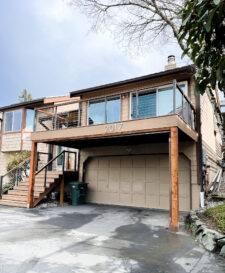
What the Nooksack Climate Actually Does to a Deck
Driving Rain and Standing Moisture
Whatcom County doesn't get hard downpours as often as it gets long, low-angle rain that gets pushed sideways by wind off the valley. That kind of rain finds its way into joints, under railings, and into any spot where two pieces of wood or composite meet without a gap to drain. Left alone, that trapped moisture is what actually breaks a deck down — not the rain itself, but the rain that never gets a chance to leave.
Moss and Algae Season
Shaded decks, and decks near trees or under second-story overhangs, can carry green growth for a good chunk of the year here. Moss isn't just a cosmetic problem — it holds moisture against the deck surface and turns boards slick and dangerous underfoot, especially on stairs. A deck design that ignores sun exposure and airflow is signing up for a moss problem no amount of pressure washing will permanently solve.
Temperature Swings and Wood Movement
Even in a mild climate like this one, wood expands and contracts with seasonal humidity changes. Framing and fastening that don't account for that movement lead to popped nails, split boards, and railings that work themselves loose over a few winters.
What a Correctly Built Deck Looks Like Here
A deck that's going to hold up in Nooksack isn't built differently from a well-built deck anywhere — it's just built with less room for error on the details that matter most in a wet climate. That includes:
- Joist and ledger flashing that actually sheds water away from the house structure, not just tape over a nail hole
- A ledger board attachment engineered for the load, with proper flashing behind it so water can't migrate into the rim joist or wall framing
- Gapped decking installed with consistent spacing so water drains through instead of sitting on the surface
- Stainless or coated fasteners rated for exterior and, where used, for contact with treated lumber
- Footings set below frost depth and sized for the soil conditions on your lot
- Railing posts through-bolted rather than just lag-screwed to the rim joist
- Stair stringers cut and supported so they don't flex or trap water at the base
None of that is unusual or exotic. It's just the difference between a deck that's assembled and a deck that's actually built to shed water and carry load for decades.
Choosing Materials for a Damp, Shaded Climate
There's no single "best" decking material — the right choice depends on your budget, how much sun the deck gets, and how much maintenance you actually want to do. Here's how the common options compare for a property like yours in the Nooksack area:
| Material | Moisture & Moss Behavior | Maintenance | Typical Lifespan |
|---|---|---|---|
| Pressure-treated wood | Handles moisture well when sealed regularly; moss can take hold if shaded and not maintained | Annual cleaning and re-sealing recommended | 15–25 years with upkeep |
| Cedar | Naturally rot-resistant, but surface graying and moss are common in shade without sealing | Sealing every 1–2 years to hold color and resist moisture | 20–25 years with upkeep |
| Composite decking | Doesn't absorb moisture like wood; still needs periodic cleaning where moss or algae can grow on the surface film | Occasional washing, no sealing or staining | 25–30+ years, per manufacturer warranty |
| PVC decking | Fully moisture-resistant surface; best option for consistently shaded, damp areas | Occasional washing only | 25–30+ years, per manufacturer warranty |
We'll walk you through the honest trade-offs for your specific lot — sun exposure, how close the deck sits to trees or the river bottom, and what upkeep you're realistically willing to do — rather than steering you toward whatever's easiest for us to install.
New Build, Replacement, or Repair — Knowing Which One You Need
New Deck Construction
If you're adding a deck where there isn't one, or replacing an old structure down to the footings, this is where we have the most control over long-term performance — proper flashing, drainage, and framing from day one instead of working around what's already there.
Deck Replacement
Sometimes the framing underneath is sound but the decking surface itself has failed — cupped boards, soft spots, or a color and style that's dated. We can often replace the surface and railings while reusing solid framing, after we've confirmed it's actually structurally sound underneath.
Repair and Restoration
Not every problem deck needs a full rebuild. Rot at a ledger board, a soft stair stringer, loose railings, or moss-stained boards can often be repaired or replaced in sections. We'll tell you plainly when a repair makes sense and when it's throwing money at a structure that's past the point of patching.
Our Process for a Nooksack Deck Project
- On-site assessment. We look at sun exposure, drainage, grade, and — for replacement or repair jobs — the condition of the existing framing and ledger connection.
- Design and material selection. We talk through layout, railing style, and decking material options with honest pros and cons for your specific site conditions.
- Permitting. Deck projects in Whatcom County typically require a permit depending on size and height; we handle that process as part of the job.
- Demolition (if applicable). Old decking, railings, and any compromised framing are removed and hauled off.
- Framing and flashing. Ledger, joists, and footings are installed or verified, with flashing detailed to shed water away from the house.
- Decking, railing, and stair installation. Fastened and gapped per manufacturer specs for the material chosen.
- Final walkthrough. We check fastener seating, railing rigidity, and drainage before calling the job done.
Maintenance That Actually Matters Here
A deck in this climate isn't maintenance-free even when the material claims to be. A short checklist that covers most of what actually protects a deck around Nooksack:
- Sweep leaves and debris off the surface and out of gaps between boards regularly through fall
- Wash the deck surface at least once a year to remove algae and moss buildup before it stains or gets slick
- Check and re-seal wood decking on the schedule the product calls for, not just when it looks faded
- Inspect railings and stair connections annually for movement or loosening
- Keep gutters and downspouts near the deck clear so runoff isn't dumping directly onto or under it
- Trim back overhanging branches to cut down on shade-driven moss growth
Why Hire a Crew That Already Works in Nooksack
A deck built by someone unfamiliar with this climate can look fine for a season or two and still be set up to fail early — the mistakes that matter here (poor flashing detail, decking with no drainage gap, fasteners that aren't rated for treated lumber) aren't always obvious until the damage is already underway. We work siding and exterior projects throughout Glenhaven and out to Nooksack, so we're used to building for driving rain, long moss season, and the humidity that sits in this part of Whatcom County. That's not a marketing line — it's the reason our framing details and material recommendations look the way they do.
We also stand behind the work with a clear scope and honest answers about what your site and budget actually call for, instead of upselling features you don't need or cutting corners you'd only find out about years later.
Get a Straightforward Estimate
If you're planning a new deck, replacing a tired one, or dealing with soft spots and moss you can't get ahead of, we're happy to take a look and give you a straightforward assessment. Request a free, no-pressure estimate using the form below and we'll go over your options in person.