 Glenhaven Siding
 Siding Repair in Bellingham: What the Local Climate Does to Your Walls
Bellingham sits close enough to the water that salt-laden air is a constant, low-grade stress on exterior building materials, even on homes that never get a direct view of Bellingham Bay. Add in the driving, wind-pushed rain that comes through Whatcom County for a good chunk of the year, plus the long, damp moss season that runs from fall through spring, and you get a climate that is genuinely hard on siding. It's not one dramatic event that causes most of the repair calls we get in this area — it's the slow accumulation of moisture, salt, and shade-loving growth working on a wall system month after month.
That combination is why siding repair here isn't really a cosmetic job. A crack, a soft spot, or a patch of dark staining is usually a symptom of moisture getting somewhere it shouldn't. Repairing it correctly means understanding what the Bellingham climate specifically does to wood, fiber cement, and vinyl siding, not just matching a board and moving on.
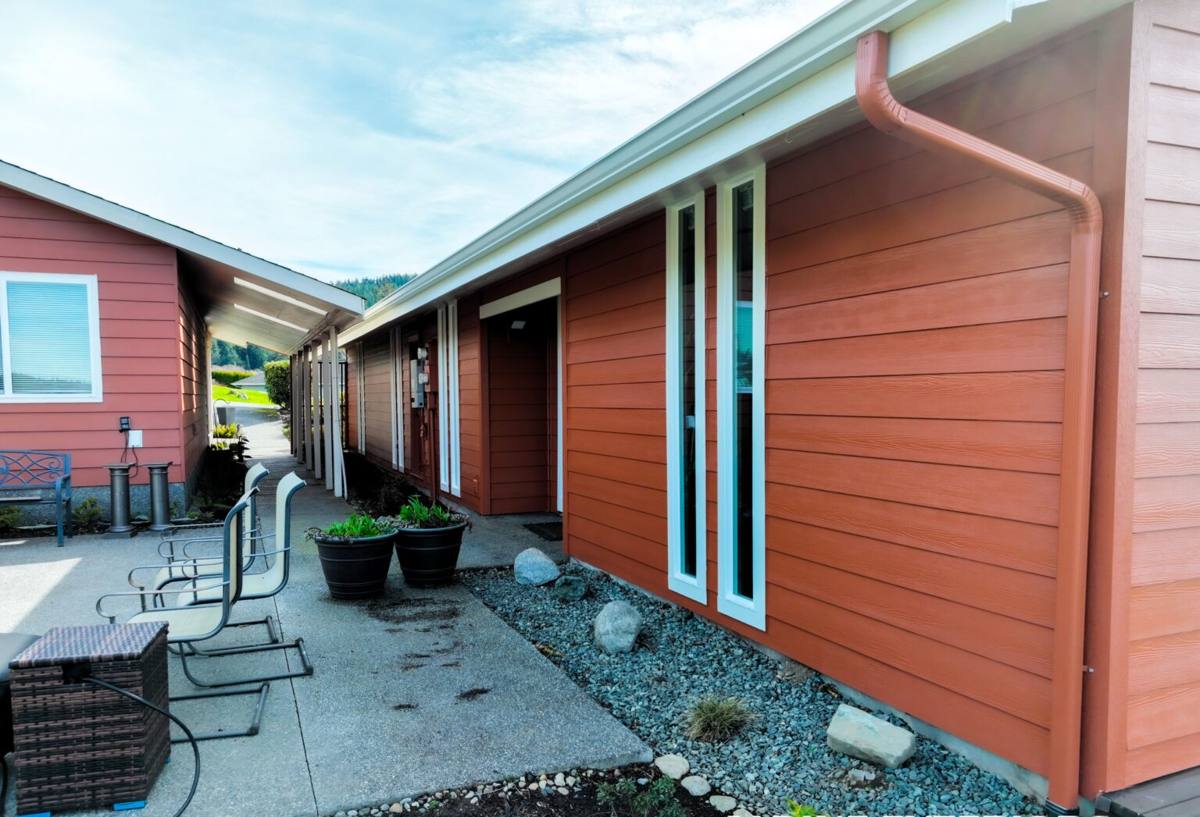
The Repair Issues We See Most Often in Bellingham Homes
Moisture Intrusion Behind the Cladding
The most common — and most misdiagnosed — problem is moisture that has worked its way behind the siding itself, usually through a failed caulk joint, a poorly flashed window or door, or a seam that was never properly lapped during the original installation. From the outside it might just look like a slightly bulging or discolored panel. Underneath, there can be a wet sheathing or trim issue that will keep causing damage until it's actually sealed and dried out, not just covered over.
Moss and Algae Staining
Bellingham's long wet season and mature tree canopy in a lot of neighborhoods create ideal conditions for moss and algae to establish on north-facing and shaded wall sections. On some siding types this is mostly a surface staining issue. On others — particularly older wood-based products or siding with compromised paint or sealant — sustained moss growth holds moisture against the surface and accelerates rot or delamination underneath it.
Cracked, Warped, or Delaminating Boards
Repeated wet-dry cycling causes different siding materials to fail in different ways. Wood-based composite products can swell, delaminate at the edges, or lose their factory coating. Vinyl can crack in cold snaps or warp where it's taken direct sun exposure. Older or poorly primed materials often show chalking, soft spots, or paint failure well before the underlying board is actually beyond saving.
Impact and Weather Damage
Wind-driven debris, ladder contact, and the occasional storm damage account for the more straightforward repairs — a cracked panel or two that needs to be swapped out. These are usually the simplest calls to make, but matching the replacement to weathered existing siding still takes some judgment.
What a Correct Siding Repair Actually Involves
A repair that's done right starts before anyone touches a piece of siding. It starts with figuring out why the damage happened in the first place. Swapping a damaged board without addressing a bad flashing detail or an open seam behind it just buys a homeow a few more years before the same spot fails again — often worse, because the moisture problem kept working the whole time.
A properly done repair generally includes:
- Removing enough of the surrounding siding to see the condition of the sheathing, house wrap, and flashing underneath — not just the damaged piece itself
- Confirming whether the sheathing or framing has taken on water damage that needs to be dried out or replaced before new siding goes back on
- Correcting the actual entry point — resealing a window, re-flashing a trim detail, re-lapping a seam — so the same failure doesn't repeat
- Selecting a replacement material and finish that will hold up against the same conditions that damaged the original
- Reinstalling with correct fastening, clearances, and joint treatment so water sheds the way it's supposed to
Skipping the diagnostic step is the single most common shortcut in siding repair, and it's the reason so many "repaired" spots fail again within a few years in a climate like this one.
Repair or Replace? How We Make That Call
Not every damaged section needs a full re-side, and we don't push a bigger job than a home actually needs. But there's a point where patching individual areas stops being the economical choice. Here's generally how that decision breaks down:
| What We're Seeing | Repair Usually Makes Sense | Points Toward Replacement |
|---|---|---|
| Damage limited to one or two isolated sections | Yes | — |
| Moisture damage confined to a specific detail (window, corner, seam) | Yes, once the source is fixed | — |
| Widespread moss staining across multiple wall faces | Sometimes, if the boards themselves are sound | If growth has been established for years |
| Repeated repairs to the same general area over time | — | Yes — recurring failure usually means a systemic issue |
| Original material failing broadly (chalking, warping, delaminating across the house) | — | Yes |
| Sheathing or framing rot found during a repair | Depends on extent | Often, if it's widespread |
We'll always tell you plainly which category your situation falls into, including when the honest answer is that a targeted repair will hold up fine and a full re-side would be spending more than the problem calls for.
Our Bellingham Repair Process
- Inspection. We look at the damaged area and the surrounding siding, trim, and flashing details, not just the spot that prompted the call.
- Diagnosis. We identify the actual cause — moisture source, material failure, impact damage, or age-related breakdown — and explain what we found in plain terms.
- Repair plan. You get a clear scope: what gets replaced, what gets resealed or reflashed, and what materials we're using, along with a straightforward, honest cost estimate.
- The work itself. We open up the area, address the underlying cause, and reinstall with correct fastening, flashing, and joint detailing so the repair is built to actually last through another wet season.
- Cleanup and check. We leave the site clean and walk the repair with you before we consider the job done.
Why We Repair and Rebuild With James Hardie Fiber Cement
When a repair calls for new siding — whether it's a couple of boards or a full section of wall — we install James Hardie fiber cement, and that's it. We don't carry vinyl, LP SmartSide, Cemplank, Allura, or bare cedar or spruce on our trucks. That's a deliberate standard, not a lack of options.
In a climate defined by salt air, driving rain, and months of shaded, damp conditions, the material doing the repair matters as much as the workmanship. Fiber cement is non-combustible and dimensionally stable — it doesn't expand and contract with moisture the way wood-based products do, and it doesn't soften, crack, or warp the way vinyl can in temperature swings. James Hardie's ColorPlus factory finish is baked on and warranted against fading and cracking, which matters a great deal on a repair: it gives us the best realistic chance of matching new material to a section of siding that's been sun- and salt-exposed for years, rather than leaving an obvious patch that ages differently than everything around it.
Hardie also builds region-specific HZ5 product engineered for wetter, harsher climates like ours, which is a meaningful difference from a one-size-fits-all siding product. Combined with a strong transferable warranty, it means a repair we do today is built on the same material system as a full re-side — not a stopgap that's mismatched to what's already on the wall.
Why a Crew That Already Works in Bellingham Matters
A repair crew that works Bellingham regularly has already seen how this specific stretch of Whatcom County treats siding — which wall orientations take the worst of the driving rain, which neighborhoods hold onto moss longest into spring, and which older installation habits tend to cause moisture problems years later. That's not something you can fully substitute with general experience from a drier or milder region.
It also means practical things for you as a homeowner: a crew that's not learning the local climate on your dime, straightforward scheduling around the wetter months when repair work needs the right weather window, and a contractor who's going to be around locally if a repair needs a warranty follow-up down the road.
Between-Repair Maintenance: What Homeowners Can Do
A good repair buys you years, but a little routine attention between visits goes a long way in this climate. A few things worth doing on your own:
- Walk the exterior once or twice a year and look for cracked caulk lines, gaps at trim, or newly soft-feeling spots
- Keep gutters clear so overflow isn't running directly down wall sections
- Trim back vegetation and tree limbs that keep shaded wall areas from ever fully drying out
- Gently rinse moss and algae buildup before it becomes established, rather than letting it sit for a full season
- Address small issues — a loose piece of trim, a small crack — before the next wet season turns them into bigger ones
None of that replaces a proper inspection, but it does reduce how often you need one.
Get an Honest Look at Your Siding
If you're seeing staining, soft spots, cracked boards, or a repair that hasn't held up, we're happy to come take a look. We'll tell you plainly what we find, whether it's a simple fix or something bigger, and what it would take to do it right. Reach out for a free, no-pressure estimate — the form below gets you started.