 Glenhaven Siding
 Sudden Valley sits above the south shore of Lake Whatcom under heavy second-growth tree cover, and that setting changes what a siding job actually needs to hold up over time. Add in Whatcom County's broader pattern of salt-tinged air, driving rain, and a moss season that runs long into the year, and you get one of the tougher siding environments we work in. This page is narrower than our general Sudden Valley exterior page — it's specifically about installing James Hardie fiber cement siding on a Sudden Valley home, what that job involves when it's done right, and why the details matter more here than they do on a typical open lot closer to town.
Why Siding Wears Differently on a Sudden Valley Lot
Most homes in Sudden Valley sit under enough tree canopy that at least one wall face gets little to no direct sun for most of the year. That single fact drives almost everything else about how a siding job needs to be planned here.
Shade That Slows Drying
A wall that never gets a full afternoon of sun stays damp longer after every rain than a wall on an open lot. Materials that depend on regular drying cycles to shed the moisture they've absorbed don't get that chance on a shaded elevation, and that's exactly the condition that shortens the useful life of moisture-sensitive siding.
Rain That Hits Every Wall Differently
Sudden Valley's terrain is hilly, and homes sit at a range of elevations and orientations relative to the lake and the surrounding ridgelines. Wind-driven rain doesn't treat every wall of the same house equally — one elevation can take a real beating while another stays comparatively dry. Flashing and water management need to be planned per elevation, not applied as a single blanket assumption across the whole house.
A Long Moss Season
Shade, humidity off the lake, and mild temperatures are the exact combination moss and mildew need to establish and keep growing for most of the year. Porous or moisture-holding siding gives that growth something to take hold on, and once it's established, it traps additional moisture against the wall behind it. That compounding effect is where a lot of long-term siding problems actually start.
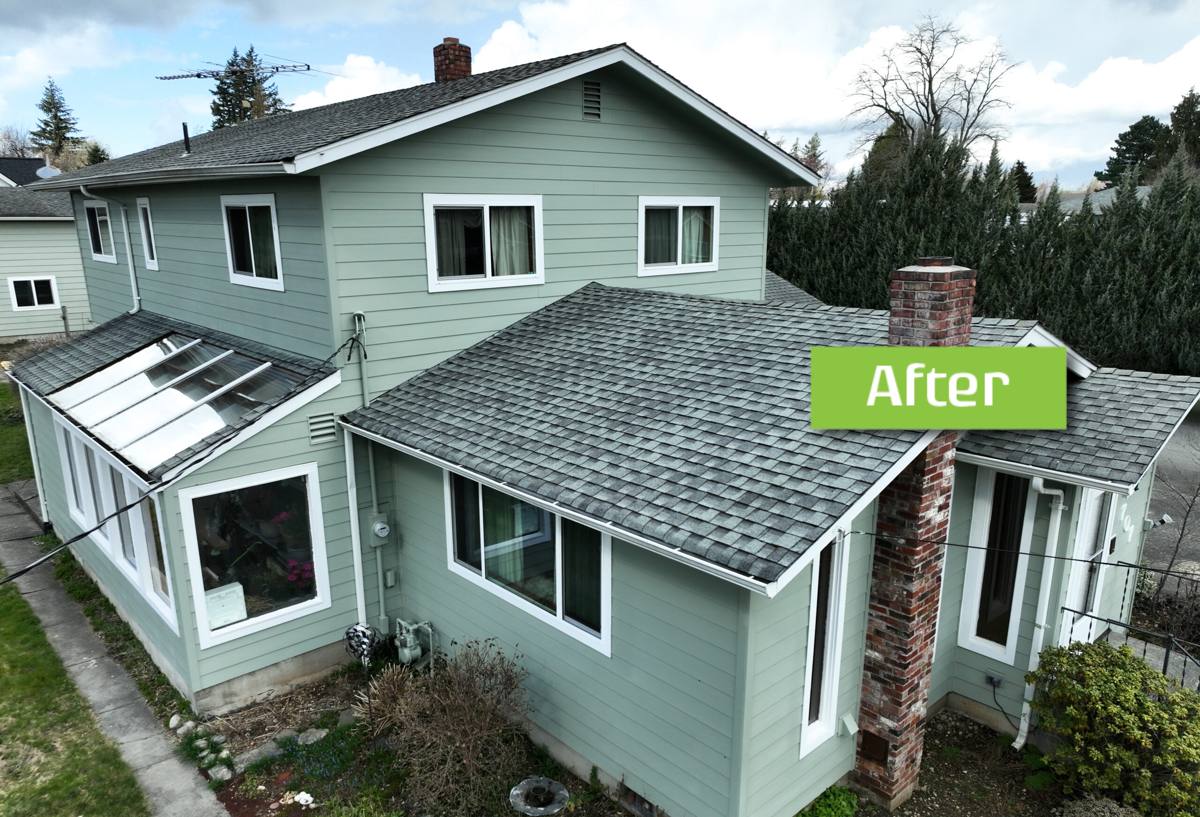
Why James Hardie Fiber Cement Fits This Site
James Hardie fiber cement is an inorganic material — a cured blend of Portland cement, sand, and cellulose fiber — which means it doesn't have a wood-based core that swells, rots, or feeds insects the way organic siding can. On a shaded, tree-surrounded lot where walls stay damp longer, that dimensional stability matters more than it would on a dry, sun-exposed property. Hardie's HZ5 line is engineered for regions with sustained moisture exposure and freeze-thaw cycling, which fits Whatcom County's winters better than a product built primarily for hot, dry climates. The ColorPlus finish is baked on in a factory setting rather than brushed on in the field, and it's built to resist the fading and chalking that constant dampness and UV exposure cause over time. Fiber cement is also non-combustible, which is a relevant point for a community surrounded by forest, even in a climate this wet.
What a Correct Installation Actually Involves
Hardie siding only performs the way it's engineered to when it's installed to the manufacturer's published spec. On a shaded lot where walls don't get much help drying out on their own, cutting corners on installation detail shows up as a problem faster than it would on a sunnier property.
- Manufacturer-specified clearances from grade, roofline, and decking, so splash-back and standing moisture stay off the board edge
- A drainage plane or rain screen behind the siding, so any moisture that gets past the surface can drain and dry instead of sitting against the wall
- Correct fastener type, spacing, and depth, which prevents cracking and keeps the water-resistive barrier behind the siding intact
- Proper flashing at every window, door, and penetration, directing wind-driven rain away from seams rather than trapping it
- Factory-cut edges used wherever possible, with any field cuts sealed to manufacturer spec so the factory finish isn't compromised at the edge
None of this is optional on a house like this. A loosely installed product will still develop moisture problems on a shaded, damp lot, regardless of how good the underlying material is.
Choosing the Right Line, Profile, and Color
Most Sudden Valley homes call for Hardie's HZ5 formulation rather than a line engineered for hotter, drier regions — that's a starting point, not a variable we treat as optional. Beyond that, lap siding is the most common profile because it sheds water consistently across a shaded elevation with the fewest horizontal seams. Shingle-style profiles are popular for their look but introduce more seams, which matters more on a wall that stays wet longer. Color is worth a real conversation too — the ColorPlus palette holds up well across the board, but darker colors on a heavily shaded wall can make normal weathering and any moss or debris more visible sooner than a lighter tone would. None of that should decide the whole project on its own, but it's worth walking through during the estimate rather than picking a color off a sample chip alone.
Our Process for a Sudden Valley Hardie Install
- On-site assessment: we walk the property elevation by elevation, noting shade exposure, existing moisture damage, and where the current siding or sheathing has already started to fail
- Tear-off and sheathing check: once the old siding comes off, we inspect the sheathing underneath — this is where hidden rot from years of shaded, slow-drying conditions often turns up
- Moisture barrier and drainage plane: a correctly lapped weather-resistive barrier and rain screen go on before any Hardie board, with extra attention on the elevations that stay damp longest
- Hardie board installation: boards go up to manufacturer clearance, fastening, and flashing spec, with factory-cut edges used wherever the layout allows
- Trim, caulking, and final details: sealed joints and properly integrated trim close out the water management system at every transition
- Walkthrough and cleanup: we go over the finished work with the homeowner and clear the site before we consider the job done
We don't skip the sheathing inspection step to save time. On a lot that's been shaded and damp for years, what's underneath the old siding is often more important to the outcome than the new siding itself.
What This Type of Project Tends to Cost
Every Sudden Valley property is different, but a few factors consistently move the price of a Hardie install more than others:
| Cost Factor | Why It Matters Here |
|---|---|
| Condition of existing sheathing | Years of shaded, slow-drying exposure sometimes mean rot repair before new siding can go on |
| Number of shaded elevations | Walls that stay damp longer often warrant more thorough drainage-plane detailing |
| Home size and trim complexity | More corners, windows, and trim transitions mean more flashing and labor time |
| Private-road access and material staging | Sudden Valley's internal road network affects how equipment and materials get delivered and staged |
| Profile and color selection | Premium ColorPlus colors and shingle-style profiles run higher than standard lap siding in a standard finish |
We'll walk through these specifics for your property during the estimate rather than quoting off a generic per-square-foot number that ignores what's actually on the wall now.
Why a Crew That Already Works Sudden Valley Matters
Sudden Valley is a private community with its own internal road network and a homeowners association, and a crew that works here regularly already has the logistics figured out — how to schedule around community access, where to stage materials, and who to coordinate with before work starts. Many HOA-governed communities also have exterior color or material guidelines that need sign-off before a project begins, and it's worth confirming what applies to your property early rather than after materials are ordered. Beyond logistics, a crew that's done this work up and down the neighborhood starts to recognize the pattern from house to house — which elevations on a given street orientation take the worst of the wind-driven rain, and how much drainage detailing a heavily shaded lot actually needs versus one with a bit more open sky.
Signs Your Current Siding Is Ready for Replacement
- Moss or mildew that keeps returning on a shaded wall shortly after cleaning
- Paint that keeps failing no matter how often it's redone
- Soft spots, bubbling, or visible swelling anywhere on the siding surface
- Gaps opening up at trim, corners, or seams that weren't there a few years ago
- Visible warping or cupping on wood-based or engineered wood panels
- Water staining on interior walls or ceilings near an exterior wall after heavy rain
If you're seeing one or two of these, it doesn't automatically mean a full re-side — sometimes targeted repair is the right call. But it's worth having someone look at the actual cause rather than just patching the symptom.
If you're weighing a siding project on a Sudden Valley property, we're glad to walk the exterior with you, look at what the current siding is actually dealing with, and give you a straight answer on what we'd recommend and why. Reach out below for a free, no-pressure estimate.