 Glenhaven Siding
 Why Siding Installation in Blaine Is a Different Job Than Inland Whatcom County
Blaine sits right up against Semiahmoo Bay and Drayton Harbor, a few miles shy of the Canadian border, and that location changes what a house needs from its exterior. Homes here take on salt-laden air off the water, wind-driven rain that hits siding sideways instead of straight down, and a wet season that stretches long enough for moss and algae to get comfortable on anything that stays damp. Add in Whatcom County's short summers and mild, soggy winters, and you've got a climate that's genuinely hard on exterior materials — not in a dramatic way, but in a slow, cumulative one.
A siding job that would hold up fine forty miles inland can fail early in Blaine if it isn't built for this specific exposure. That's not scare talk — it's just what saltwater proximity and sustained moisture do to fasteners, seams, and any product that isn't dimensionally stable when wet. Siding installation here needs to account for all three: the salt, the wind-driven rain, and the moss.
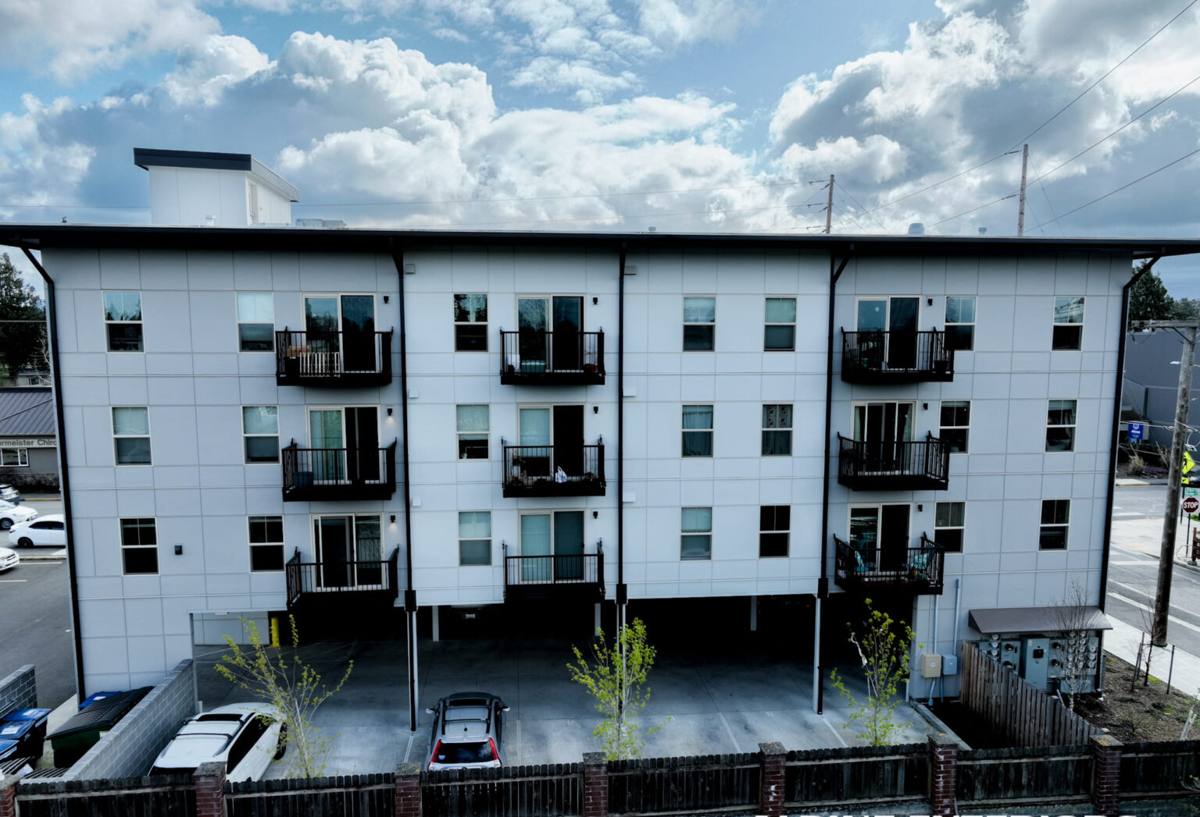
What Blaine's Climate Actually Does to Siding Over Time
Salt Air
Airborne salt from the bay settles on exterior surfaces and accelerates corrosion of fasteners, flashing, and any metal trim components. Over years, this can loosen siding attachment points or cause staining and pitting on lower-grade hardware. It also degrades some paint and coating systems faster than they'd wear inland, leading to chalking, fading, or adhesion failure well before a manufacturer's stated lifespan.
Driving Rain
Wind off the water doesn't let rain fall straight down — it pushes it laterally into wall assemblies, testing every seam, joint, and piece of flashing. Siding and house wrap that would perform adequately in a calmer inland setting can let water intrude at Blaine's wind speeds if laps, caulking, and flashing details aren't done correctly. Once moisture gets behind siding, it doesn't dry out quickly in this climate — which leads to the next problem.
Long Moss and Algae Season
Whatcom County's wet months run long, and shaded or north-facing walls in Blaine can stay damp for weeks at a stretch. That's exactly the environment moss, algae, and mildew need to take hold. Siding materials that absorb moisture or have porous surfaces give these organisms something to grip onto, and once established, moss holds water against the wall even longer — a cycle that accelerates deterioration if the underlying material isn't resistant to it.
Why We Only Install James Hardie Fiber Cement in Blaine
We standardized on James Hardie fiber cement siding for every home we work on, and Blaine's exposure is a good example of why. Fiber cement is dimensionally stable — it doesn't swell, warp, or expand the way wood-based or engineered-wood products can when they take on moisture. That matters directly here: a product that moves with humidity opens gaps at seams and fastener points, which is exactly where wind-driven rain finds its way in.
Hardie's fiber cement is also non-combustible, which is a real consideration for homes near dry summer conditions and wildfire smoke seasons that have become more common across Western Washington. And Hardie's ColorPlus factory-applied finish is baked on under controlled conditions, giving it better fade and moisture resistance than field-applied paint — which matters when salt air is already working against coatings before the wildlife of a Pacific Northwest winter even starts.
We don't install vinyl siding, LP SmartSide, Cemplank, Allura, or primed wood siding, and Blaine's climate is a straightforward illustration of why. Vinyl can become brittle and crack in freeze-thaw swings and doesn't hold paint if a homeowner ever wants a different color. Engineered wood products carry inherent moisture sensitivity at cut edges and butt joints — exactly the seams that driving rain targets. Primed wood siding requires diligent, ongoing repainting to keep moisture out, and in a salt-air, high-moisture environment that maintenance burden only grows. We'd rather put one product on a home that we know performs here than juggle exceptions.
How James Hardie's HZ5 Product Line Fits This Region
Hardie engineers its HardieZone products for different climate zones, and Whatcom County — including Blaine — falls into the HZ5 zone, which is built around wet, moderate-freeze Pacific Northwest and Northern climates. HZ5 formulations account for prolonged moisture exposure and freeze-thaw cycling, which is a better match for coastal Whatcom County than a generic siding product not engineered by region.
What Correct Siding Installation Involves Here
The siding material is only part of the equation. In Blaine's conditions, the installation details determine whether a job holds up for decades or starts showing problems in a handful of years. A correct installation includes:
- Proper water-resistive barrier (house wrap) installed with correct laps and sealed penetrations, so any moisture that gets past the siding has a drainage path instead of a place to sit
- Rainscreen or drainage gap detailing where appropriate, so siding isn't sitting flush against wet sheathing
- Correct flashing at every window, door, and roof-to-wall intersection — the highest-risk points for wind-driven rain intrusion
- Manufacturer-specified fastener spacing, type, and corrosion-resistant hardware suited to a salt-air environment
- Proper clearance between siding and grade, decks, and roof lines to avoid wicking moisture from the ground or nearby surfaces
- Caulking and sealant only where Hardie's install specs call for it — over-caulking traps moisture just as often as under-caulking lets it in
- Factory-cut and factory-primed edges kept intact, with field cuts sealed per manufacturer instructions
Skipping any one of these doesn't usually cause an obvious problem on day one. It shows up two, five, or ten years later as a soft spot, a stain, or a section of siding that's holding moss no matter how many times it's cleaned. That's why installation quality matters as much as the product choice.
Our Process for a Blaine Siding Installation
1. On-Site Assessment
We walk the home and look at what's actually driving the need for new siding — moisture intrusion, failing material, age, or a remodel — and check the condition of the sheathing and water-resistive barrier underneath, since Blaine's exposure means we sometimes find wall assembly issues that need addressing before new siding goes up.
2. Product and Detail Planning
We select the right Hardie profile, plank exposure, and trim package for the home, and plan flashing and drainage details specifically for the wall's exposure to prevailing wind and rain direction.
3. Prep and Removal
Old siding comes off, the substrate gets inspected and repaired as needed, and we address any water-resistive barrier issues before a single new plank goes up. This step gets skipped by crews trying to move fast — we don't skip it, especially this close to the water.
4. Installation to Manufacturer Spec
Siding, trim, and flashing go in following James Hardie's published installation instructions, which is also what keeps the manufacturer's warranty intact. This is where fastener corrosion resistance and proper clearances get handled correctly the first time.
5. Final Walkthrough
We review the finished work with the homeowner, including maintenance basics — what little there is with fiber cement — so there are no surprises later.
Why a Crew That Already Works Blaine Matters
Siding installation isn't identical from town to town, even within Whatcom County. A crew that regularly works homes in Blaine has already dealt with the salt air's effect on fastener choice, has seen which wall orientations take the worst of the driving rain, and knows how aggressively moss establishes itself on shaded elevations here. That experience shows up in the small decisions — where to add extra flashing attention, which details to double-check — that a crew unfamiliar with this specific coastal exposure might not think twice about.
It also means we're not guessing at what "normal" looks like for a Blaine home's exterior. We've seen how James Hardie siding performs here over time, and we install to the standard that keeps it performing that way.
Cost Factors for Siding Installation in Blaine
Every home is different, but the following factors typically drive cost on a Blaine siding project:
| Factor | Why It Matters |
|---|---|
| Home size and wall complexity | More square footage, corners, and roof-to-wall intersections mean more material and more flashing detail work |
| Substrate condition | Water-damaged sheathing found during removal needs repair before new siding goes on |
| Siding profile and trim selection | Lap width, shingle-style panels, and trim packages vary in material and labor cost |
| Existing siding removal and disposal | Tear-off adds labor and disposal cost versus new construction |
| Site access | Waterfront lots, steep grades, or tight setbacks can affect staging and labor time |
| Drainage and flashing detailing needed | Homes with more wind-exposed elevations may need additional flashing and rainscreen work |
We provide a specific, written estimate after seeing the home in person — broad cost ranges without an on-site look aren't useful to a homeowner trying to budget accurately.
Signs a Blaine Home May Need New Siding Soon
A few things worth watching for, especially on walls facing prevailing wind and rain:
- Persistent moss or algae growth that returns quickly after cleaning
- Soft spots, bubbling, or visible warping in existing siding
- Paint that's failing faster than expected, especially on south- or west-facing walls
- Visible gaps or separation at seams, corners, or trim boards
- Rust staining running down from fasteners or metal flashing
- Higher heating bills that might point to compromised wall insulation behind failing siding
None of these alone means a full replacement is urgent, but taken together — or left unaddressed for a few seasons in this climate — they tend to compound.
If you're weighing a siding project for a home in Blaine, we're happy to take a look and give you a straightforward, no-pressure estimate — including an honest read on whether repair or full replacement makes more sense for your situation. Use the form below to get started.