 Glenhaven Siding
 Windows in Columbia Face a Tougher Job Than Most
Ask anyone who has lived in the Columbia area of Glenhaven for more than a winter or two, and they'll tell you the weather here doesn't ease up on a house. Salt-laden air drifts in off the water, driving rain comes sideways during winter storms, and a long, damp moss season settles in and doesn't let go until well into spring. Windows sit right at the front line of all of it. A window that's a good fit for a dry inland climate can start failing within a few years out here — not because it was a bad product, but because it was never built or installed for this exposure.
Custom windows, done right, aren't just about matching an odd-sized opening or getting a particular look. In Columbia, "custom" also means selecting materials, seals, and flashing details that actually hold up against salt corrosion, wind-driven moisture, and the constant freeze-thaw-damp cycle that defines a Whatcom County winter. This page focuses specifically on that: what local homes need, what a correct installation actually involves, and why the details matter more here than they would somewhere with milder weather.
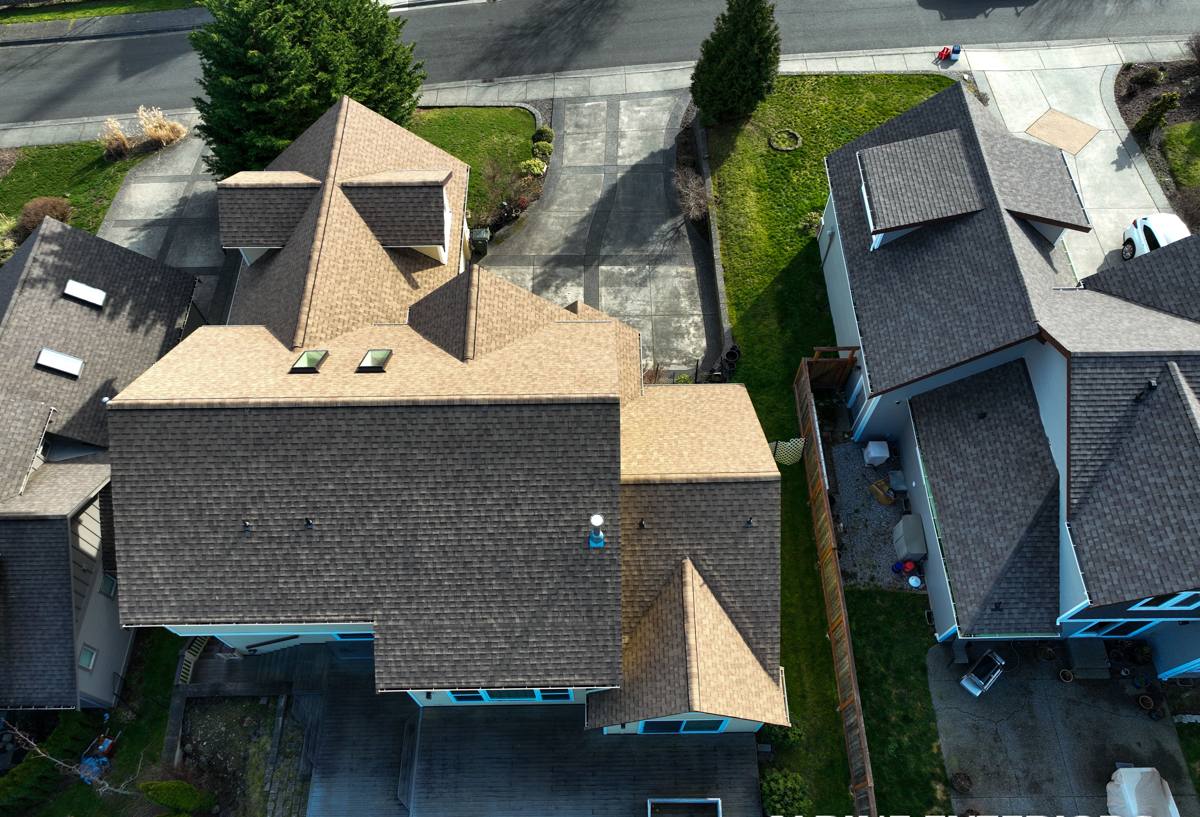
What Whatcom County Weather Actually Does to a Window
Salt Air and Metal Fatigue
Salt in the air accelerates corrosion on anything metal — hinges, cranks, balance systems, screws, and uncoated aluminum components. Over years, this shows up as stiff or sticking hardware, pitting on exposed metal trim, and hardware that seizes up entirely. It's a slow process, which is exactly why it gets ignored until a window won't latch properly anymore.
Driving Rain and Wind Pressure
Rain that falls straight down is manageable for almost any window. Rain that's being pushed sideways by wind is a different problem — it tests the flashing, the sill pan, and the seal around the frame far harder than a typical rating test does. A window that leaks in Columbia usually isn't leaking through the glass or the sash; it's getting in around the perimeter, where installation quality matters more than the window itself.
Moss, Mildew, and Trapped Moisture
The long moss season here isn't just a roof and gutter issue. Moss and organic buildup around window trim and sills hold moisture against wood and painted surfaces for months at a time. If a window's exterior detailing doesn't shed water and dry out between storms, that moisture works its way into trim, sheathing, and eventually framing.
What a Correct Custom Window Installation Involves
A lot of what determines whether a window lasts 10 years or 30 in this climate happens before the window is even set in the opening. We treat the following as non-negotiable on every Columbia job:
- Full inspection of the rough opening for existing rot, soft framing, or prior water intrusion before anything new goes in
- Correctly lapped, water-shedding flashing at the head, jambs, and sill — installed in the right order, not just caulked over
- A sloped sill pan that directs any water that does get past the exterior back outside, rather than letting it pool
- Sealant and backer rod sized and placed for the actual gap, not just a bead of caulk run around the trim
- Insulation packed correctly around the frame — gaps left empty, or overpacked and bowing the frame, both cause problems
- Hardware and cladding chosen with coastal exposure in mind, not just cost or lead time
Skip any one of these steps and the window itself becomes almost irrelevant — even a premium unit will eventually leak or fail early if the opening around it wasn't prepped and flashed correctly.
Choosing Frame Materials for a Salt Air, High-Moisture Climate
There's no single "best" window material for every home — it depends on the home's exposure, the look you're going for, and how much maintenance you're willing to keep up with. Here's how the common options actually perform in a Columbia-area setting:
| Frame Material | Coastal / Moisture Performance | Maintenance | Trade-Offs |
|---|---|---|---|
| Vinyl | Good — won't rot or corrode, handles moisture well | Low | Limited color/finish options; can look less premium on higher-end homes |
| Fiberglass | Excellent — very stable in temperature and moisture swings, resists corrosion | Low | Higher upfront cost than vinyl |
| Wood-clad (exterior clad, wood interior) | Good on the exterior if cladding is sound; interior wood needs protection from any leaks | Moderate | Any breach in the cladding lets moisture reach wood underneath — installation quality is critical |
| Aluminum (uncoated or poorly finished) | Poor in salt air unless properly finished — prone to pitting and corrosion over time | Moderate to high | We generally steer homeowners away from unfinished or budget aluminum this close to salt air |
For most Columbia homes, we lean toward vinyl or fiberglass for straightforward replacements, and properly clad wood options when a homeowner wants a traditional look and understands the added maintenance. We're upfront about that trade-off rather than talking anyone into a material that will cause headaches five years down the road.
Our Process for a Columbia Window Project
1. On-Site Assessment
We start by looking at existing openings, checking for signs of past water intrusion, and noting which elevations of the house take the worst weather — usually whichever side faces the prevailing wind and rain. That exposure often drives material and detailing decisions more than the homeowner's initial preference does.
2. Measuring and Ordering
Custom windows are built to the exact opening, not a stock size, which means accurate measurement up front matters. We also plan flashing and trim details at this stage so nothing is improvised on install day.
3. Removal and Opening Prep
Old windows come out carefully so we can inspect the framing underneath. If there's rot or old water damage — which isn't unusual on older Columbia-area homes — we address it before the new window goes in, not after.
4. Installation and Flashing
This is where the details from earlier in this page get executed: sill pan, flashing sequence, sealant, insulation, and fastening to manufacturer and code specifications.
5. Interior and Exterior Finish
Trim, caulking, and paint or stain get finished to match the home, and we walk the homeowner through operation and basic care before we consider the job done.
Signs of a Window Job Done Wrong
We get called out to a fair number of homes in the area to fix or replace windows that were installed without enough attention to local conditions. A few warning signs worth knowing, whether you're evaluating existing windows or checking work in progress:
- Caulk used as the only barrier against water, with no flashing underneath
- Soft or discolored trim and sheathing around the window frame
- Hardware that's stiff, corroded, or hard to operate within just a few years of installation
- Visible daylight or drafts around the frame when the window is closed
- Condensation building up between panes, a sign the seal has failed
- Moss or dark staining concentrated right below a window, suggesting water is running down the wall from that opening
Any one of these is worth a closer look before it turns into a larger repair.
What Custom Windows Typically Cost — And What Drives the Price
We won't quote firm numbers without seeing the actual openings, but the factors below are what generally move a project's cost up or down. These apply broadly across the Columbia area:
| Cost Factor | Why It Matters |
|---|---|
| Window size and quantity | Larger openings and whole-house replacements naturally scale material and labor cost |
| Frame material | Vinyl is generally most affordable; fiberglass and clad-wood cost more upfront |
| Glazing package | Double vs. triple pane, and low-E or gas-fill options, add cost but also performance |
| Condition of the existing opening | Rot repair or reframing adds labor beyond the window install itself |
| Access and elevation | Second-story or hard-to-reach windows take more time and equipment |
| Custom shapes or sizes | Non-standard openings cost more than stock sizes due to custom manufacturing |
In general, a broad range for a quality custom window installed correctly — material, labor, and finish work included — runs from a few hundred dollars per window on the low end up to well over a thousand per window for larger openings, premium materials, or difficult access. The only way to get an accurate number is a walkthrough of your specific home.
Why a Crew That Already Works in Columbia Makes a Difference
Window installation isn't identical everywhere. A crew that mostly works drier, inland areas may not think twice about flashing details that are genuinely optional there but essential here. Working regularly in the Columbia area and the broader Whatcom County climate means we've already seen how salt air, wind-driven rain, and moss-season moisture find the weak points in a window installation — and we build around those weak points as a matter of habit, not as an afterthought.
That familiarity also shows up in smaller ways: knowing which elevations of a typical local home take the worst weather, sourcing hardware and finishes that hold up to salt exposure, and recognizing early signs of rot or past water intrusion that an out-of-area crew might miss entirely.
Keeping Custom Windows Performing Long-Term
A well-installed window still needs a little upkeep in this climate. Rinsing salt residue off exterior frames and hardware periodically, keeping moss and debris clear of sills and trim, and checking that exterior caulking hasn't cracked or pulled away all go a long way toward protecting the installation you paid for. None of this is difficult, but it does need to happen — a window that's ignored for years in salt air and constant damp will show it faster than one that gets basic seasonal attention.
If you're weighing whether it's time to replace aging windows in your Columbia-area home, or you want a second opinion on an installation that isn't performing the way it should, we're happy to take a look. Reach out for a free, no-pressure estimate using the form below — we'll walk the exterior with you, answer questions honestly, and give you a clear picture of what your home actually needs.