 Glenhaven Siding
 Deck Building Built for Sehome's Weather, Not Against It
A deck in Sehome lives a different life than a deck built somewhere dry and inland. Between the salt air drifting in off the water, driving rain that can run sideways for days at a time, and a moss season that seems to start earlier and last longer every year, an outdoor structure here is under near-constant low-grade attack. None of that means a deck can't last decades — it means the deck has to be built by someone who designs for those conditions from the first footing, not someone who builds a generic deck and hopes the weather is kind.
We build and rebuild decks for homes in and around Sehome, and the patterns repeat: decks that fail early almost always fail because of moisture that had nowhere to go, fasteners that weren't rated for a coastal-influenced climate, or framing that trapped water instead of shedding it. Get those fundamentals right and the deck earns its keep. Get them wrong and you're looking at soft boards, rusting hardware, and slick, moss-covered surfaces within a few seasons.
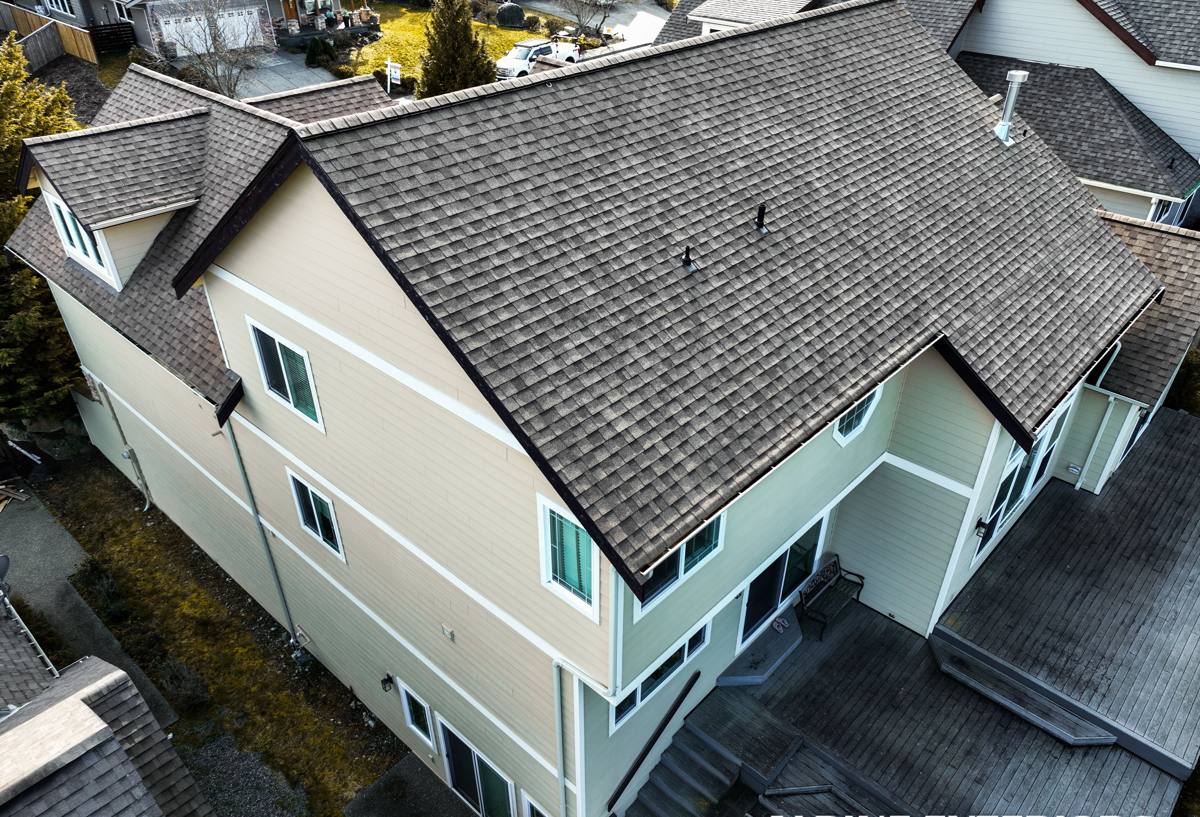
What Whatcom County's Climate Actually Does to a Deck
Salt Air and Metal Fatigue
Homes with any proximity to Puget Sound and the surrounding waterways deal with airborne salt that accelerates corrosion on anything less than properly rated fasteners and connectors. Standard hardware store screws and joist hangers can start showing rust streaks within a year or two in a salt-influenced environment. Once a fastener starts corroding, it loses holding strength long before it looks obviously bad — which is exactly why the hardware spec matters more here than in a drier, inland build.
Driving Rain and Water Intrusion
Western Washington rain doesn't just fall straight down — it drives at an angle against ledger boards, railing posts, and any point where the deck attaches to the house. That's where the majority of rot problems start: not on the open deck surface, where water at least has a chance to dry, but at hidden connection points where moisture gets trapped against wood with no airflow.
Moss, Algae, and a Long Wet Season
Whatcom County's extended damp season gives moss and algae a long runway to establish themselves on any horizontal wood or composite surface that doesn't get much sun or airflow. Beyond looking bad, a mossy deck surface is a genuine slip hazard, and moss holds moisture directly against the decking material, which shortens its service life regardless of what it's made of.
What a Correctly Built Deck Requires Here
A deck that's going to hold up to this climate isn't built differently in some dramatic way — it's built with more attention paid to the details that generic construction tends to skip.
- Footings sized and set below frost depth, appropriate to the soil conditions on the specific lot
- A ledger board properly flashed and sealed against the house wall, with a gap or flashing detail that lets water drain away instead of collecting behind the siding
- Structural connectors and fasteners rated for coastal or high-moisture exposure, not standard interior-grade hardware
- Joist framing with enough spacing and airflow underneath to let the structure dry out between rain events
- Decking material and gap spacing chosen to shed water and resist moss buildup rather than trap it
- Railing posts anchored in a way that resists both wind load and the slow loosening that comes from repeated wet-dry cycles
Skipping any one of these doesn't necessarily show up right away. It shows up two, five, or eight years later, as soft spots near the house, rust bleeding through fastener heads, or a railing post that's started to wiggle. Building it right the first time costs less than fixing it after the fact.
Choosing Decking Material for a Sehome Home
There's no single "right" decking material for every home — it depends on how much sun and shade the deck gets, how much upkeep the homeowner wants to do, and budget. What we won't do is install a product in a way that ignores how it actually behaves in this climate. Here's the honest comparison we walk homeowners through:
| Material | How It Handles This Climate | Maintenance | General Lifespan |
|---|---|---|---|
| Pressure-treated wood | Affordable and strong, but needs consistent sealing to resist moisture and moss in a wet climate | Annual cleaning, re-sealing every 1-2 years | 10-15 years with upkeep |
| Cedar | Naturally moisture- and insect-resistant, ages to a soft gray if left unfinished, but still benefits from cleaning to slow moss growth | Periodic cleaning, optional staining | 15-20 years with care |
| Composite decking | Resists rot outright, but shaded or low-airflow areas still need cleaning to stay ahead of surface algae and moss | Occasional washing, no sealing needed | 25-30+ years |
| PVC decking | Fully synthetic and moisture-proof, best long-term option for consistently shaded or damp sections of a lot | Occasional washing | 25-30+ years |
We don't push one material on every job. A sunny, open deck on a Sehome lot might do perfectly well in cedar with reasonable upkeep. A deck tucked under tree cover with limited sun exposure is usually a better candidate for composite or PVC, simply because it won't get the natural drying time that keeps wood in good shape.
Building for Sehome's Lots Specifically
Sehome homes often sit on lots with mature trees and established landscaping, which is part of the neighborhood's character — and also a factor in how a deck should be designed. Heavier tree cover means more shade, more falling debris, and slower drying after rain, all of which push moss and algae growth. That doesn't rule out wood decking, but it does mean the framing needs to prioritize airflow underneath, and the maintenance conversation needs to be honest about what a shaded deck actually requires compared to one in full sun.
Grade and drainage on the lot matter too. Before we design anything, we look at where water naturally moves across the property, because a deck built without accounting for existing drainage patterns can end up redirecting water toward the house foundation or pooling underneath the structure itself.
Our Process
1. On-Site Assessment
We walk the property, look at sun exposure, tree cover, existing drainage, and how the deck will tie into the house. If we're replacing an existing deck, we also check the substructure and connection points for signs of the rot or corrosion patterns common in this climate.
2. Design and Material Selection
We talk through material options honestly, including trade-offs in upkeep and cost, and design the framing and footing layout for the specific soil and drainage conditions on the lot.
3. Permitting
Most new decks and many rebuilds require a permit through the local jurisdiction. We handle that process so it doesn't become the homeowner's problem.
4. Construction
Footings and framing go in first, built to the spacing, flashing, and fastener standards this climate actually demands — not the minimum a plan might allow. Decking, railing, and finishing details go on last.
5. Final Walkthrough
We walk the finished deck with the homeowner, cover basic care for the specific material installed, and make sure everything meets the standard we'd want on our own homes.
Living With Your Deck: Maintenance That Actually Matters Here
Whatever material is chosen, a few habits go a long way in Whatcom County's climate:
- Sweep debris and standing leaves off the deck surface regularly, especially in fall and under tree cover
- Clean moss and algae buildup at least once a year, more often on shaded sections
- Check railing posts and stair connections annually for movement or looseness
- Inspect the ledger board area where the deck meets the house for any signs of water staining or soft wood
- Re-seal wood decking on the schedule appropriate to the product — don't wait until it's visibly gray and dry
None of this is complicated, but skipping it is exactly how a well-built deck ends up needing early repairs.
Why Hire a Crew That Already Works in Sehome
A contractor who builds decks all over the state, in every kind of climate, isn't necessarily thinking about salt air corrosion or moss-season drainage when they spec hardware and framing. A crew that regularly works in and around Sehome and greater Whatcom County has already seen what fails here, and builds accordingly by default — not as an upcharge or a special request. That familiarity shows up in the fastener grade we reach for, the flashing detail at the ledger board, and the material recommendations we make based on how much sun a specific deck will actually get, not a generic assumption.
It also matters when something needs attention down the road. A crew that knows the neighborhood and stands behind its work locally is easier to reach for a follow-up question or a maintenance check than a company that was passing through on a bigger job.
Ready to Talk About Your Deck?
Whether you're planning a new deck, replacing one that's showing its age, or just want an honest read on what a repair versus a rebuild would involve, we're happy to take a look. Reach out for a free, no-pressure estimate using the form below, and we'll walk the site with you and talk through what your home actually needs.