 Glenhaven Siding
 Siding Built for Deming's Foothill Climate
Deming sits in the Nooksack River valley on the way up toward Mt. Baker, and that location gives it a weather pattern that's a little different from siding out on the flats or closer to the water. The valley holds moisture. Tree cover is heavy. Rain off the Cascade foothills comes in sideways more often than it falls straight down, and it comes often. Add in the cooler, shaded stretches along the river and you get long stretches of the year where siding simply doesn't get much chance to fully dry out between storms.
Whatcom County as a whole deals with driving rain and a long moss season, and homes closer to the water pick up salt air on top of that. Deming's exposure leans more toward standing humidity, shade, and constant damp than salt spray — but the net effect on siding is the same problem from a different direction: material that can't shed water fast and dry out fast is going to have a rough time here, no matter what's causing the moisture.
That's the lens we use on every Deming siding job. Not "what looks good on the truck," but "what's going to hold up on this specific lot, in this specific amount of shade, for the next 30 years."
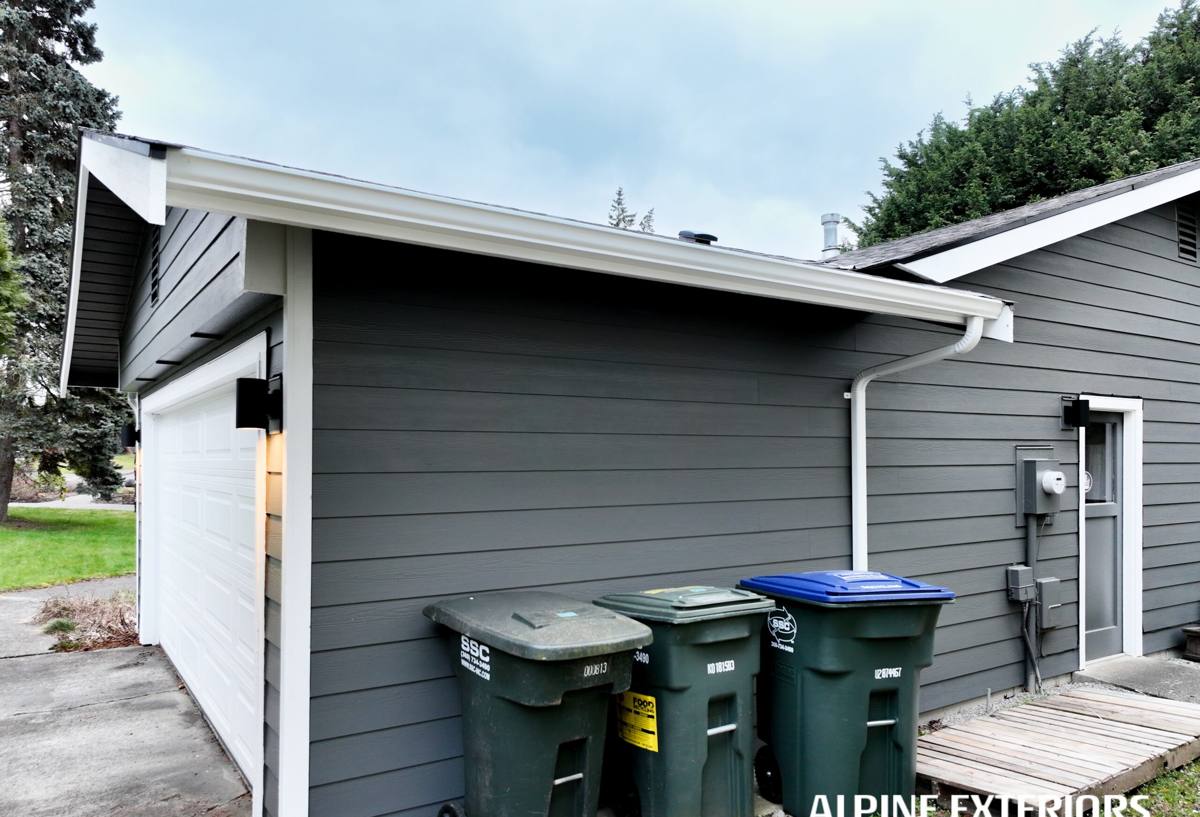
What Deming Homes Actually Need From Siding
Talk to enough homeowners in this part of the county and the same complaints come up. Here's what we hear, and what it tells us about material choice:
- North and east walls that never quite dry out — heavy tree cover and hillside shade mean some sides of a house stay damp for days after a storm. That's where moss, mildew, and paint failure show up first.
- Moss and algae staining — a long, cool wet season plus shade is exactly what moss wants. Whatever's on the wall needs a finish that resists staining and can be cleaned without damaging it.
- Swelling and soft spots at butt joints and bottom edges — wood-based products that take on water at the seams are common failure points in valley settings like this one.
- Paint that doesn't last — field-applied paint on a house that's wet more than it's dry tends to fail early, which means repainting on a shorter cycle than anyone budgeted for.
None of this is exotic. It's what happens to siding, over years, in a valley with dense tree canopy and a long wet season. The fix isn't a gimmick — it's choosing a material that's dimensionally stable when wet, resists moisture intrusion at the core, and holds a factory finish instead of relying on field-applied paint.
Why We Install Only James Hardie Fiber Cement
We install James Hardie fiber cement siding exclusively — no vinyl, no LP SmartSide, no Cemplank, no Allura, no primed spruce or cedar. That's not a marketing position, it's a decision based on what we've seen hold up in this climate versus what struggles.
Fiber cement is cement, sand, and cellulose fiber. It doesn't swell when it gets wet the way wood-based siding can, and it isn't a petroleum product that softens and distorts in heat and cold the way vinyl can. For a valley property with heavy shade and long damp stretches, that stability matters more than almost anything else on the spec sheet.
ColorPlus Factory Finish
James Hardie's ColorPlus finish is baked on at the factory under controlled conditions, not brushed or sprayed on-site. It's more resistant to fading, chipping, and moss staining than field-applied paint, and it comes with its own finish warranty separate from the product warranty. On a shaded Deming wall that stays damp longer than most, a finish that doesn't depend on perfect field conditions to cure properly is a real advantage.
HZ5 Engineering
Hardie makes climate-specific product lines, and the versions engineered for wetter, more humid regions (HZ5) are what we spec for this part of Whatcom County. It's the same idea as choosing the right tires for the terrain — the product is built for the moisture load it's actually going to see.
Non-Combustible Core
Fiber cement doesn't burn. That's a genuine safety upgrade over vinyl or wood-based siding, and it matters more the closer a property sits to forested land — which describes a lot of Deming.
Why We Don't Install the Alternatives
Homeowners sometimes ask why we won't quote vinyl or LP SmartSide alongside Hardie. Fair question — here's the honest answer.
| Product | What it does well | Why it's a poor fit for Deming's climate |
|---|---|---|
| Vinyl siding | Low upfront cost, low maintenance day-to-day | Expands and contracts with temperature swings, can warp or crack with age, doesn't hold up to moss and mildew cleaning as well as a factory-cured finish |
| LP SmartSide | Engineered wood, easier to install than some alternatives, reasonable cost | Wood-based core is more moisture-sensitive at cut edges and seams — a real risk in a valley that stays damp for extended stretches |
| Primed cedar or spruce | Natural look, traditional appeal | Needs ongoing repainting and sealing to keep moisture out; in heavy shade that maintenance cycle gets short and expensive fast |
| Cemplank / Allura fiber cement | Similar core material to Hardie | We standardize on one manufacturer's system, install methods, and warranty structure so every job we do is consistent and every warranty claim is straightforward |
None of these are bad products in the abstract. They're just trade-offs we're not willing to put on a Deming roofline when a more moisture-stable option exists and costs about the same to install.
What a Correct Fiber Cement Install Involves
Fiber cement is only as good as the install behind it. A rushed or shortcut job undermines everything the material is good at. Here's what we consider non-negotiable, especially on a shaded, damp lot:
- Proper water-resistive barrier — a correctly lapped weather barrier behind the siding, not just whatever was left over from the original build.
- Rainscreen gap where conditions call for it — on heavily shaded walls that stay wet longer, a ventilated gap between the siding and the barrier lets moisture escape instead of sitting against the wall.
- Correct fastening pattern — Hardie specifies fastener type, spacing, and placement precisely; skipping that voids warranty coverage and invites problems.
- Factory-cut and factory-primed edges kept sealed — any field cuts get properly sealed so the exposed edge doesn't become the weak point.
- Correct clearance at grade and roofline — siding held up off the ground and away from roof planes so water doesn't wick up from below or pool at transitions.
- Flashing at every penetration — windows, doors, vents, and any wall penetration flashed and integrated with the water-resistive barrier, not just caulked over.
Every one of these steps exists because of moisture, and moisture is Deming's defining condition. Skip one and you've built a house that looks right for a year or two and then starts showing the same problems fiber cement is supposed to solve.
Our Process for a Deming Job
We keep the process straightforward and we don't rush the parts that matter:
- On-site walk-through. We look at sun exposure, tree cover, drainage, existing siding condition, and any trouble spots — soft siding, moss buildup, staining patterns — before we talk numbers.
- Written estimate. Scope, product line, color, and a clear cost breakdown. No pressure to sign on the spot.
- Prep and tear-off. Old siding removed, sheathing inspected for hidden rot or moisture damage — common in valley homes with long-term shade exposure — and repaired before anything new goes up.
- Barrier and flashing installation. This is the layer that does the real work keeping water out; it happens before a single piece of Hardie board goes up.
- Fiber cement installation. Installed to Hardie's fastening and clearance specs, with rainscreen detailing where the site calls for it.
- Final walk-through. We go over the finished job with the homeowner and address anything before we call it done.
Why Hiring a Crew That Already Works Deming Matters
Siding installers who mostly work in town or closer to the coast don't always think about rainscreen detailing or extended shade cycles, because it doesn't come up as often on those jobs. A crew that regularly works river valley and foothill properties around Whatcom County already knows to check for it — where moss tends to build first, which walls stay wet longest, where hidden rot shows up on older homes, and how to sequence a tear-off around a wet forecast instead of getting caught mid-job.
That local pattern recognition doesn't show up on a spec sheet, but it shows up in how long the siding actually lasts once it's on the wall.
Cost Factors for a Deming Fiber Cement Project
Every house is different, but the main cost drivers on a Deming project tend to be the same handful of things:
| Factor | Why it affects cost |
|---|---|
| Existing siding removal | Tear-off and disposal of old material adds labor before new siding can start |
| Sheathing condition | Hidden rot or moisture damage found during tear-off needs repair before installation continues |
| Home size and wall complexity | More corners, gables, and trim details mean more cutting and labor |
| Siding profile and color | Lap width, shake-style panels, and ColorPlus color selection vary in material cost |
| Rainscreen detailing | Shaded, damp walls that call for a ventilated gap add a step but reduce long-term moisture risk |
| Access and site conditions | Sloped lots, tree cover, and limited equipment access can affect labor time |
We give an honest, itemized number after seeing the property — not a phone-quote guess.
Ready to Talk About Your Home
If moss, staining, soft spots, or a house that never seems to fully dry out are on your mind, it's worth having a look before those small problems turn into sheathing repairs. We'll walk the property, tell you honestly what we see, and put together a clear estimate — no pressure, no obligation. Use the form below to request a free estimate for your Deming home.