 Glenhaven Siding
 Siding Replacement in Everson: What the Nooksack Valley Does to a House
Everson sits inland from the Salish Sea, but the marine climate that defines Whatcom County doesn't stop at the coastline. Homes here still get the long, wet shoulder seasons, the heavy morning dampness that settles into the Nooksack River valley, and the slow accumulation of moss and algae that comes with months of shade, humidity, and short winter daylight. Add in driving rain that comes sideways off storms moving through the lowlands, and you've got a climate that is quietly hard on exterior siding — even when nothing looks obviously wrong from the curb.
Most siding failure we see on Everson homes isn't dramatic. It's slow: paint that won't hold past a few years, board edges that swell and soften, seams that let moisture behind the cladding where nobody's looking. By the time it shows up as visible damage, the substrate underneath has often been compromised for a while. Replacing siding correctly in this area means designing for that slow, steady moisture load — not just swapping old boards for new ones.
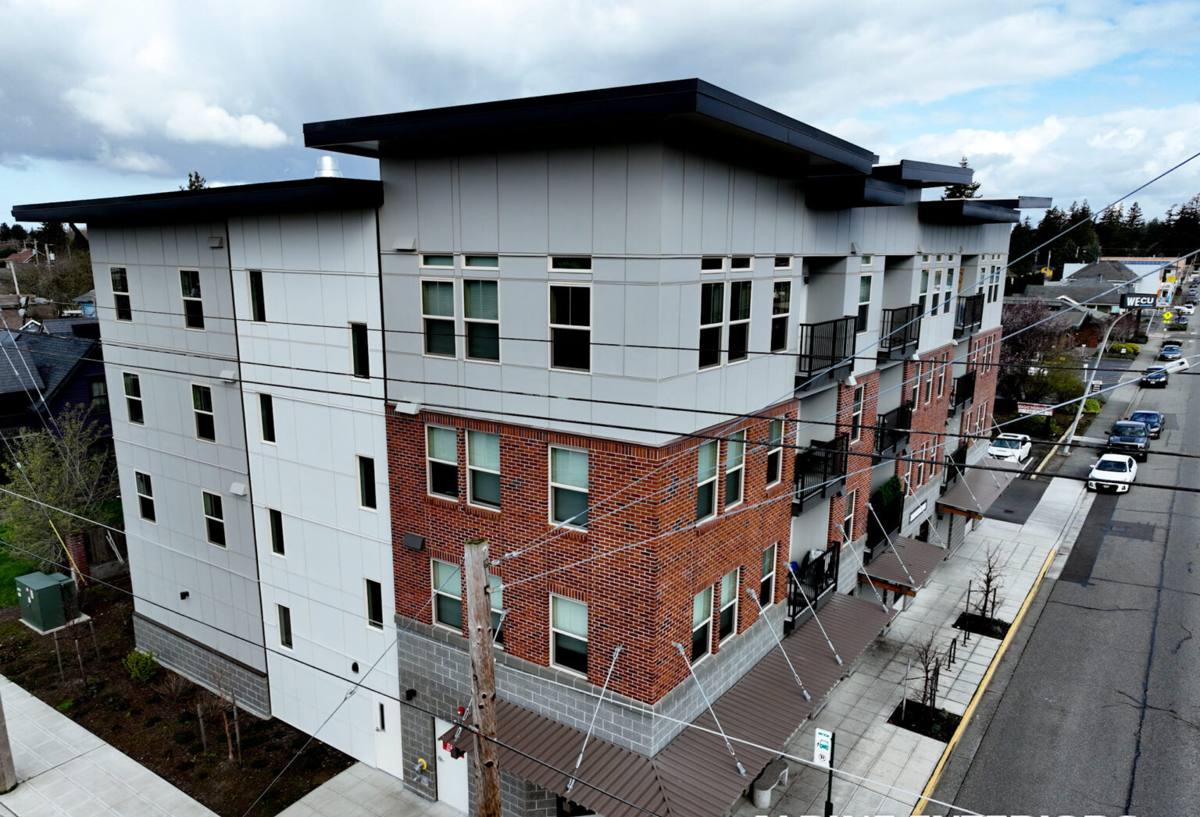
Why Everson's Climate Is Harder on Siding Than It Looks
Moss Season Runs Long
In a lot of the country, moss is a roof problem. In Whatcom County, it's a siding problem too. North-facing walls, areas shaded by trees or neighboring structures, and any spot where airflow is restricted stay damp for extended stretches. Organic growth on siding isn't just cosmetic — it holds moisture against the surface and, on products that aren't dimensionally stable or well-sealed, that moisture eventually finds its way in.
Driving Rain and Wind-Driven Moisture
Everson's exposure to storms moving up the valley means rain doesn't always fall straight down. Wind-driven rain gets pushed up under laps, into unsealed joints, and behind trim that wasn't flashed correctly. Siding systems and installation details that work fine in a drier climate can underperform here simply because the water intrusion pathways get tested far more often.
Humidity and Marine Air
The broader marine climate that defines this part of Washington keeps relative humidity elevated for much of the year, even away from the immediate coastline. That constant low-grade moisture in the air is part of why paint films fail early on the wrong substrates, and why any siding product with real moisture sensitivity struggles to hold up over a full service life here.
What Correct Siding Replacement Actually Involves
A siding replacement job is only as good as what happens before the new boards go up. On Everson homes, we treat the tear-off as a chance to fix the things that caused the original failure — not just cover them up.
- Full removal of old siding and inspection of the sheathing underneath for rot, soft spots, or hidden moisture damage
- Repair or replacement of any compromised sheathing before new material goes on
- Installation of a code-compliant weather-resistive barrier, correctly lapped and sealed
- Proper flashing at every window, door, deck ledger, and roofline intersection — the spots where wind-driven rain actually gets in
- Correct fastening pattern and clearances per manufacturer specification, not shortcuts
- Ground and hardscape clearance so siding isn't sitting in a moisture trap at the base of the wall
- Factory-finished siding installed with the correct joint treatment, so field-painted seams aren't the weak point
Skip any one of those steps and you can end up with siding that looks right for a season or two and then starts showing the same problems the old siding had.
Why We Only Install James Hardie Fiber Cement
We get asked why we don't offer vinyl, LP SmartSide, primed spruce, cedar, or other fiber cement brands like Cemplank or Allura. The honest answer is that after years of replacing siding in this climate, James Hardie is the product we trust to hold up to what Everson weather actually does to a house.
Non-Combustible and Dimensionally Stable
Fiber cement doesn't expand and contract with moisture the way wood-based products do, and it doesn't soften or swell at cut edges and joints the way engineered wood products can if a seal fails. That matters enormously in a climate where siding stays damp for long stretches at a time.
ColorPlus Factory Finish
Hardie's ColorPlus finish is baked on at the factory under controlled conditions, which gives it better adhesion and UV resistance than field-applied paint. In a climate where paint failure is one of the most common complaints we hear about older siding, starting with a factory finish rather than a job-site paint job is a real advantage, not a marketing point.
Engineered for This Climate
Hardie's HZ product lines are engineered specifically for climate zones like ours — the version specified for the Pacific Northwest is built around the moisture and temperature patterns this region actually sees, rather than a one-size-fits-all formulation.
Warranty Backing
Hardie backs its siding with a strong, transferable limited warranty, and the ColorPlus finish carries its own separate finish warranty. That two-part structure reflects a manufacturer that's confident in both the substrate and the finish holding up over decades, not just years.
What We Don't Install, and Why
Vinyl siding is inexpensive and easy to install, but it's a petroleum-based product that can warp in temperature swings, fade over time, and offers limited protection against wind-driven rain at the seams — it relies almost entirely on the water-resistive barrier behind it doing all the work. LP SmartSide and primed spruce are wood-based products that can perform well when maintenance is kept up religiously, but any breach in the factory coating exposes engineered wood or solid wood to exactly the kind of sustained moisture Everson gets for months at a time, and the consequences of a missed maintenance cycle are more severe than with fiber cement. Cedar is a beautiful, traditional material, but it demands an ongoing maintenance commitment — refinishing, sealing, and vigilance against moss and rot — that most homeowners underestimate going in. Other fiber cement brands like Cemplank and Allura are legitimate products, but we've standardized on Hardie because of its track record, factory finish process, and the depth of its product engineering for exactly this climate. We'd rather install one product well and stand behind it fully than offer five and hedge on all of them.
Choosing the Right Hardie Product for Your Everson Home
| Product | Best For | Key Advantage |
|---|---|---|
| HardiePlank Lap Siding | Most standard residential exteriors | Classic profile, widest color and texture selection |
| HardieShingle | Accent areas, gables, craftsman-style homes | Textured, dimensional look without the maintenance of real wood shingle |
| HardiePanel | Modern or board-and-batten style exteriors | Clean vertical lines, large-format coverage |
| HardieTrim | Window, door, and corner detailing | Matches siding durability at the most water-exposed edges of the house |
Which combination makes sense depends on your home's style, existing trim details, and how exposed different elevations are to wind-driven rain and shade-driven moss growth. We walk through that on-site rather than guessing from a truck.
Our Process for Everson Homeowners
- On-site assessment — we look at your current siding, check for hidden moisture or sheathing damage, and note which elevations take the worst weather exposure
- Written estimate — clear scope, product selection, and pricing before any work starts
- Tear-off and sheathing inspection — old siding comes off, substrate gets checked and repaired as needed
- Weather barrier and flashing — the parts of the job that determine whether the new siding actually stays dry for the next several decades
- Hardie installation — installed to manufacturer specification, including fastening, clearances, and joint treatment
- Final walkthrough — we go over the finished work with you before calling the job done
Why It Matters to Hire a Crew That Already Works This Area
Siding installation isn't uniform across the country, and it shouldn't be treated that way. A crew that mostly works drier inland climates can get away with installation habits — looser flashing details, less attention to ground clearance, thinner weather barriers — that simply don't hold up against a Whatcom County wet season. Everson's combination of river-valley humidity, extended moss season, and wind-driven rain punishes shortcuts faster than most places. A crew that already works this specific area knows which details actually matter here, because they've seen what happens to the houses where those details got skipped.
Signs Your Everson Home May Need Siding Replacement Soon
- Paint that's peeling, bubbling, or failing within a few years of application
- Soft or spongy spots when you press on the siding, especially near the bottom courses
- Visible moss or algae buildup that keeps returning after cleaning
- Warping, buckling, or gaps opening up at seams and corners
- Rising energy bills that suggest the wall assembly isn't sealing the way it should
- Visible rot or staining around window and door trim
Catching these early usually means a smaller, more contained job. Waiting typically means more sheathing damage to repair once the siding finally comes off.
If your Everson home is showing any of these signs, or you're simply due for a siding replacement and want it done right the first time, we're happy to walk the property with you and give you a straightforward, no-pressure estimate — just fill out the form below.