 Glenhaven Siding
 Building a Deck That Can Actually Handle Fairhaven
Fairhaven sits close enough to the water that every outdoor structure on the property deals with a slightly different set of conditions than a deck built a few miles inland. Salt-laden air, driving rain off the water, and a moss season that can stretch for months all put steady pressure on wood, fasteners, and finishes. A deck built with generic, catalog-standard materials and methods will often look fine for the first year or two, then start showing problems — soft spots, rust streaks, slick green film, loose railings — well before it should. Building correctly for Fairhaven from day one means choosing materials and details that are matched to this specific exposure, not just to a regional average for Whatcom County.
This page is about one thing: what it actually takes to build a deck in Fairhaven that holds up. Not a generic "deck building" overview, but the material choices, structural details, and maintenance realities specific to a coastal-adjacent property in this part of Glenhaven.
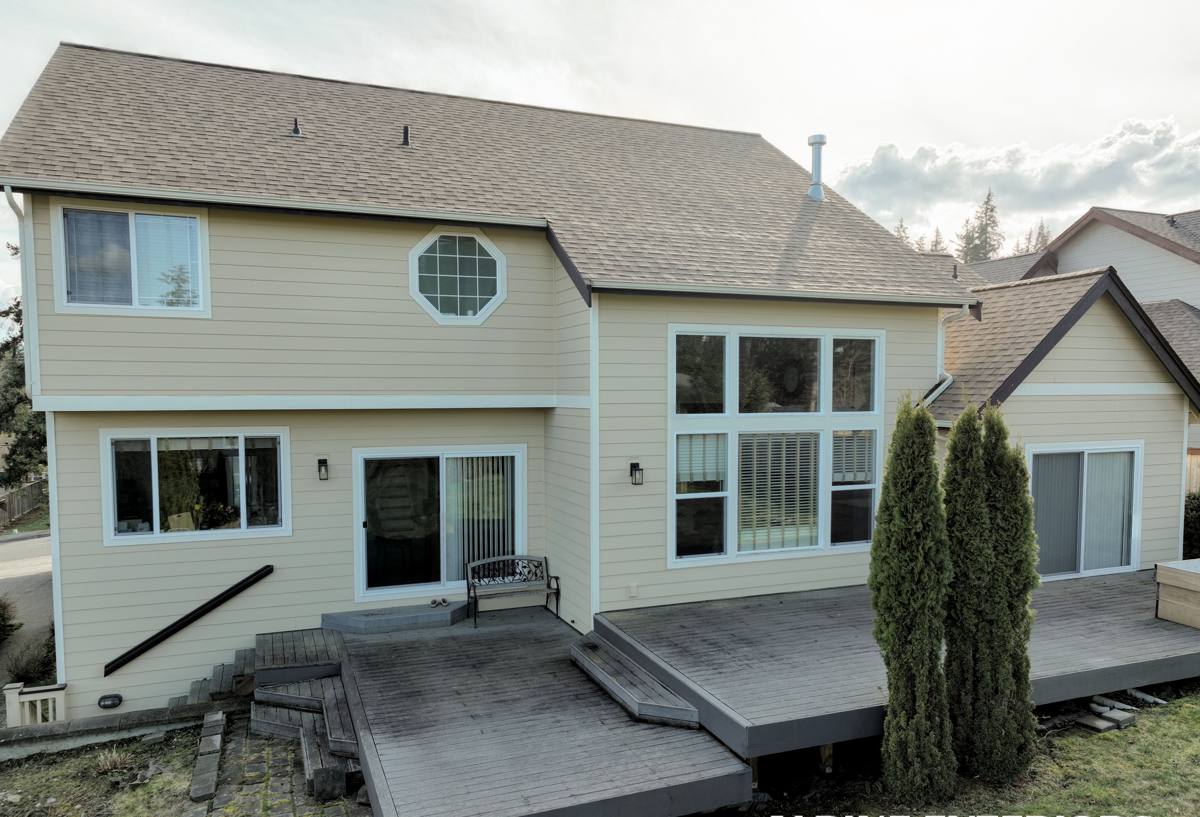
What Salt Air and Moss Season Actually Do to a Deck
It helps to understand the mechanisms, because they drive almost every material and construction decision below.
Salt Air
Airborne salt is corrosive to metal and it's persistent — it doesn't rinse away completely with a single rainstorm, and it settles into joints, fastener heads, and any spot where two materials meet. Over time it accelerates rust on unprotected or under-rated hardware, which weakens connections long before the visible wood looks bad. It also interacts with certain wood treatments and finishes, which is part of why fastener and hardware selection matters as much as the decking itself.
Driving Rain
Rain that comes in at an angle, rather than falling straight down, gets pushed into ledger connections, under railing posts, and into any gap where flashing is missing or undersized. A deck built for calmer, drier conditions often skips flashing details that are non-negotiable here. Once water gets behind a ledger board or into an unprotected post base, rot starts from the inside, where it's invisible until the damage is advanced.
Moss and Prolonged Dampness
Whatcom County's long wet season keeps deck surfaces damp for extended stretches, and shaded or north-facing decks in particular can stay damp for days after a storm passes. That dampness is exactly what moss and algae need to establish. Beyond being unsightly, a mossy deck surface is genuinely slick and can become a fall hazard, and moss holds moisture against the decking material, extending the time wood or wood-composite surfaces stay wet.
Decking Material: What Holds Up in This Exposure
There's no single "best" decking material for every budget and every homeowner, but some materials are clearly better matched to salt air and heavy moss pressure than others. The table below reflects how each common option actually performs here, not just its price point.
| Material | Salt Air / Corrosion Behavior | Moss & Moisture Behavior | Maintenance Load |
|---|---|---|---|
| Pressure-treated fir/pine | Wood itself is fine; pairs with hardware that must be rated for the treatment chemicals | Absorbs moisture, needs regular sealing to resist moss growth in shaded areas | Higher — annual inspection, periodic re-sealing |
| Cedar | Naturally decay-resistant, still needs corrosion-rated fasteners | Resists rot well but still grows moss/algae film if not cleaned periodically | Moderate — periodic cleaning and finish maintenance |
| Composite decking | Board itself doesn't corrode; hardware underneath still must be rated | Resists moisture absorption into the board, but surface film (moss/algae) can still form and needs occasional washing | Lower — no sealing, periodic surface cleaning |
| PVC/capped polymer | Fully inert to salt exposure | Very low moisture absorption; surface can still get slick and needs washing | Lowest — cleaning only, no sealing or staining |
Composite and capped-polymer products tend to be a strong fit for Fairhaven's climate specifically because they don't absorb and hold moisture the way solid wood does, which reduces both rot risk and the internal dampness that feeds moss. That said, plenty of homeowners want the look and feel of real wood, and cedar built and maintained correctly is a legitimate, durable choice — it just requires a more disciplined maintenance routine to stay ahead of moisture and organic growth.
Framing and Substructure: Where Decks Actually Fail First
Almost every deck failure we see doesn't start at the decking surface — it starts underneath, in the framing, ledger connection, and post bases, where problems are hidden until they're serious.
Ledger Attachment and Flashing
The ledger board — where the deck attaches to the house — is the single most important structural connection on the deck, and it's also the most common point for water intrusion. Correct flashing directs driving rain away from the house sheathing and framing instead of letting it wick behind the ledger. Skipping or shortcutting ledger flashing is a fast track to hidden rot at the exact point where the deck's structural connection to the house lives.
Post Bases and Footings
Posts that sit directly on concrete, or in contact with damp soil, take on moisture from below in addition to what falls from above. Elevated post bases that keep wood off the concrete, combined with footings set to the correct depth for this region's frost and soil conditions, keep the structural posts drier and more stable over the life of the deck.
Joist Protection
Joist tops are a frequent rot location because water sits on the cut surface under the decking boards, out of sight. Protective joist tape or flashing over the top of each joist is inexpensive relative to the deck's total cost and meaningfully extends the framing's service life in a climate that stays wet for months at a stretch.
Fasteners and Hardware: The Detail Salt Air Punishes First
This is the detail that separates a deck built for Fairhaven from a deck built for anywhere. Standard, uncoated or minimally coated fasteners and connectors are not a good match for sustained salt air exposure — they're often the first visible sign of trouble, showing rust streaks down the decking long before any structural issue is apparent.
- Structural connectors (joist hangers, post bases, angle brackets) rated for coastal or high-corrosion exposure, not general-purpose interior-grade hardware
- Fasteners compatible with the specific decking and framing materials used — mismatched metals can accelerate corrosion at the point of contact
- Stainless or coated deck screws sized and rated for the decking product, following the manufacturer's fastening specification rather than a generic screw
- Hidden fastener systems, where used, chosen for documented corrosion resistance rather than lowest cost
- Railing hardware and post connections inspected for corrosion resistance, since railings take direct weather exposure and structural load simultaneously
Cutting corners on hardware is one of the most common ways a deck ages badly here — the visible boards can look fine while the connectors holding everything together are already compromised.
Railings and Structure in Coastal Wind
Wind off the water can be stronger and more consistent than what's typical a few miles inland, and railings take that load directly. Railing posts need solid blocking and connection detail — not just cosmetic attachment to the rim joist — to stay tight over years of wind and use. Cable, glass, and metal railing systems each have their own corrosion and maintenance considerations in salt air, and the right choice depends on the look the homeowner wants balanced against how much upkeep they're willing to do.
How We Build a Deck for Fairhaven Conditions
Our process for a Fairhaven deck follows the same core steps as any quality deck build, but every stage is filtered through this property's specific exposure.
- On-site assessment — we look at sun/shade exposure, wind direction, drainage on the lot, and how close the deck sits to salt-laden air, since a sheltered deck and an exposed one call for different material and hardware decisions.
- Material selection walkthrough — we go over decking, framing, and hardware options honestly, including trade-offs in maintenance and lifespan, so the homeowner picks a system they're comfortable maintaining, not just the cheapest upfront option.
- Ledger and flashing detail — proper flashing at the house connection, done correctly the first time, since this is the hardest point to repair once the deck is finished.
- Framing with corrosion-rated hardware — connectors and fasteners matched to the exposure, not swapped for cheaper general-purpose parts.
- Decking installation — spacing and fastening per the manufacturer's specification, accounting for drainage and airflow underneath to reduce the damp conditions moss needs.
- Railing and final structural check — connections tested for solidity, not just visual completion.
- Homeowner walkthrough — we explain what maintenance the specific materials chosen will actually need, so there are no surprises in year two or three.
Maintenance: What Actually Keeps a Fairhaven Deck Healthy
Even a correctly built deck needs some seasonal attention in this climate. The list below is what we tell homeowners to stay on top of.
- Sweep debris (leaves, needles) off the deck regularly — trapped organic matter holds moisture and speeds moss growth
- Wash the surface at least once a year, more often on shaded or north-facing decks, to remove moss and algae film before it gets slick
- Check railing posts and stair connections annually for looseness, which can signal corroding hardware underneath
- Inspect the ledger flashing area for staining or soft wood at the house connection
- Re-seal or re-stain solid wood decking on the schedule the product calls for — skipping a cycle in this climate compounds quickly
- Keep gutters and downspouts near the deck clear so roof runoff isn't dumping extra water directly onto or under the structure
Why Hiring a Crew That Already Works Fairhaven Matters
A lot of the decisions above — hardware grade, flashing detail, decking choice, drainage under the boards — aren't things a homeowner can easily verify after the fact by looking at a finished deck. They're built in, or they're not. A crew that regularly works in Fairhaven and similar salt-exposed parts of Whatcom County has already seen which shortcuts fail here and which material and fastening choices actually hold up through repeated wet seasons. That local track record is worth more than a lower bid built on generic, inland-standard specifications.
If you're planning a new deck or replacing one that's showing its age, we're happy to take a look and put together a straightforward, no-pressure estimate — including an honest rundown of material options and what each one will actually require from you in maintenance. Use the form below to get started.