 Glenhaven Siding
 Deck Repair Built for Fairhaven's Marine Climate
A deck in Fairhaven works harder than a deck almost anywhere else in Whatcom County. Sitting close to the water means salt-laden air settles on every board, railing, and fastener year-round, while the region's long, wet winters keep decking damp for months at a stretch. Add in the moss and algae that thrive in shaded, low-airflow corners, and you have a structure that ages faster than the same deck would twenty miles inland. We repair decks throughout Glenhaven, but our Fairhaven work follows a slightly different playbook — one built around salt exposure, sustained moisture, and the specific failure patterns we see in this neighborhood.
This page covers what actually goes wrong with Fairhaven decks, how we diagnose it, what a correct repair looks like, and how to keep a repaired deck performing for years afterward.
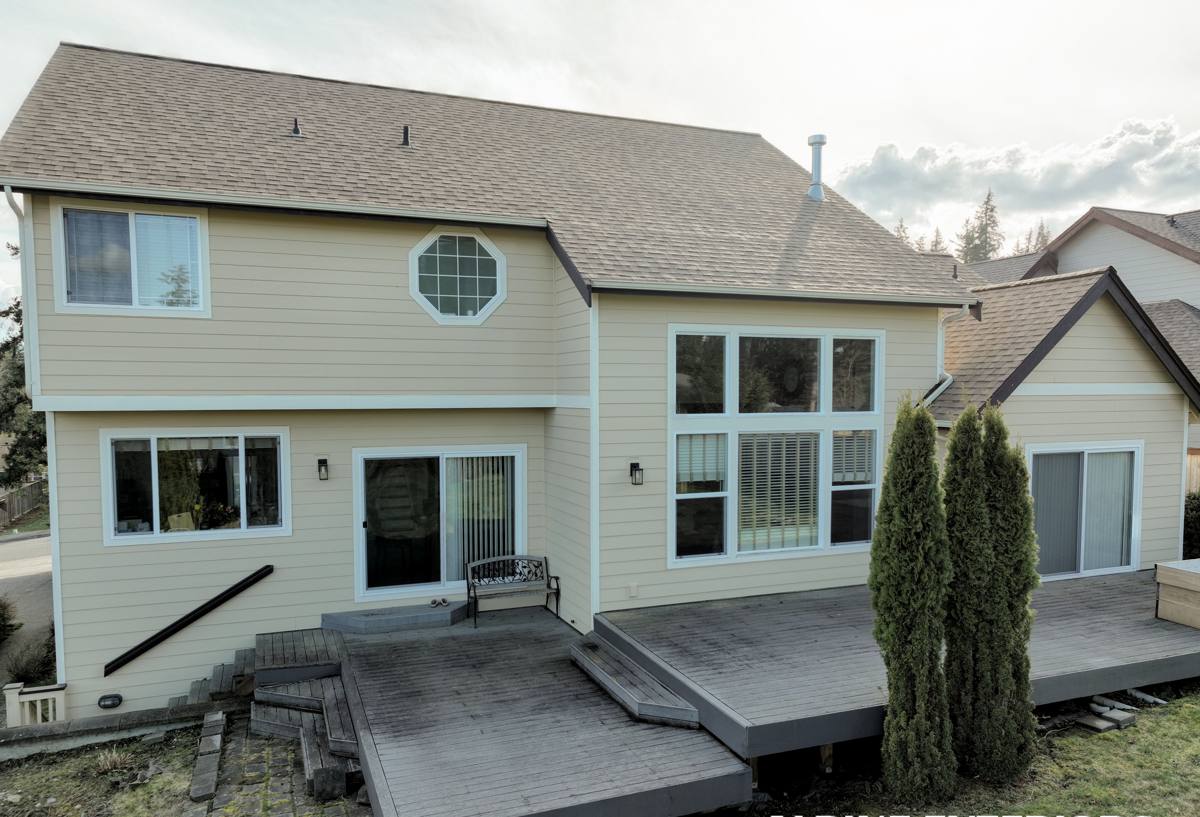
Signs Your Fairhaven Deck Needs Repair
Deck problems rarely start where you can see them. By the time a board feels soft underfoot or a railing wiggles, the damage underneath has usually been developing for a season or two. Watch for these warning signs:
- Boards that feel spongy, springy, or slightly damp even on dry days
- Dark staining or black-green streaking around fasteners or board edges
- Visible rust bleeding from screws, nails, or metal connectors
- Gaps opening up between deck boards and the house, or between boards themselves
- A railing post or stair stringer that has more give than it used to
- Persistent green film on shaded sections, even after cleaning
- Ledger board area (where the deck attaches to the house) showing discoloration or soft wood
None of these mean the whole deck needs to come out. Most of the time, they point to a specific, fixable problem — but only if it's caught before it spreads into the framing.
What Salt Air, Rain, and Moss Actually Do to a Deck
Fasteners and Metal Hardware
Salt air accelerates corrosion on anything metal — screws, joist hangers, bolts, and flashing. Once a fastener starts rusting, it loses holding strength long before it looks obviously bad, and rust stains bleeding into the wood are often the first visible clue that something underneath needs attention.
Framing and the Ledger Board
The ledger board — where the deck bolts to the house — is the single most important structural connection on most decks, and it's also the one most exposed to trapped moisture if flashing was installed poorly or has failed over time. Whatcom County's driving rain pushes water sideways as much as it falls straight down, which finds its way into gaps that a drier climate would never expose.
Decking Boards and Moss
Shaded, north-facing, or tree-covered sections of a deck stay damp longer after every rain, which is exactly the environment moss and algae need to establish. Beyond being slippery underfoot, moss holds moisture directly against the wood surface, which speeds up rot in wood decking and can stain or degrade the surface of composite boards over time.
Repair vs. Replacement: How We Decide
Homeowners often assume any deck with visible damage needs full replacement. In our experience, most Fairhaven decks we're called out to can be repaired if the framing is sound — but a few factors tip the decision one way or the other.
| Factor | Usually points to repair | Usually points to replacement |
|---|---|---|
| Framing & ledger condition | Solid, structurally sound | Widespread soft or rotted framing |
| Extent of damage | Isolated boards, posts, or connections | Damage spread across most of the deck |
| Deck age | Under 15-20 years, built to a reasonable standard | Older deck already near end of service life |
| Fastener condition | Localized rust or failure | Corrosion throughout the connection points |
| Code compliance | Meets current railing/attachment standards | Undersized railings, missing ledger flashing, or other gaps |
We give you a straight answer either way. If a repair will hold up and save you money, we'll say so. If the framing has gone past the point where a repair is honest, we'll tell you that too, along with why.
What a Correct Deck Repair Involves
Full Inspection First
We start below the surface — checking the ledger connection, joists, posts, and any hardware we can access, not just the boards you can see. A repair that only addresses the top layer while ignoring a failing connection underneath doesn't hold up in this climate; it just delays the same problem.
Structural Repairs
Any compromised framing, posts, or ledger connections get addressed before anything cosmetic. This is also where we correct the moisture sources that caused the damage in the first place — proper ledger flashing, corrected drainage paths, and adequate airflow underneath the deck.
Board and Railing Replacement
Damaged boards are replaced individually rather than defaulting to a full tear-off, unless the extent of the damage genuinely calls for it. Railings and stair components are checked for both stability and current code requirements, since older decks were sometimes built to standards that have since changed.
Fastener and Hardware Upgrade
Wherever we're opening up a connection, we replace rusted or undersized fasteners with hardware rated for coastal, high-moisture exposure. Using the same fasteners that failed the first time just resets the clock on the same problem.
Sealing and Finish Work
Exposed wood gets sealed or finished appropriately before we consider the job done. An unsealed cut edge or newly placed board is one of the fastest ways moisture gets back into a deck.
Materials for Repairs in a Coastal Climate
Matching new material to the existing deck matters, but so does choosing something that will actually hold up in Fairhaven's conditions. Here's how we think about it:
- Pressure-treated lumber is the standard for framing repairs and is a reasonable choice for decking boards, provided cut ends are properly sealed and the wood is allowed to dry before finishing.
- Cedar offers natural resistance to rot and insects and blends well with older decks in the area, but it's a softer wood that needs more consistent maintenance to keep performing near salt air.
- Composite decking resists rot and doesn't need staining, which appeals to homeowners who want less upkeep — the trade-off is a higher upfront cost and the need for proper ventilation underneath, since trapped moisture can still affect the substructure below composite boards.
- Fasteners and connectors should be stainless steel or hot-dip galvanized rated for coastal exposure — standard interior-grade hardware corrodes noticeably faster this close to the water.
We'll walk you through the honest trade-offs for your specific deck rather than pushing one material as a default. What's right for a full sun, open deck is often wrong for a shaded, tree-covered one.
Maintenance Checklist to Extend the Life of a Repair
A good repair buys you years, but a little seasonal upkeep buys you more. This is the routine we recommend to Fairhaven homeowners:
- Clear leaves and debris from between boards before fall rains set in
- Rinse or scrub moss and algae off shaded areas each spring before it establishes
- Check railings and stair connections for movement once or twice a year
- Look at the ledger board area for staining or gaps after major storms
- Re-seal or re-stain wood decking on the manufacturer's recommended schedule, not just when it looks worn
- Keep planters, rugs, and furniture from sitting directly on boards for long stretches, which traps moisture underneath
- Confirm gutters and downspouts near the deck are directing water away, not onto it
Why Hire a Crew That Already Works in Fairhaven
Deck repair advice that works for a dry inland climate doesn't automatically translate to a neighborhood sitting this close to Bellingham Bay. A crew that regularly works in Fairhaven already knows which framing details tend to fail first in this exposure, which fastener grades actually hold up, and where moss and shade create recurring trouble spots. That local pattern recognition is the difference between a repair that treats the visible symptom and one that addresses why the damage happened in the first place.
It also means a faster, more accurate estimate. We're not guessing at how Whatcom County's rain and salt air behave on a deck — we see the results of it regularly, and we build the repair around that reality rather than a generic checklist.
Get a Straightforward Deck Repair Estimate
If your Fairhaven deck has soft boards, rust stains, a wobbly railing, or just feels like it's past due for a look, we're happy to take a walk around it with you. We'll give you a clear, honest assessment of what needs attention and what can wait — no pressure, no upsell. Reach out using the form below to schedule a free estimate.