 Glenhaven Siding
 Deck Repair in Geneva: Built for Whatcom County Weather
Decks in Geneva take a different kind of beating than decks inland. The combination of salt-laden air off the water, long stretches of driving rain, and a moss season that can run from fall clear through spring means wood and fasteners here age faster than the manufacturer's brochure suggests. A deck that would need attention every eight to ten years in a drier climate often needs it every five to seven here, especially on the north- and west-facing sides that stay damp longest.
None of that means a Geneva deck is doomed to constant repair. It means the repair work has to account for moisture cycling and salt exposure from the start, rather than treating every deck the same way a general contractor might in a less demanding climate. That's the difference between a repair that holds for another decade and one you're revisiting next spring.
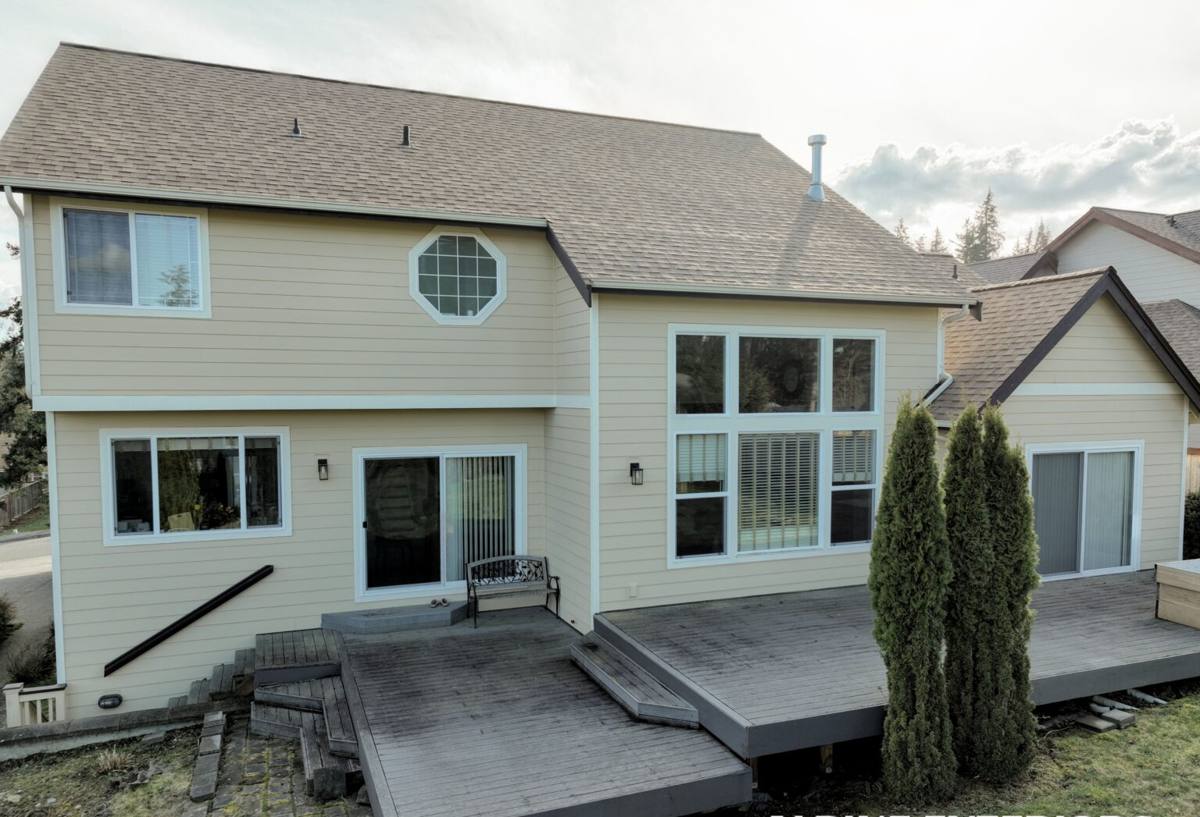
Warning Signs It's Time for Deck Repair
Most deck problems don't show up as a single obvious failure. They show up as small signals that get ignored until a board gives way or a railing feels loose under a hand. Walk your deck and check for these:
- Soft or spongy spots when you press down with your foot, especially near the house or at board ends
- Railings or posts that wiggle more than a slight amount when pushed
- Gaps opening up where the deck meets the house (ledger board area)
- Rust streaks running down from screws or nail heads
- Persistent green or black film on boards that comes back within weeks of cleaning
- Fasteners backing out or popping above the board surface
- Cracks running along the grain of structural boards, not just surface checking
- Standing water that doesn't drain within an hour or two after rain
Any one of these on its own might be minor. Several together, or anything near the ledger board or support posts, is worth a proper inspection before you plan another season of use.
What a Proper Deck Repair Actually Involves
A repair that's done right starts below the decking, not on top of it. Surface boards are the easiest part to see and the easiest part to replace, but they're rarely the whole story. A thorough repair looks at:
The structure first
Ledger board attachment to the house, joist condition, post bases, and any beam that's carrying weight. This is where moisture does the most damage because it's the part of the deck that stays wet longest and dries out slowest, particularly where the deck meets siding or sits close to grade.
Fasteners and hardware
Old nails and undersized screws are a common failure point long before the wood around them gives out. Corroding hardware weakens connections quietly, and in a salt-air environment ordinary fasteners corrode faster than most homeowners expect.
Drainage and airflow
Water that can't get away from a deck's structure is the single biggest driver of repeat repairs. Fixing the visible damage without addressing why that spot stayed wet just buys you a few more years before the same repair comes back.
The decking surface itself
Only after the structure and drainage are sound does it make sense to address boards, railings, and finish. Replacing surface boards over a compromised frame is a cosmetic fix, not a repair.
Common Problems We See on Geneva Decks
Every deck is a little different, but certain issues come up again and again in this area:
Ledger board rot
Where the deck attaches to the house is one of the wettest spots on the whole structure, especially without proper flashing. It's also structurally the most important connection, so this is never a corner worth cutting.
Joist and post-base deterioration
Close to the ground, joists and posts sit in the splash zone from rain bouncing off grade, and in shaded yards that area rarely gets a chance to fully dry between storms.
Corroded or failing fasteners
Salt air accelerates corrosion on hardware that wasn't rated for coastal exposure. We see this most often on older decks built with standard hot-dip galvanized nails instead of stainless or coated fasteners meant for this environment.
Persistent moss and algae growth
Shaded decks and north-facing surfaces here can stay damp for weeks at a stretch during the wet months, which is exactly what moss needs to establish. Left alone, it holds moisture against the wood and accelerates rot underneath.
Railing and stair looseness
Railings take repeated stress from hands and weight, and once a post connection loosens, water intrusion at that joint speeds up everything else.
Repair or Replace? Weighing Your Options
Not every deck problem calls for a full rebuild, and not every "quick fix" is actually the cheaper option long-term. Here's how we help homeowners think through it:
| Factor | Repair Usually Makes Sense | Replacement Worth Considering |
|---|---|---|
| Structural frame (joists, beams, posts) | Isolated rot or damage in a few members | Widespread rot or undersized framing throughout |
| Ledger board | Localized issue, house framing behind it is sound | Rot has spread into house rim joist or sheathing |
| Decking boards | Scattered failed boards, rest of deck is sound | Most boards are cupping, splitting, or soft |
| Age of deck | Under 15-20 years, built to a reasonable standard | Older deck built to outdated code or with undersized lumber |
| Budget priority | Address the problem now, spread cost over time | Want one project, one warranty, no repeat visits |
An honest inspection will tell you which column your deck falls into. We'd rather tell you a repair will hold than sell you a replacement you don't need — and just as often, we'll tell you plainly when patching a compromised frame is a short-term answer to a longer-term problem.
Our Deck Repair Process
- Inspection. We check the frame, ledger, posts, fasteners, and drainage before we ever talk about surface boards. This is where we find the problems that aren't visible from the top.
- Straightforward findings. You get a clear explanation of what's failing, why, and what your realistic options are — no pressure toward the bigger job if the smaller one is genuinely sound.
- A scoped plan. We outline exactly what gets repaired, what materials and fasteners we'll use, and what it will cost, so there's no guessing once work starts.
- The repair itself. Structural work first, then drainage corrections, then decking, railings, and finish work.
- Cleanup and walkthrough. We walk the finished repair with you so you know what was done and what to watch for going forward.
Materials and Fasteners That Hold Up to Salt Air
Material choice matters more here than in a lot of places, because the same board or fastener that performs fine forty miles inland can underperform on a deck exposed to Whatcom County's salt air and near-constant winter moisture. A few standards we hold to:
Fasteners
Stainless steel or coated fasteners rated for coastal and treated-lumber exposure, not generic hardware. Corroding fasteners are one of the most common causes of premature deck failure we see, and they're one of the cheapest things to get right the first time.
Structural lumber
Properly rated pressure-treated lumber for framing, sized to current code rather than whatever was there originally, especially on older decks built before current joist-spacing standards.
Decking surface
Whether you stick with treated wood or move to a composite board, the decision comes down to maintenance tolerance versus upfront cost. Wood is less expensive up front but needs regular cleaning and refinishing to hold up against moss and moisture. Composite costs more initially but sheds moisture differently and needs less upkeep — the trade-off is worth discussing against your specific deck's exposure and your appetite for maintenance.
Flashing at the ledger
Proper flashing where the deck meets the house is non-negotiable in this climate. It's inexpensive relative to the rest of the job and it's the single best defense against the most damaging kind of rot we see.
Keeping Moss and Algae From Coming Back
Moss season here isn't a one-time event, it's a recurring condition, and a deck repair that ignores it is incomplete. After structural and fastener work is done, a few habits go a long way toward protecting the investment:
- Keep overhanging branches trimmed back so more sunlight and airflow reach the deck surface
- Sweep debris off the deck regularly, especially in fall when leaves and needles trap moisture against boards
- Clean visible moss or algae promptly rather than letting it establish over a season
- Check that gaps between boards stay clear so water can actually drain through rather than pooling
- Reapply finish or sealant on wood decking on the schedule appropriate to the product, not just when it looks worn
None of this is complicated, but it's the difference between a repair that lasts and one that's undone by the same conditions that caused the original problem.
Why Hire a Crew That Already Works in Geneva
A contractor who works this specific stretch of Whatcom County regularly already knows which framing details tend to fail first in this climate, which fastener grades actually hold up to the salt air, and how long moss season realistically runs here versus what a general contractor from a drier region might assume. That local familiarity shows up in fewer surprises during the inspection and a repair plan that accounts for conditions from day one, rather than treating your deck like it's in a different climate entirely.
It also means a crew that's around for the long haul if a question comes up after the work is done, not a company that did one job in the neighborhood and moved on.
If your deck is showing any of the signs above, or you'd just like an honest read on where it stands, we're happy to take a look. Reach out for a free, no-pressure estimate using the form below.