 Glenhaven Siding
 Siding That Has to Work Harder in Geneva
Geneva sits in one of the more demanding pockets of Whatcom County when it comes to what the weather does to the outside of a house. Homes here deal with a combination most siding products were never engineered for: salt-laden air moving in off the water, driving rain that hits walls sideways instead of straight down, and a moss season that can stretch for months at a time. Any one of those on its own is manageable. Together, year after year, they expose every weakness in a siding system that was chosen for looks or price instead of performance.
This page is about one product, in one place: James Hardie fiber cement siding, installed correctly on Geneva homes. We don't install anything else, and the reasons are visible on almost every older house in this area if you know what to look for.
What Salt Air, Driving Rain, and Moss Actually Do to a Wall
Salt Air
Airborne salt is corrosive and hygroscopic — it pulls moisture out of the air and holds it against whatever surface it lands on. On wood-based siding, that means the surface stays damp longer than it should, which accelerates rot, paint failure, and fastener corrosion. On vinyl, salt exposure combined with UV tends to show up as premature chalking and brittleness at panel edges. Metal fasteners and trim that aren't rated for coastal exposure corrode faster than homeowners expect, sometimes staining the siding around them.
Driving Rain
Wind-driven rain doesn't just wet a wall — it forces water sideways and upward into laps, seams, and penetrations that were designed for water running straight down. This is where installation detail matters more than the material itself. A siding product can be rated for a wet climate and still fail on a specific wall if the flashing, lap spacing, or caulking wasn't done for wind-driven conditions.
Moss Season
A long moss season means extended periods where north-facing and shaded walls stay damp, cool, and shielded from UV. That's the exact environment moss, algae, and mildew need to establish. On absorbent siding materials, moss doesn't just sit on the surface — it holds moisture against the substrate, which is where real damage starts. On a dense, factory-finished surface, it stays a surface problem that a homeowner can address without threatening the material underneath.
Why We Standardized on Fiber Cement for This Climate
We get asked regularly why we don't install vinyl, LP SmartSide, cedar, or primed spruce alongside Hardie. The honest answer is that we've watched each of those products struggle with some combination of salt air, wind-driven rain, or sustained moisture — not because they're bad products in every climate, but because Geneva's conditions expose their specific weak points.
| Material | Vulnerability in This Climate | Common Result Over Time |
|---|---|---|
| Vinyl | UV and salt-driven brittleness, panel expansion/contraction | Cracking, warping, gapping at seams |
| Cedar / primed spruce | Absorbs moisture, feeds moss and rot in shaded/damp zones | Recurring repainting, rot repair, moss treatment |
| LP SmartSide (engineered wood) | Edge and cut-end swelling if moisture reaches the substrate | Bubbling, edge softness at seams and penetrations |
| James Hardie fiber cement | Requires correct installation to control water at laps/penetrations | Stable when installed to spec; factory finish resists moss and salt |
Fiber cement isn't magic — it's a dense, cement-based material that doesn't absorb water the way wood or wood-composite products do, and it doesn't degrade under UV and salt exposure the way vinyl can. That's why it holds up to this specific combination of conditions better than the alternatives, provided it's installed with the water-management details this climate demands.
James Hardie Product Lines That Fit Geneva Homes
James Hardie builds region-specific formulations, and for a Pacific Northwest coastal climate like this one, we install their HZ5 line — engineered for wet, freeze-thaw-capable climates rather than the HZ10 formulation built for hot, dry regions. The right product line matters as much as the brand name.
- HardiePlank lap siding — the standard horizontal siding for most Geneva homes, available in several exposure widths and textures.
- HardiePanel vertical siding — used for board-and-batten styling or accent sections.
- HardieTrim — fiber cement trim boards that won't rot the way wood trim does at corners, window surrounds, and fascia.
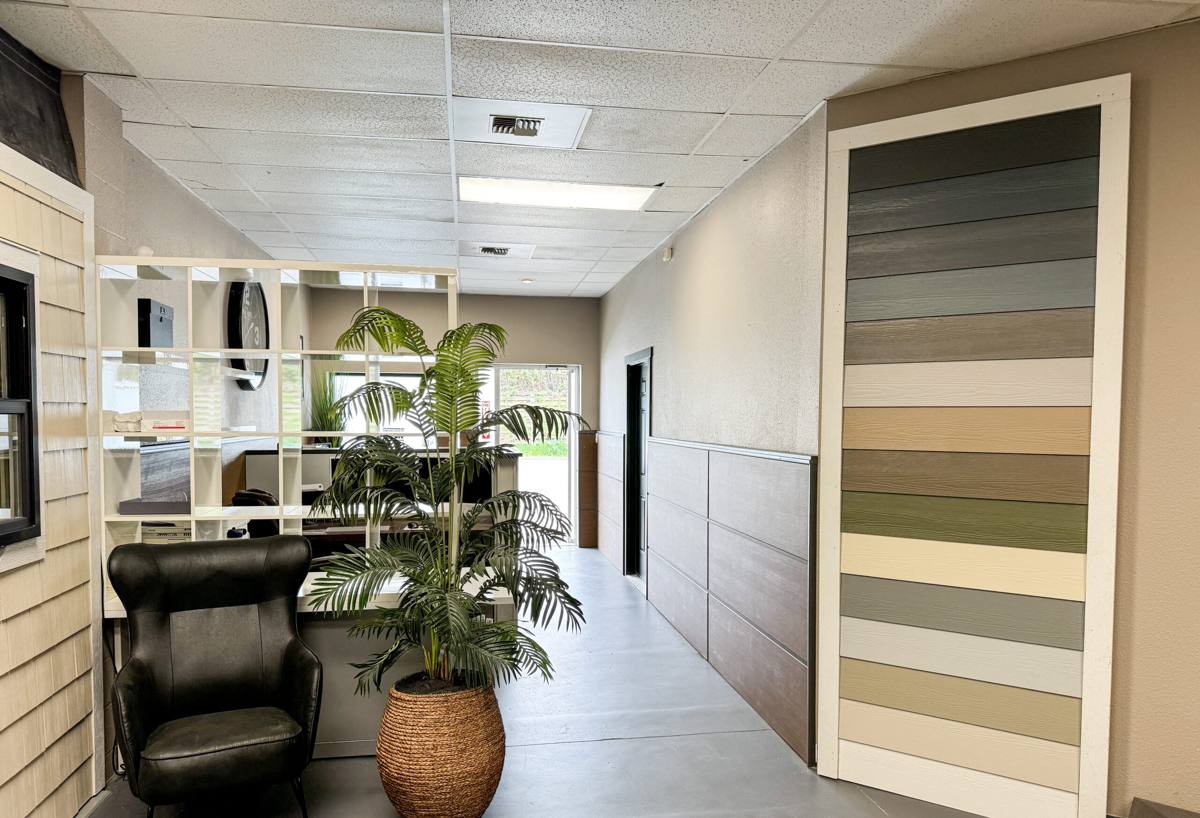
- ColorPlus Technology finish — a factory-baked, multi-coat finish that resists fading and chalking far longer than field-applied paint, and holds up better to salt exposure than a site-painted finish.
ColorPlus in particular matters here: a factory finish cures under controlled conditions, while paint applied on-site in a damp coastal climate is more likely to have adhesion issues down the road. That's one of the concrete performance reasons we push ColorPlus over field-painted fiber cement whenever it fits the project.
What Correct Installation Actually Involves
Fiber cement siding fails prematurely almost exclusively because of installation mistakes, not material defects. In a climate with this much wind-driven rain, the details below aren't optional extras — they're the difference between siding that lasts decades and siding that traps moisture behind it.
- Weather-resistive barrier installed and lapped correctly behind the siding, with all penetrations properly sealed
- Rain screen or drainage gap where wall assembly and exposure warrant it, so incidental water can drain and the wall can dry
- Correct minimum clearance between siding and grade, roofing, and decks — a common shortcut on rushed jobs
- Flashing at every window, door, and horizontal trim transition, not just caulk alone
- Manufacturer-specified nailing pattern and fastener type — corrosion-resistant fasteners matter more here than in a drier inland climate
- Correct lap and butt-joint spacing with proper caulking or trim coverage at joints
- Field-cut edges sealed per manufacturer specification before installation
Any one of these skipped can turn a premium siding product into a moisture trap. We treat this checklist as non-negotiable on every Geneva job, not as something to speed past.
How the Job Runs, Start to Finish
Assessment
We start by walking the home and identifying exposure — which walls take the worst of the wind-driven rain, which stay shaded and damp longest, and where existing siding or trim already shows moss, staining, or moisture damage. That assessment shapes the flashing and drainage plan before a single board goes up.
Prep and Water Management
Existing siding comes off, the sheathing gets inspected for hidden damage, and the weather-resistive barrier and flashing details get installed before Hardie touches the wall. This is the step that determines how the siding performs in year ten, not just year one.
Installation
Siding, trim, and any accent panels go up per Hardie's fastening and clearance specifications, with attention to the joints and penetrations most exposed to driving rain.
Final Walkthrough
We walk the finished job with the homeowner, checking caulk lines, trim, and clearances, and go over basic care so the ColorPlus finish keeps looking the way it should.
Maintenance and What to Expect Over Time
One of the practical advantages of James Hardie with a ColorPlus finish in a moss-prone, salt-air climate is how little upkeep it asks for compared to painted wood or vinyl. It still needs a periodic rinse to keep algae and moss from building up on shaded sides, and caulked joints should get a visual check every year or two, but it doesn't need repainting on the schedule wood siding does, and it won't chalk or embrittle under UV and salt the way vinyl can over time.
| Task | Typical Frequency | Why It Matters Here |
|---|---|---|
| Rinse siding (garden hose, soft brush) | 1-2x per year, more on shaded walls | Limits moss/algae buildup during long wet season |
| Inspect caulking at joints and trim | Every 1-2 years | Wind-driven rain finds any gap quickly |
| Check for debris buildup at bottom courses | Seasonally | Trapped debris holds moisture against siding |
| Full repaint | Not required with ColorPlus finish | Factory finish is warrantied and far more durable than field paint |
Cost Factors for a Geneva Project
Every home is different, and we won't quote a number without seeing the house, but the same handful of factors drive cost on nearly every project in this area:
| Factor | How It Affects the Project |
|---|---|
| Home size and wall complexity | More corners, dormers, and trim detail mean more labor and material |
| Condition of existing sheathing | Hidden rot or damage found during tear-off adds repair scope |
| Product selection | Lap width, panel style, and trim choices shift material cost |
| Exposure severity | High wind-driven rain walls may warrant added drainage detailing |
| Access | Tight lots, second stories, and staging needs affect labor time |
Because Hardie with ColorPlus rarely needs repainting and resists the moss and moisture issues that drive repair costs on other materials, the total cost of ownership over 20-30 years is usually the more useful number to compare, not just the install price.
Why a Crew That Already Works Geneva Matters
A contractor who mostly works drier, inland jobs can install James Hardie technically correctly and still miss the details that matter most in a coastal Whatcom County microclimate — the extra attention to flashing on the walls that take the worst wind-driven rain, the fastener choices that hold up to salt exposure, the drainage detailing for walls that stay shaded and damp through moss season. Those aren't things you learn from a manufacturer's install guide alone; they're things you learn by seeing what actually goes wrong on homes in this specific environment. We work in Geneva and the surrounding Glenhaven area regularly, which means the assessment and installation plan account for this climate from the first walkthrough, not as an afterthought.
If your Geneva home needs new siding — or you're weighing James Hardie against another product — we're happy to walk the property, look at what your current siding and trim are telling us, and put together a straightforward, no-pressure estimate. Use the form below to get started.