 Glenhaven Siding
 Geneva's Siding Has to Work Harder Than Most
Homes in the Geneva area of Glenhaven sit close enough to the water and the weather patterns of Whatcom County that siding takes a beating most inland neighborhoods never see. Salt-laden air corrodes fasteners and finishes. Driving rain, pushed sideways by wind off the water, finds every gap in flashing and caulk. And a long, damp moss season keeps north- and shade-facing walls wet for months at a stretch. Siding that would hold up fine in a drier climate can fail early here — not because it's bad material, but because it was never built for this exposure.
When we talk about siding replacement in Geneva, we're not just talking about swapping old boards for new ones. We're talking about matching the product, the installation details, and the water management underneath the siding to what this specific microclimate actually does to a house year-round.
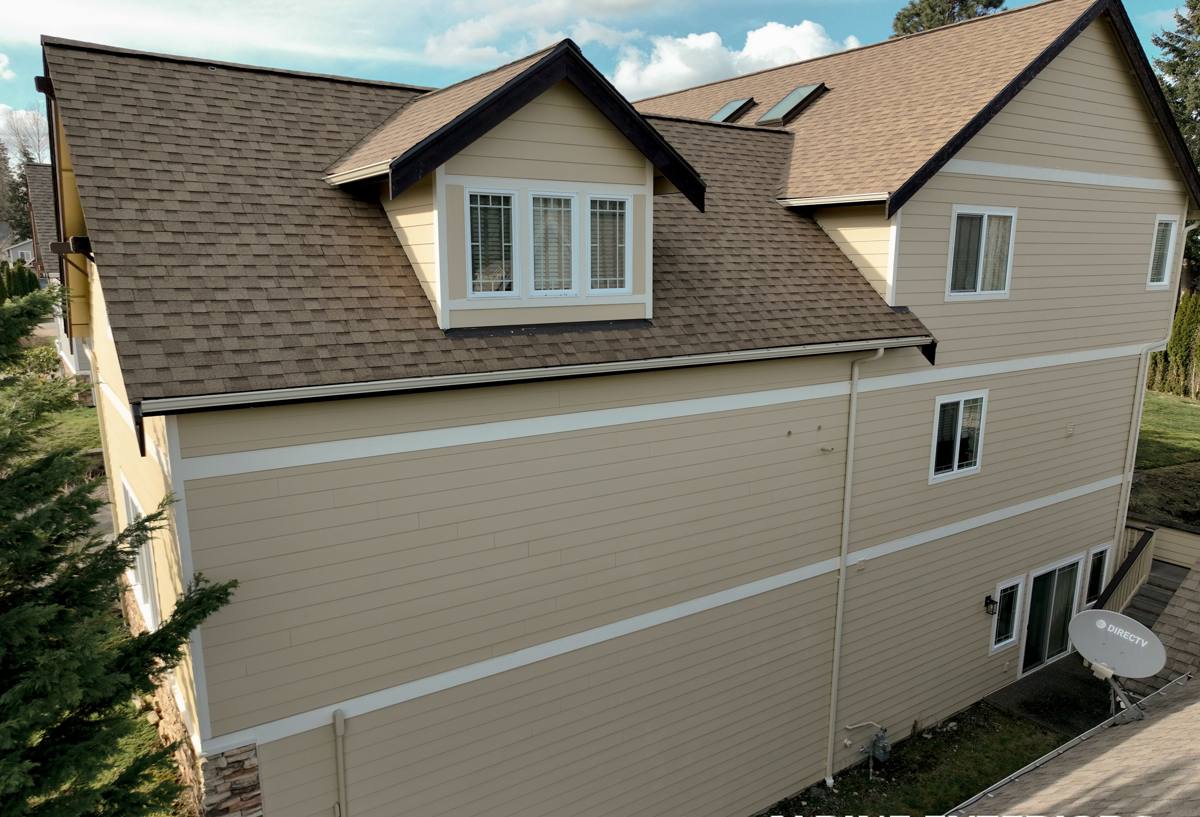
What Salt Air, Driving Rain, and Moss Season Actually Do
Salt Air and Corrosion
Airborne salt accelerates corrosion on fasteners, flashing, and any exposed metal trim. Over years, corroding fasteners can loosen siding panels, and corroded flashing can quietly fail long before the siding itself shows visible damage. This is why fastener choice and flashing material matter as much as the siding brand.
Driving Rain and Wind-Driven Moisture
Rain that comes in sideways doesn't behave like rain that falls straight down. It gets pushed up under laps, around window and door trim, and into any seam that isn't properly lapped or sealed. A siding system that relies on paint or caulk alone to keep water out — rather than a correctly installed weather-resistive barrier and flashing sequence — is going to lose that fight eventually.
Moss Season
Shaded and north-facing walls in this part of Whatcom County can stay damp for much of the fall, winter, and spring. Moss and algae thrive in that moisture, and on porous or poorly finished siding, sustained dampness behind organic growth accelerates rot, delamination, and finish breakdown. Siding that resists moisture absorption and holds a factory finish is far better positioned to handle a long wet season without constant upkeep.
Signs a Geneva Home Needs Replacement, Not Repair
Not every siding problem calls for a full replacement. But there's a point where patching stops being cost-effective and starts hiding bigger problems underneath. Watch for:
- Soft, spongy, or crumbling siding when pressed — usually a sign of moisture damage behind the surface
- Persistent moss or algae staining that returns within weeks of cleaning
- Bubbling, peeling, or chalky paint across large sections rather than isolated spots
- Visible warping, cupping, or separation at panel seams
- Rust streaking near fasteners or trim
- Rising energy bills alongside drafts near exterior walls
- Siding that's original to a home built more than 20-25 years ago, especially wood-based or older composite products
If you're seeing two or more of these, it's worth having someone look at the wall assembly, not just the surface — because once moisture gets behind siding, the damage is often worse than what's visible from the driveway.
What a Correct Siding Replacement Job Actually Involves
Tear-Off and Inspection
Replacement starts with full removal of the old siding, not installation over it. That's the only way to actually see the sheathing underneath — and in a climate like Geneva's, it's common to find soft spots, old water staining, or failed house wrap that a re-side-over-existing approach would simply bury for another decade.
Water Management Comes First
Before a single piece of new siding goes up, the weather-resistive barrier, flashing at windows and doors, and any necessary sheathing repairs get addressed. This layer is what actually keeps wind-driven rain out of the wall — the siding itself is the second line of defense, not the first.
Installation to Manufacturer Spec
Fastener spacing, clearance from grade and roof lines, proper caulking at butt joints, and correct overlap are what separate siding that lasts decades from siding that fails in ten years. This is where a lot of installation problems originate — not from bad material, but from shortcuts taken to save time.
Why We Only Install James Hardie Fiber Cement
We've made a deliberate call to install James Hardie fiber cement siding exclusively, and Geneva's climate is a big part of why. Fiber cement is non-combustible, doesn't absorb moisture the way wood-based or engineered wood products can, and holds its factory-applied ColorPlus finish far longer than field-painted alternatives — which matters directly when you're dealing with sustained salt exposure and a long wet season.
James Hardie also engineers specific product lines for different climate zones (their HZ5 and HZ10 designations), which means the siding specified for Western Washington is built with this region's moisture exposure in mind, not a generic national average. We don't install vinyl, LP SmartSide, Cemplank, Allura, or primed wood siding — not because those products have no place anywhere, but because we've seen how coastal Pacific Northwest conditions expose their specific weak points over time, and we'd rather stand behind one system we trust completely than offer several we have reservations about.
How Common Siding Materials Hold Up in This Climate
| Material | Moisture Resistance | Salt Air Durability | Finish Longevity |
|---|---|---|---|
| James Hardie Fiber Cement | Does not absorb moisture like wood; engineered HZ lines for this region | Non-combustible, dimensionally stable, resists corrosion-driven damage | Factory ColorPlus finish, long warranty on finish and product |
| Vinyl Siding | Sheds water but can warp or buckle with temperature swings | Can become brittle and fade faster under salt and UV exposure | Color is baked into the material but fades unevenly over time |
| LP SmartSide / Engineered Wood | Wood-based core is more vulnerable to sustained moisture at cut edges and seams | Requires diligent sealing and maintenance in salt air conditions | Field or factory finish, shorter track record in wet coastal climates |
| Cedar / Primed Wood | Absorbs moisture readily; high maintenance in a long moss season | Prone to rot and insect damage without constant upkeep | Requires regular repainting or staining |
This is a general comparison, not a claim that every product in every column fails — it's a summary of the real-world trade-offs that led us to standardize on one system for homes in this region.
Our Process, From Estimate to Final Walkthrough
- Free on-site assessment — we look at your current siding, sheathing condition where visible, and any trouble spots specific to your home's exposure
- Written estimate — clear scope, product selection, and timeline, no pressure to decide on the spot
- Tear-off and sheathing inspection — old siding comes off, and we address anything we find underneath before moving forward
- Weather barrier and flashing installation — the water management layer goes in correctly, not as an afterthought
- James Hardie installation to spec — proper fastening, clearances, and sealing at every seam and penetration
- Final walkthrough — we go over the finished job with you before calling it done
Why a Crew That Already Works Geneva Matters
Siding replacement isn't a one-size-fits-all job. A crew that's worked other homes in this part of Glenhaven already knows which walls tend to hold moisture longest through moss season, how far inland the salt exposure realistically affects fastener and flashing choices, and what wind-driven rain does to trim details that look fine on paper. That local pattern recognition shows up in fewer callbacks and a job that's built for the actual conditions your home faces, not a generic install.
It also means straightforward answers when you ask questions — about permitting, about how your home's specific exposure should shape material or detailing decisions, and about what a realistic timeline looks like given Whatcom County's weather windows.
What Affects the Cost of a Siding Replacement
Every home is different, but a few factors consistently move the estimate:
- Total square footage of exterior wall area
- Condition of the sheathing underneath the existing siding — hidden damage adds scope
- Number and complexity of windows, doors, and trim details
- Home height and accessibility (multi-story homes require more staging and safety equipment)
- Siding profile and finish selection within the James Hardie product line
- Removal and disposal of existing material
We walk through all of this during the on-site assessment so the estimate reflects your actual home, not a generic square-footage average.
Ready to Talk About Your Home?
If your Geneva home is showing signs of wear from salt air, driving rain, or a stubborn moss problem, we're glad to take a look and give you a straight answer about what it needs. Reach out for a free, no-pressure estimate using the form below.