 Glenhaven Siding
 Siding Replacement Around Lake Whatcom: A Job With Its Own Demands
Homes around Lake Whatcom sit in one of the more demanding exterior climates in Whatcom County. Salt-tinged air drifts in off the broader coastal airflow, driving rain hits lakeside walls at odd angles depending on terrain and tree cover, and a moss season that starts early and lingers late keeps every exterior surface damp for long stretches of the year. Siding replacement here isn't the same job as a straightforward re-side in a dry, open subdivision. It's a job that has to account for what this specific setting does to a wall system over time, and we approach it that way on every Lake Whatcom property we work on.
We're a Glenhaven-based crew, and Lake Whatcom is part of our regular service area — not a stretch assignment we take occasionally. That matters for siding replacement specifically, because the failure patterns we see on tear-offs around the lake are consistent enough that we've built our whole process around them.
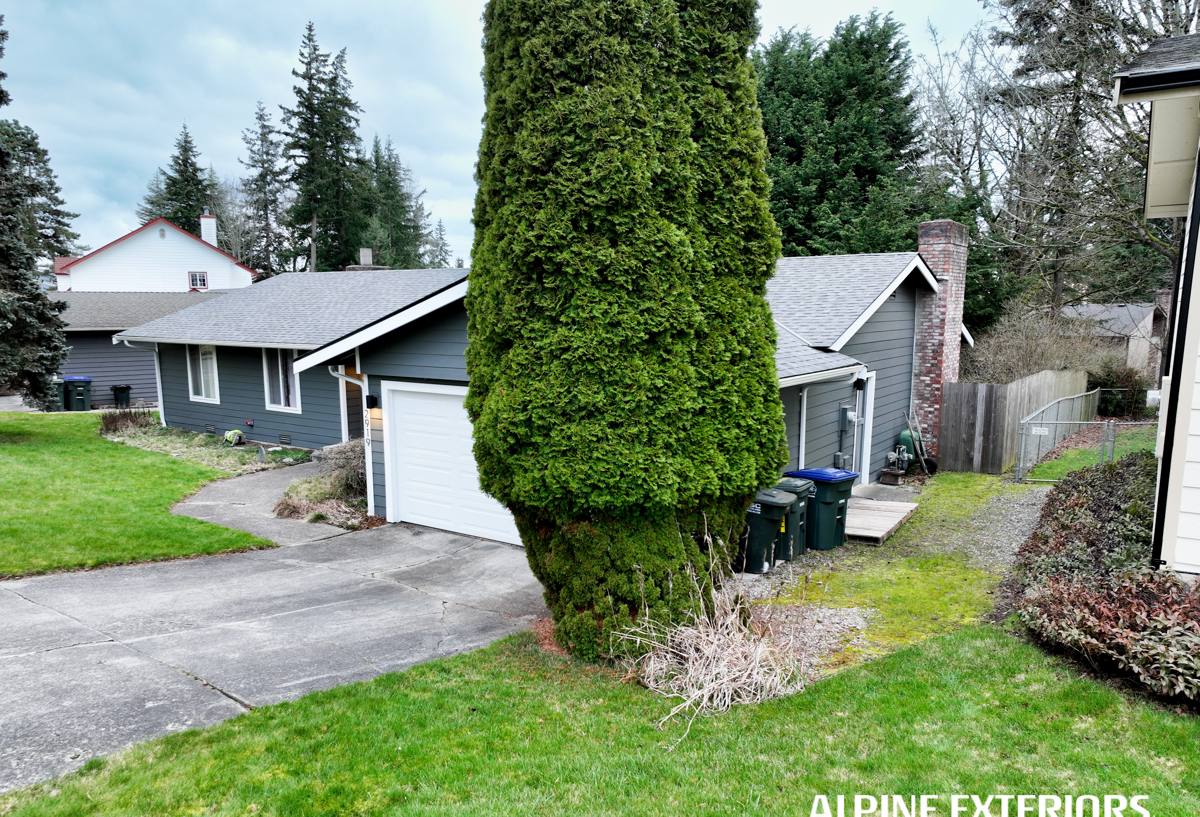
What This Climate Does to Siding Over Time
Salt-Tinged Air and Coastal Moisture
Whatcom County's exterior climate carries salt-tinged air well inland from the coast, and homes around Lake Whatcom aren't insulated from that just because they're not directly on saltwater. That airborne moisture works on fasteners, trim, and any siding material with a finish that isn't built to resist it, accelerating corrosion and finish breakdown in ways that aren't always obvious until a homeowner looks closely at fastener heads or joint lines after a few years.
Driving Rain Off the Lake and Surrounding Terrain
Lake Whatcom sits in hilly terrain with homes at a range of elevations and orientations, and that terrain shapes how driving rain hits a house. One wall can take direct wind-driven rain while an adjacent wall, protected by grade or tree cover, barely gets wet. A siding replacement that treats every elevation the same misses that variability. Flashing, drainage, and water-resistive barrier detailing need to reflect the actual exposure of each wall, not a generic assumption about the whole house.
A Long Moss and Mildew Season
Moss and mildew need three things to establish themselves: moisture, shade, and time without a full dry-out. Lake Whatcom's tree cover and lake-driven humidity supply all three for much of the year. Siding that holds moisture at the surface or in its joints gives moss a foothold faster than a material that sheds water and dries out between storms. Once established, moss and mildew hold moisture against the wall surface, which compounds whatever damage the material was already prone to.
Signs Your Home Needs Replacement, Not Just Repair
Not every siding problem calls for a full replacement. But around Lake Whatcom, certain signs usually mean the underlying material or installation has run its course rather than needing a patch.
- Boards that are soft, spongy, or crumbling when pressed, especially near the bottom courses or around window and door trim
- Visible cupping, buckling, or warping across multiple wall sections rather than one isolated board
- Paint or finish that keeps failing within a year or two of repainting, even after prep work
- Persistent moss or mildew staining that returns quickly after cleaning, on more than one elevation
- Gaps opening up at seams and joints, letting moisture behind the siding rather than shedding it
- Interior signs — staining, soft drywall, or musty smell along exterior walls — that point to moisture already past the siding layer
If a home is showing two or more of these signs across different parts of the exterior, that's usually a sign the siding system as a whole has reached the end of its useful life, not that one section needs a spot repair.
What a Correct Siding Replacement Actually Involves
Tear-Off and What's Underneath
A proper replacement starts with removing the old siding down to the sheathing, not covering over it. That step matters more around Lake Whatcom than it does in a drier climate, because it's the only point in the project where the crew can actually see what years of moisture exposure have done to the sheathing, framing, and any existing water-resistive barrier. Soft or delaminated sheathing, rusted fasteners, and compromised framing all need to be addressed before new siding goes on — installing new material over a compromised wall assembly just resets the clock on the same problem.
Water-Resistive Barrier and Flashing
Once the wall is open, a new water-resistive barrier goes on correctly lapped, and flashing gets installed at every window, door, and horizontal transition so water is directed out and down rather than trapped behind the new siding. Given how much wind-driven rain varies by elevation around the lake, we pay particular attention to flashing details on whichever walls face the prevailing weather on a given lot, since that's where a shortcut shows up first.
Fastening, Clearances, and Joint Treatment
Fiber cement performs the way it's engineered to only when it's fastened with the correct type and spacing of fasteners, held at the proper clearance from grade, roofing, and other transitions, and finished with joints that are sealed to the manufacturer's specification. Skipping or shortcutting any of these steps is exactly what turns a good material into a problem down the road, regardless of what's written on the product's warranty paperwork.
Why We Replace Siding With James Hardie Fiber Cement Only
We install James Hardie fiber cement siding exclusively. We don't install LP SmartSide, vinyl siding, Cemplank, Allura, primed spruce, or cedar. That's not because those products have no legitimate use anywhere — it's a professional standard we settled on after seeing which materials actually hold up to salt-tinged air, driving rain, and a long moss season, and which ones don't.
- Non-combustible core: Fiber cement doesn't feed a fire the way wood-based siding can, which carries real weight for insurance underwriting as well as basic safety.
- Factory-applied ColorPlus finish: The color is baked on in a controlled factory process rather than applied on site, and it resists fading, chalking, and moisture intrusion far longer than field-applied paint — a meaningful advantage on a wall that stays damp for extended stretches.
- Climate-engineered HZ product lines: Hardie's HZ5 formulation is built for regions with heavy moisture exposure and freeze-thaw cycling, which describes Lake Whatcom's conditions closely.
- Dimensional stability: Fiber cement doesn't swell, cup, or warp through repeated wetting and drying cycles the way engineered wood products can.
- Strong transferable warranty: Hardie backs its products with one of the more substantial warranty structures in the industry, provided the installation follows their published specifications — which is why our installation process is built around meeting them exactly.
Every one of the products we don't install has real trade-offs on a lakeside property like this: vinyl can trap moisture behind panels in poorly ventilated wall assemblies, engineered wood is sensitive to moisture at cut edges and joints, and cedar or primed wood needs regular refinishing to keep ahead of a climate that doesn't give a wall much time to dry out. We'd rather stand fully behind one system than offer a cheaper option that quietly shifts long-term maintenance risk back onto the homeowner.
Comparing Siding Materials for a Lake Whatcom Replacement
| Material | Moisture Behavior | Maintenance in This Climate | Typical Longevity Here |
|---|---|---|---|
| James Hardie fiber cement | Dimensionally stable; sheds moisture, resists swelling | Low; factory finish resists salt air, fading, and chalking | 30+ years with correct installation |
| Vinyl siding | Can trap moisture behind panels in damp, low-ventilation walls | Low upfront, but seams and J-channels hold moisture longer here | Variable; often shorter on exposed or shaded elevations |
| LP SmartSide / engineered wood | Wood-based core sensitive at cut edges and joints | Moderate to high; edge sealing critical in a wet, moss-prone climate | Depends heavily on installation quality and upkeep |
| Cedar / primed wood | Absorbs and releases moisture readily | High; regular refinishing needed to keep ahead of moss and mildew | Shorter without consistent, ongoing maintenance |
Our Siding Replacement Process
Every Lake Whatcom siding replacement follows the same sequence, adjusted for the specific exposure and terrain of the property:
- An on-site assessment of the existing siding, noting which elevations show the most weather exposure and moisture damage
- A written scope of work and timeline before any contract is signed, so there's no ambiguity about what's included
- Full tear-off to the sheathing, with an honest look at what's underneath before anything new goes on
- Repair of any compromised sheathing or framing found during tear-off
- Installation of a correctly lapped water-resistive barrier and flashing at every penetration and transition
- Installation of James Hardie siding to manufacturer specification — fastener type and spacing, clearances, and sealed joints
- A final walkthrough with the homeowner before the job is considered complete
We don't skip the assessment step to get to the more visible part of the job faster. On a lakeside property, what's happening behind the old siding tells us more about what the new installation needs than a quick look at the surface ever could.
Why Hiring a Crew That Already Works Lake Whatcom Matters
Lake Whatcom isn't a uniform environment — homes at different elevations, orientations, and distances from the shoreline face genuinely different exposure to wind, rain, and moisture. A crew that already works this area regularly has already seen how those differences play out in practice: which walls need extra drainage detailing, how flashing needs to be lapped on a given roof pitch, and which fastener grade actually holds up against salt-tinged, moisture-heavy air over the long run. That's the kind of judgment that only comes from repeated, direct experience with this specific setting, not from a generic siding crew rotating through unfamiliar territory.
A Simple Checklist Before Hiring for a Siding Replacement Here
- Ask what siding material they install and why, and whether they'll put a written warranty behind it
- Confirm current Washington contractor licensing and active liability insurance
- Ask specifically how they handle water-resistive barrier and flashing detailing on lakeside or wind-exposed walls
- Ask whether tear-off includes an inspection of sheathing and framing, not just removal of the old siding
- Get a clear, written scope of work before signing anything
What Affects the Cost of a Lake Whatcom Siding Replacement
Cost varies from property to property, but a few factors consistently move the number more than homeowners expect. The condition of the sheathing and framing underneath the old siding is usually the biggest variable — hidden moisture damage found during tear-off adds real repair work that can't be scoped accurately until the wall is open. Home size, wall complexity (dormers, multiple gables, extensive trim), and how many elevations need heavier drainage or flashing detailing because of their exposure to prevailing wind and rain all factor in as well. We give homeowners a realistic range up front and update it in writing if tear-off reveals something the initial assessment couldn't see from the outside.
If your home is due for a siding replacement, or you're not sure whether what you're seeing calls for repair or full replacement, we're glad to take a look and give you an honest read on it. Reach out below for a free, no-pressure estimate.