 Glenhaven Siding
 Lynden Homes Face a Different Kind of Wear
Lynden sits in Whatcom County's marine climate zone, and that shapes how windows age here compared to drier parts of the state. Even though Lynden itself is inland farm country, the same weather system that pushes moisture off the Strait of Georgia and the Puget Sound still reaches this far in — driving rain in the fall and winter, long stretches of grey humidity, and a moss season that doesn't just sit on roofs. It works its way into window sills, tracks, and the gaps around old frames. This page is about one job, done right, for this one area: replacing windows on Lynden homes in a way that actually accounts for what the climate does to them, not a generic rundown of window options.
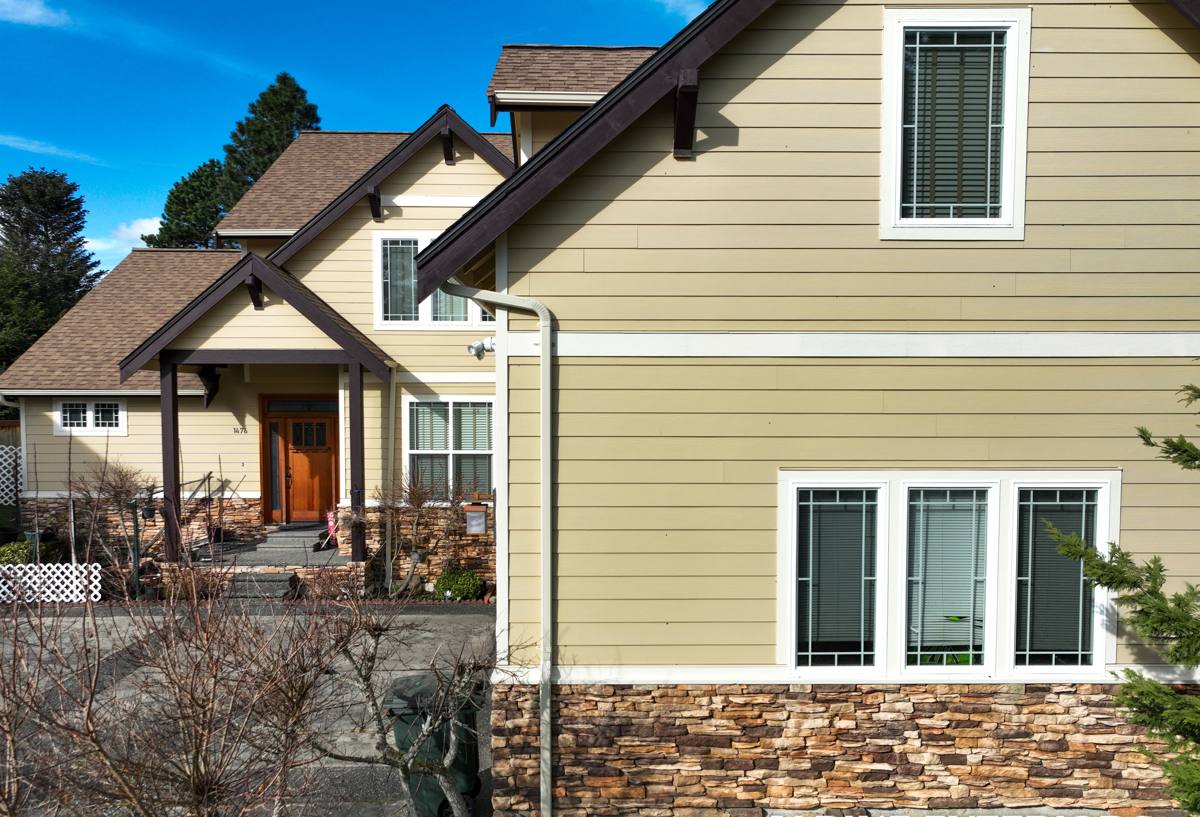
What This Climate Does to Windows Over Time
Rain and Wind-Driven Moisture
Lynden doesn't get hammered by coastal storms the way waterfront towns do, but it gets a steady, soaking rain for months at a time, often with enough wind to push water sideways into seams and joints. Older windows — especially aluminum-frame or original wood units from decades past — were rarely sealed with today's flashing and weatherproofing standards. Over years, that lets water behind the trim, where it does its damage out of sight.
Moss and Organic Growth
The same damp, shaded conditions that grow moss on roofs and north-facing siding also colonize window sills, especially on older wood-frame windows or units set under eaves that don't get much sun or airflow. Once organic growth gets a foothold in a sill or lower sash, it holds moisture against the wood and speeds up rot from the inside.
Temperature Swings and Seal Failure
Whatcom County's mix of cool nights and daytime warmth creates repeated condensation cycles on window glass. In a healthy insulated unit, that's a non-issue. But once a seal starts to fail, that same temperature swing pulls moisture into the space between the panes, which is what causes the fogging or haze many Lynden homeowners eventually notice and can't clean off.
Signs a Lynden Home Needs Window Replacement
Not every window with a problem needs full replacement — some issues are hardware or caulking fixes. But a few signs consistently point to windows that have reached the end of their useful life in this climate:
- Fogging, haze, or moisture trapped between panes of double-pane glass
- Noticeable drafts near the frame even with the window fully latched
- Wood that's soft, discolored, or crumbling at the sill or lower corners
- Moss, algae, or dark staining that keeps returning around the frame
- Windows that are painted shut, warped, or difficult to open and close
- Single-pane glass still in place in a home built or renovated decades ago
- A noticeable jump in heating costs with no other explanation
Choosing Windows That Actually Hold Up Here
Frame Material
Frame material matters more in a wet climate than in a dry one, because it determines how the window handles years of moisture exposure without warping, rotting, or corroding. We steer most Lynden homeowners toward vinyl or fiberglass frames for exactly this reason — they don't absorb water the way wood does and don't corrode the way older aluminum frames can.
| Frame Material | Moisture Resistance | Maintenance | Typical Lifespan |
|---|---|---|---|
| Vinyl | Very good — won't rot or corrode | Low — occasional cleaning | 20-30 years |
| Fiberglass | Excellent — dimensionally stable in wet/dry cycles | Low | 30-40+ years |
| Wood / Wood-Clad | Fair — depends heavily on maintenance | High — regular painting/sealing | 15-25 years if maintained |
| Aluminum (older style) | Poor in this climate — prone to condensation and corrosion | Moderate | Varies widely |
Wood-clad windows can still make sense on homes where the look matters more than low maintenance, but we're upfront that they require an ongoing commitment to sealing and paint upkeep that vinyl and fiberglass simply don't demand.
Glass Packages
For Lynden's damp winters, we generally recommend double-pane windows with a low-E coating and argon gas fill as the practical baseline — it cuts heat loss and reduces the interior condensation that shows up on cold, humid mornings. Triple-pane glass adds further insulation value and is worth discussing for north-facing rooms or homes with higher energy goals, but it comes at a higher cost and added weight, which matters for older frames and larger openings.
Window Style
Casement windows, which crank outward and seal by compression, tend to resist wind-driven rain better than double-hung windows, which rely on two sliding sashes meeting in the middle. That doesn't mean double-hung windows are wrong for a Lynden home — they suit a lot of architectural styles and are easier to service — but it's a tradeoff worth knowing before you pick a style based on looks alone.
What a Correct Installation Actually Involves
Flashing and Water Management
The window itself is only part of the system. Proper installation means integrating flashing tape and a water-resistive barrier around the rough opening so that any moisture that does reach the frame drains back out instead of getting trapped behind siding or trim. This step gets skipped more often than homeowners realize, and it's usually the reason a "new" window still leaks a few years later.
Insulation and Air Sealing
Gaps between the window frame and the rough opening need to be filled with the right low-expansion foam or backer rod and sealant — not just caulked over on the surface. Overfilling with standard spray foam can actually bow a vinyl frame out of square, so this is a step that rewards experience over shortcuts.
Old Window Removal and Disposal
Removing the old unit without damaging the surrounding siding, trim, or interior wall finish takes care, especially on older homes where trim isn't a standard modern profile. We haul away and dispose of the old windows as part of the job — that's not something you should have to handle yourself.
How We Handle a Window Replacement Project
- On-site estimate and measurement. We look at each opening individually — older Lynden homes are rarely perfectly square — and talk through frame material, glass, and style options based on your home and budget.
- Ordering and scheduling. Windows are ordered to the exact measurements of your openings. We schedule installation with an eye on the weather, since a dry stretch matters for a clean, well-sealed install.
- Removal and installation. Old units come out, flashing and insulation go in correctly, and new windows are set, shimmed, and sealed to spec.
- Final check and cleanup. Every window gets operated and inspected before we consider the job done, and we clean up job-site debris and packaging before we leave.
Why Local Experience in Lynden Matters
A lot of window replacement advice online is written for a national audience and doesn't account for what actually happens to a window in Whatcom County's climate. Crews who work in Lynden regularly know the difference between a farmhouse built decades ago with settling and out-of-square openings, and a newer build on the edge of town where the framing is tighter but the exposure to open-field wind and rain is often greater. That local pattern recognition affects which frame material we recommend, how we flash an opening, and how we sequence a job around the weather rather than fighting it. It also means we're not learning the local building department's requirements on your project — we already know how Whatcom County and City of Lynden permitting and inspection typically works for residential window replacement.
What Affects the Cost of Window Replacement
Costs vary enough from house to house that we won't quote a number without seeing the actual openings, but a few factors consistently drive the price up or down:
| Cost Factor | Why It Matters |
|---|---|
| Number and size of windows | More openings and larger glass areas mean more material and labor |
| Frame material chosen | Vinyl is typically the most affordable; fiberglass and wood-clad cost more |
| Glass package | Triple-pane and specialty coatings add cost over standard double-pane |
| Condition of the opening | Rot repair or reframing adds time and materials beyond a straightforward swap |
| Access and window height | Second-story or hard-to-reach windows take more time and equipment |
As a rough starting point, many Whatcom County homeowners find a standard vinyl window installed runs somewhere in the several-hundred to low-thousand-dollar range per window, with the total project cost scaling from there based on the factors above. We'll give you exact numbers once we've actually looked at your windows.
If your Lynden home has windows showing any of the wear signs above, or you're just planning ahead, we're happy to take a look and give you a straightforward, no-pressure estimate. Use the form below to get started.