 Glenhaven Siding
 Asphalt Shingle Roofing Built for Nooksack's Climate
Nooksack sits in a part of Whatcom County where the weather doesn't do a roof any favors. Homes here deal with long stretches of driving rain, damp marine-influenced air moving in off the Sound, and shaded, tree-lined lots that stay wet long after a storm passes. Asphalt shingle roofing is still the most practical, cost-effective choice for the vast majority of homes in this area — but only when it's specified and installed with this climate in mind. A shingle roof installed the same way you'd install one in a dry inland climate will not perform the same way here, and the difference shows up as premature granule loss, moss colonies, and leaks well before the shingles' rated lifespan is up.
This page covers what an asphalt shingle roof needs to hold up in Nooksack specifically, what a correctly done installation or repair involves, and how we approach the work.
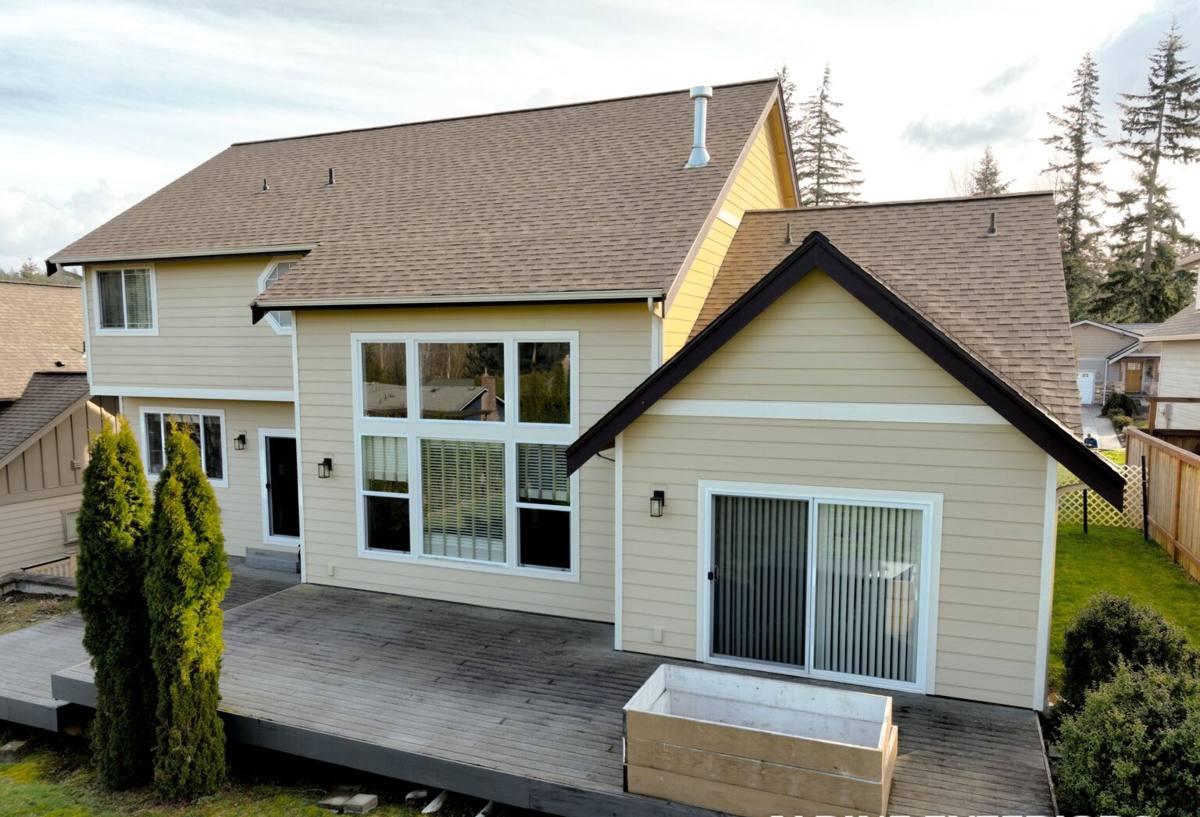
What Whatcom County Weather Does to a Shingle Roof Over Time
It helps to understand the specific forces at work, because they shape almost every recommendation we make.
Driving Rain and Wind-Driven Moisture
Storms coming through Whatcom County often carry enough wind to push rain sideways and under shingle tabs, especially at ridges, valleys, and anywhere the roof plane changes direction. If flashing and underlayment weren't installed correctly the first time, this is where water finds its way in — sometimes slowly, over a season or two, before anyone notices a stain on a ceiling.
Salt-Tinged Marine Air
Even away from the immediate shoreline, Whatcom County's air carries a marine influence that accelerates the breakdown of metal flashing, fasteners, and vent components that aren't rated for it. Cheaper or mismatched hardware corrodes faster here than it would in a drier, inland climate, and a corroded flashing seam is a leak waiting to happen.
A Long Moss and Algae Season
Shaded roof sections, north-facing slopes, and anything under overhanging trees stay damp for extended periods much of the year. That's exactly the environment moss and algae need to establish. Once moss gets a foothold under shingle tabs, it lifts them, holds moisture against the roof deck, and accelerates granule loss — turning a cosmetic issue into a structural one if it's left alone.
What a Correct Asphalt Shingle Roofing Job Actually Involves
A roof is a system, not just a layer of shingles. Skipping or shortcutting any one component below is where most premature roof failures in this region start.
- Roof deck inspection and repair — any soft, delaminated, or water-damaged sheathing gets replaced before new material goes down, not covered up.
- Ice and water shield at vulnerable areas — eaves, valleys, and roof penetrations get a self-adhering waterproof membrane, not just standard felt.
- Synthetic underlayment across the full deck — a water-resistant barrier that also protects the deck during the installation window.
- Corrosion-resistant flashing — at chimneys, sidewalls, valleys, and any roof-to-wall transition, matched to hold up in marine-influenced air.
- Proper nailing pattern and fastener count — matched to the shingle manufacturer's wind-rating specifications, not just "enough to hold it down."
- Balanced attic ventilation — intake at the eaves and exhaust at the ridge, sized to the attic volume, so moisture and heat don't build up under the deck.
- Drip edge at eaves and rakes — directs water off the roof edge instead of letting it wick back into the fascia.
Any one of these done poorly can undercut an otherwise good shingle product. This is why we treat the installation details, not just the shingle brand, as the real determinant of how long a roof lasts here.
Why Ventilation Matters More Than Most Homeowners Expect
Ventilation is easy to overlook because it's invisible once the roof is finished, but it's one of the biggest factors in shingle lifespan in this climate. A poorly ventilated attic traps warm, moist air against the underside of the roof deck. In winter, that moisture can condense and slowly rot the sheathing from below — a problem you won't see from the outside until it's advanced. In summer, trapped heat accelerates the aging of asphalt shingles from underneath, shortening their service life regardless of how good the shingle itself is. Balanced intake-and-exhaust ventilation keeps air moving through the attic space year-round, which protects both the roof deck and the shingles above it.
Choosing the Right Shingle for Nooksack's Conditions
Not all asphalt shingles are built the same, and the differences matter more in a wet, moss-prone climate than they would somewhere dry. We walk homeowners through the trade-offs rather than defaulting to whatever is cheapest or most common.
| Shingle Type | Typical Lifespan | Best Fit For | Consideration |
|---|---|---|---|
| 3-tab (standard) | ~15-20 years | Budget-conscious projects, secondary structures | Lower wind rating; less algae resistance unless specified |
| Architectural / dimensional | ~25-30 years | Most Nooksack homes | Heavier, better wind rating, more common with algae-resistant granules |
| Algae-resistant (AR) granule shingles | Same as base product | Shaded lots, north-facing slopes, tree cover | Copper-infused granules slow algae growth; strongly recommended in this climate |
| Impact-resistant / Class 4 | Same as base product, often longer warranty | Homes wanting extra durability against wind-driven debris | Higher upfront cost, may qualify for insurance discounts |
For most Nooksack properties, we recommend architectural shingles with algae-resistant granules as the baseline — the added cost over standard 3-tab is modest, and the payoff in reduced moss and streaking over the life of the roof is significant.
Our Process for a Nooksack Roofing Project
1. On-Site Inspection and Honest Assessment
We start by getting on the roof, not just looking at it from the ground. We check the deck condition, existing ventilation, flashing condition, and how many layers of shingles are already there. You get a straight answer about whether you're looking at a repair or a full replacement, and why.
2. Clear, Written Scope
Before any work starts, you know exactly what's being done, what materials are being used, and what it costs. No vague allowances or surprise change orders for work that should have been scoped upfront.
3. Tear-Off and Deck Prep (Full Replacements)
Old material comes off down to the deck so we can actually inspect and repair the sheathing underneath — not install over problems that will resurface later.
4. Installation to Manufacturer Spec
Underlayment, ice and water shield, flashing, and shingles go down in the sequence and fastener pattern the manufacturer requires, which is also what keeps the product warranty valid.
5. Ventilation Check and Correction
We verify intake and exhaust ventilation is balanced for the attic space, correcting it as part of the job if it isn't — not flagging it as a separate future expense.
6. Final Walkthrough and Cleanup
We walk the finished roof, check flashing and ridge lines, and make sure the property is cleared of debris and stray fasteners before we consider the job done.
Repair vs. Full Replacement: How We Help You Decide
Not every roofing problem in Nooksack means a full replacement. But knowing the difference takes an honest inspection, not a sales pitch. Here's the general framework we use.
| Factor | Leans Toward Repair | Leans Toward Replacement |
|---|---|---|
| Age of roof | Under ~60% of expected lifespan | Near or past expected lifespan |
| Extent of damage | Isolated to one section or penetration | Widespread granule loss, multiple leak points |
| Deck condition | Sound, no soft spots found | Soft, delaminated, or water-stained sheathing |
| Moss/algae presence | Surface growth, shingles intact underneath | Moss lifting tabs, granule loss underneath established growth |
| Ventilation | Adequate and functioning | Absent, blocked, or unbalanced |
We'll tell you plainly which side of this a given roof falls on, including when a repair is the right call and a full replacement isn't necessary yet.
Maintenance That Extends Shingle Roof Life in This Climate
A well-installed roof still needs some upkeep in a climate like Nooksack's. None of this is difficult, but it's easy to let slide.
- Keep gutters clear so water isn't backing up under the eave line during heavy rain.
- Trim back overhanging branches to cut down on shade and debris buildup that feeds moss.
- Have moss and algae growth treated before it lifts shingle tabs, not after.
- Check attic ventilation isn't blocked by insulation or storage items.
- After major windstorms, do a visual check (or have us check) for lifted or missing shingles.
- Schedule a roof inspection every couple of years, even without visible problems.
Why a Crew That Already Works Nooksack Makes a Difference
Roofing crews who mainly work in drier climates often don't default to the details that matter most here — algae-resistant granules, upgraded ice and water shield coverage, corrosion-rated flashing hardware, and ventilation sized correctly for a consistently damp attic environment. Those aren't upgrades in Nooksack; they're what a roof needs to reach its expected lifespan at all. A crew already familiar with Whatcom County's weather patterns, moss pressure, and typical home construction in the area isn't learning on your roof — they're applying what already works on homes like yours down the street.
We also know that local weather windows for roofing work can be tight. Planning around the wetter months, sequencing tear-off and dry-in efficiently, and not leaving a deck exposed longer than necessary are all things that come from doing this work in this specific climate, repeatedly.
Get a Free, No-Pressure Estimate
If your Nooksack roof is showing moss, missing granules, or you just want an honest read on how much life it has left, we're happy to take a look. Use the form below to request a free estimate — no pressure, no obligation, just a straight assessment of what your roof actually needs.