 Glenhaven Siding
 Why Siding Replacement Looks Different in Nooksack
Nooksack homes sit in a part of Whatcom County that doesn't get a break from moisture. Between the marine air moving in off the Salish Sea, the driving rain that comes sideways in a winter storm, and a moss season that can stretch from October through May, siding here is under near-constant pressure. It's not one dramatic event that wears out a wall system — it's the slow, repeated cycle of wet-dry-wet that finds every weak seam, every gap in caulking, and every spot where water can get behind the cladding and stay there.
That's the lens we use for every siding replacement job in Nooksack: not "what looks good today" but "what will still be doing its job in twenty years under this climate." This page covers what that actually takes — what to watch for, what a correct job includes, how our process works, and why local experience matters more than most homeowners realize.
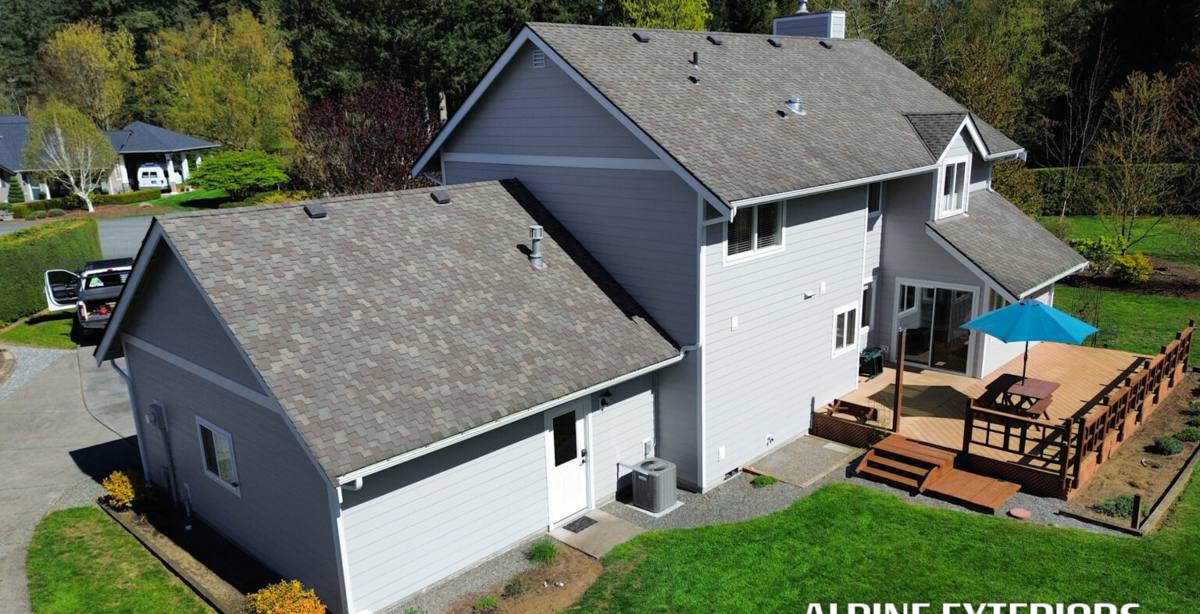
Signs a Nooksack Home Needs Siding Replacement, Not Another Repair
Repairs make sense when the problem is isolated — a cracked board, a dented panel, a section damaged by a falling branch. Replacement becomes the right call when the damage is systemic, meaning it shows up in more than one place or points to a failure in the material or the barrier behind it, not just the surface.
- Soft or spongy spots when you press on the siding, especially near the bottom courses and around window sills
- Paint that won't hold anymore, even after repeated repainting — a sign moisture is moving through the material itself
- Persistent moss or algae growth that returns within a season or two of cleaning, especially on north-facing and shaded walls
- Visible warping, bowing, or gaps opening up between boards or panels
- Siding that's cupping or separating at the seams, letting wind-driven rain track in behind it
- A musty smell inside near exterior walls, or interior drywall staining that lines up with an exterior wall
If you're seeing two or more of these, it's worth having someone pull a board and look at the sheathing behind it before deciding between repair and full replacement. Patching over hidden rot just resets the clock on a bigger problem.
What Actually Causes Siding Failure Here
Driving Rain and Wind-Loaded Walls
Whatcom County storms don't just rain down — they push rain sideways into walls, especially on west- and southwest-facing exposures that catch the prevailing weather. Siding systems that rely on caulk and paint film alone to keep water out tend to fail here faster than they would in a drier region. What matters more is the water-resistive barrier and flashing details behind the siding — the parts you don't see once the job is done.
Moss, Shade, and Slow Drying
Nooksack's tree cover and long wet season mean a lot of homes have walls that simply don't get enough sun and airflow to dry out between storms. Moss and algae aren't just cosmetic — they hold moisture against the surface longer, which accelerates whatever degradation is already happening underneath.
Salt-Influenced Marine Air
Even away from the immediate shoreline, the marine air that moves through this part of Whatcom County carries salt content that affects fasteners, trim metal, and any siding material with a paint film that isn't factory-cured. Over years, that translates to fastener corrosion and paint that fails from the inside out rather than just fading.
Why We Only Install James Hardie Fiber Cement
We made a standing decision to install one siding system on every job: James Hardie fiber cement. That's not a marketing preference — it's a response to exactly the conditions described above.
Fiber cement is non-combustible and dimensionally stable, meaning it doesn't swell, cup, or warp the way wood-based products can when they take on repeated moisture cycling. James Hardie's ColorPlus finish is baked on at the factory under controlled conditions, which gives it a bond and UV resistance that field-applied paint can't match — that matters in a climate where a house might not see direct, drying sun for weeks at a stretch. Hardie also builds region-specific HZ product lines engineered for climates like ours, and backs the material with a strong, transferable warranty that reflects confidence in long-term performance, not just first-year appearance.
We don't install vinyl, LP SmartSide, Cemplank, Allura, primed spruce, or cedar. Each of those has legitimate uses elsewhere, but none of them held up to our standard for this specific climate — whether that's vinyl's tendency to warp and gap in temperature swings, engineered wood's sensitivity to sustained moisture at cut edges and seams, or solid wood's ongoing maintenance demand in a moss-heavy environment. When we recommend fiber cement for a Nooksack home, it's because we've decided it's what we're willing to put our name on here.
What a Correct Siding Replacement Job Involves
The siding itself is maybe half the job. The other half — the part that determines whether it lasts 10 years or 40 — happens underneath it.
Tear-Off and Sheathing Inspection
Full removal of the old siding lets us actually see the wall. This is where we find hidden rot, compromised sheathing, or old flashing mistakes that a re-side-over-existing job would just bury for the next owner to discover. Any damaged sheathing gets replaced before anything new goes up.
Weather-Resistive Barrier
A correctly lapped, sealed water-resistive barrier is what actually keeps bulk water out of the wall assembly. Given how much wind-driven rain Nooksack walls take, this layer isn't optional or interchangeable — it's installed to manufacturer spec with proper overlaps at every seam and penetration.
Flashing at Every Penetration
Windows, doors, hose bibs, light fixtures, and vents are where most siding failures actually start. Each one needs flashing detailed to shed water outward and downward, never relying on caulk as the primary defense. Caulk fails; correctly lapped flashing doesn't rely on staying flexible forever.
Rainscreen or Drainage Gap
In a climate this wet, giving the wall a way to drain and dry — rather than sealing siding tight against the barrier — reduces how long moisture sits against the wall assembly after a storm. This detail matters more here than it would in a drier region.
Fastening and Panel Installation to Spec
James Hardie siding has specific fastener type, spacing, and clearance requirements. Installing outside of spec is one of the most common ways a Hardie job underperforms — and it's also one of the easiest things for a crew to get wrong if they don't install it regularly.
Trim, Caulking, and Touch-Up
Corner trim, window trim, and the color-matched touch-up on any field-cut edges finish the job and protect the cut edges of the fiber cement panels — an important step for keeping the whole system sealed.
Our Siding Replacement Process
- On-site assessment — we walk the exterior, check for moisture damage, and look at what's driving the need for replacement rather than repair.
- Written estimate — a clear scope covering tear-off, sheathing repair allowance, barrier and flashing work, materials, and finish, so there's no ambiguity about what's included.
- Material selection — choosing the right Hardie product line and color for the home, factoring in exposure, sun, and the look you're after.
- Tear-off and inspection — old siding comes off, sheathing gets inspected and repaired as needed before anything new goes on.
- Barrier, flashing, and rainscreen installation — the parts of the job that determine long-term performance.
- Hardie panel or plank installation — installed to manufacturer fastening spec, not shortcuts.
- Trim, caulking, and final walkthrough — finishing details and a walkthrough with you before we call it done.
What Affects the Cost of a Siding Replacement
| Factor | Why It Matters |
|---|---|
| Home size and wall area | More square footage means more material, labor, and fastening time |
| Condition of existing sheathing | Rot or water damage found during tear-off adds repair scope before new siding goes up |
| Number of stories and access | Second-story and steep-site work requires more scaffolding and safety setup |
| Trim, corners, and architectural detail | Homes with more windows, gables, and trim lines take longer to detail correctly |
| Product line and profile | Lap plank, panel, and shingle-style Hardie products vary in material and install cost |
| Color choice | Factory ColorPlus finishes come in a range of standard colors; custom or premium colors can affect lead time and cost |
We give a written, itemized estimate before any work starts, so you're not guessing at what drives the final number.
Why It Matters That We Already Work in Nooksack
A crew that only occasionally works this area has to relearn the local conditions on every job — which exposures take the worst weather, which older homes tend to have outdated flashing details, how long moss really takes to come back on a shaded wall. A crew that regularly works Nooksack and the surrounding Whatcom County communities already knows those patterns going in.
That local pattern-recognition shows up in small decisions that add up: knowing which walls need extra attention at flashing, sizing up how much sheathing repair to expect before we even open the wall, and specifying the right Hardie line for the exposure a given home actually sees. It also means we're a known, reachable local business if a warranty question comes up years down the road — not a crew that worked the area once and moved on.
Protecting Your Investment After Installation
James Hardie siding is built to be low-maintenance, not zero-maintenance. A little seasonal attention keeps it performing the way it's designed to in this climate.
- Rinse siding annually to clear pollen, dust, and early moss growth before it takes hold
- Keep gutters clear so overflow doesn't run down the siding face repeatedly
- Trim back vegetation and tree limbs that shade walls and keep them from drying out
- Inspect caulking at trim joints and penetrations every year or two and touch up as needed
- Address any impact damage promptly rather than letting a chip sit exposed through a wet season
Following these basics is usually all it takes to get the full service life out of a correctly installed Hardie system.
If your Nooksack home is showing signs it's time for new siding, we're happy to take a look and walk you through what we'd recommend — no pressure, no obligation. Reach out using the form below for a free estimate.