 Glenhaven Siding
 Building New in Puget: What the Windows Have to Handle From Day One
When you're building new in the Puget area near Glenhaven, the windows you choose and how they're installed will set the tone for that home's exterior performance for decades. Unlike a remodel where you're working around an existing wall system, new construction gives you one clean shot at getting the water management, flashing, and frame selection right before siding, trim, and interior finishes cover it all up. In Whatcom County, that first shot matters more than most places, because the weather here doesn't give a house many easy years.
Salt-tinged air off the water, driving rain that comes in sideways during fall and winter storms, and a moss season that can stretch for the better part of the year all put steady pressure on a window system. A new build in Puget isn't fighting an old, failing installation — it's starting from zero. That's an advantage, but only if the crew putting the windows in treats the rough opening, the flashing sequence, and the sealant details as seriously as the window itself.
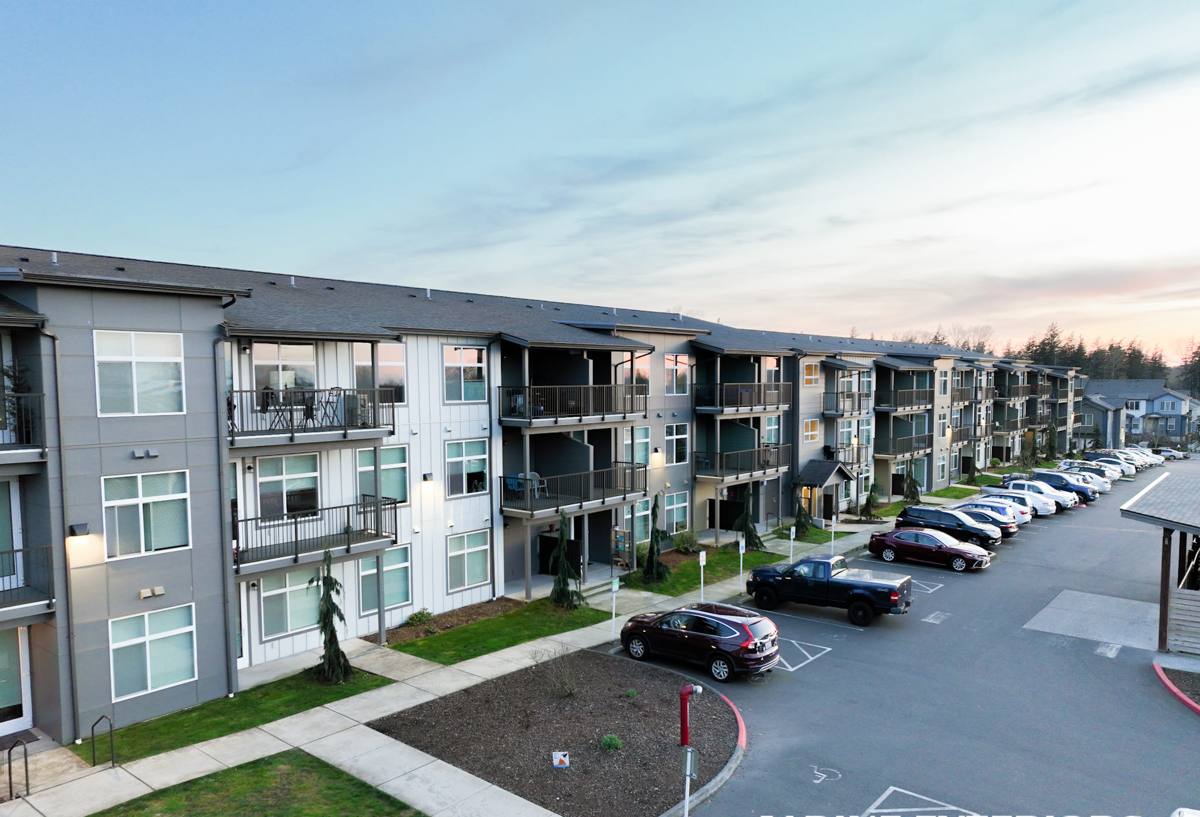
New Construction vs. Replacement: Why the Job Is Different
A lot of homeowners assume a window is a window, but new-construction and replacement units are built and installed in fundamentally different ways. New-construction windows typically have a nailing fin around the perimeter of the frame, designed to be fastened directly to the sheathing before the weather-resistive barrier and siding go on. That fin is what lets us build a proper "shingle-style" flashing system — one where every layer overlaps the one below it, so water is always directed outward and down, never trapped behind the wall.
Replacement windows, by contrast, are usually inserted into an existing frame with no nailing fin exposed, relying on the old opening's flashing (good or bad) to keep water out. On a new build, we don't inherit anyone else's shortcuts. We get to build the water management system from the sheathing out, which is exactly why new construction is the right time to be picky about sequencing, not just product selection.
The Puget Climate Factors That Drive Our Choices
Salt Air and Corrosion
Homes closer to the water in the Puget area deal with airborne salt that accelerates corrosion on unprotected fasteners, cheap hardware, and certain metal flashings. We spec corrosion-resistant fasteners and flashing tape systems rather than relying on standard hardware, and we're careful about mixing metals in the flashing assembly, since dissimilar metals in a salt-air environment can corrode faster where they meet.
Driving Rain
Whatcom County storms don't always fall straight down — wind-driven rain can push water sideways and even upward under certain conditions, testing every seam and joint in a window installation. This is why sill pan flashing and proper head flashing aren't optional extras on a Puget build; they're the difference between a window that sheds water and one that eventually lets it find a path into the wall cavity.
The Long Moss Season
Moss and algae growth is a fact of life on north-facing and shaded elevations throughout the region, and it doesn't stop at the roofline. It creeps onto trim, sills, and anywhere moisture sits without enough sun or airflow to dry out. On new construction, we grade sills and select trim details that shed water instead of holding it, because moss growth around a window is usually a sign that water is sitting somewhere it shouldn't be.
What a Correct New-Construction Window Installation Involves
Flashing and Water Management
The flashing sequence is the part of the job nobody sees once the siding goes up, and it's the part that determines whether the window performs for thirty years or starts leaking in five. A correct sequence includes a sloped sill pan (so any water that gets past the window drains back out, not into the framing), self-adhered flashing tape at the jambs, and head flashing integrated with the weather-resistive barrier in proper shingle-lap order. Every layer has to overlap the one beneath it — reverse that order anywhere and you've built a water trap instead of a water diverter.
Frame Selection and Glass Packages
Frame material and glass package both matter for a home that will see this much rain and marine humidity. We talk through vinyl, fiberglass, and wood-clad options with every homeowner based on budget, maintenance appetite, and the specific exposure of the home — how much sun, wind, and rain a given elevation actually takes. For glass, a quality Low-E coating with an argon fill and a warm-edge spacer is standard for this climate; it manages condensation better and keeps energy performance reasonable through our wet, mild winters.
Sealants and Interior Air Sealing
Exterior sealant around the frame perimeter has to be compatible with the flashing tape and siding material — the wrong sealant can fail to bond or degrade faster in UV and salt exposure. On the interior side, proper low-expansion foam or backer rod and sealant at the rough opening keeps conditioned air in and stops a pathway for moisture-laden air to reach cold surfaces inside the wall.
Comparing Frame Options for a Puget New Build
There's no single "best" window for every new build — the right choice depends on the home's exposure, the owner's maintenance preference, and budget. Here's how the common options stack up for this climate specifically:
| Frame Type | Moisture & Salt-Air Durability | Maintenance | Typical Cost Position |
|---|---|---|---|
| Vinyl | Good — won't rot or corrode; seams need periodic sealant checks | Low | Most affordable |
| Fiberglass | Very good — dimensionally stable, resists moisture and salt exposure well | Low to moderate | Mid to upper-mid |
| Wood-Clad | Depends heavily on cladding integrity and installation quality at joints | Higher — cladding seams need inspection, interior wood needs care | Highest |
For homes with heavier exposure to driving rain or closer proximity to the water, we lean homeowners toward vinyl or fiberglass unless there's a strong design reason for wood-clad, simply because the maintenance burden of a clad product goes up in a climate that never really dries out for long.
Our Process, From Rough Opening to Final Seal
On a Puget new-construction job, our sequence is the same whether it's a single window or a whole house of them:
- Verify rough openings against window schedule and confirm they're square, plumb, and correctly sized before anything is installed.
- Install sloped sill pan flashing at every opening, regardless of elevation or exposure.
- Set the window, confirm level and square, and fasten through the nailing fin per manufacturer spec.
- Apply jamb and head flashing tape in correct shingle-lap sequence, integrated with the weather-resistive barrier.
- Air-seal and insulate the interior rough opening gap without over-compressing the frame.
- Apply exterior sealant at trim and siding intersections, matched to the siding material being installed.
- Final walk-through of every opening before the crew leaves the site, checking operation, seals, and flashing laps.
Mistakes We See on Other New-Construction Jobs
Most window failures we're called out to inspect on newer homes trace back to a handful of repeated shortcuts during the original build. Before drywall or siding closes up your rough openings, it's worth confirming these details with whoever is doing the install:
- Sill pan flashing installed flat instead of sloped to drain
- Flashing tape applied out of shingle-lap order, directing water behind the barrier instead of over it
- Window fastened through the fin without shimming, leaving the frame out of square and stressing the seals
- Incompatible sealant used between flashing tape and siding material
- Interior gap packed too tightly with foam, bowing the frame and affecting operation
- No documentation or photos of flashing details before they're covered by siding
Any one of these can look fine on move-in day and still cause a leak or moss-stained trim line within a few wet seasons.
Why a Crew That Already Works in Puget Matters
Window installation instructions are written for average conditions — they don't account for a specific street's wind exposure, how close a lot sits to the water, or which elevations in a given Glenhaven neighborhood take the worst of the winter storms. A crew that's already worked new construction in and around Puget has seen how these homes actually perform after a few Whatcom County winters, not just how they look on installation day. That experience shapes decisions on the job — where to add extra flashing attention, which elevations need a more conservative sealant choice, and when a standard detail needs to be upgraded for a particular site's exposure.
It also means fewer surprises during the build. We coordinate directly with builders and framers on scheduling, rough opening tolerances, and flashing sequencing so the window install doesn't become the bottleneck — or the callback — on your project.
After Move-In: Keeping New Windows Performing
A correctly installed new-construction window shouldn't need much attention, but a little seasonal care goes a long way in this climate. Rinse pollen, salt residue, and organic buildup off frames and sills a couple of times a year, keep weep holes clear of debris so water can drain as designed, and watch shaded or north-facing units for early moss or algae growth, which usually signals a spot that's staying wetter than it should. Catching that early is far cheaper than dealing with a rot or seal failure down the road.
If you're building new in Puget and want a crew that treats the flashing and water management details as carefully as the windows themselves, we're happy to walk your plans and talk through the right window package for your site's exposure. Reach out for a free, no-pressure estimate — use the form below to get started.