 Glenhaven Siding
 Why Decks in Silver Beach Wear Differently Than Decks Inland
A deck built the same way everywhere else doesn't hold up the same way in Silver Beach. Homes here sit close enough to open water that salt-laden air reaches every exposed surface, and that air doesn't just fade a finish — it accelerates corrosion in fasteners, connectors, and hardware that would otherwise last decades. Add in the driving rain that comes off Whatcom County's winter storms and a moss season that can stretch from fall through spring, and you have three separate forces working against an outdoor structure at the same time: corrosion, moisture intrusion, and organic growth that holds water against the wood or decking surface.
None of this means a deck in Silver Beach can't last. It means the design, materials, and fastening choices have to account for salt exposure and prolonged dampness from the start, not get patched in after the first sign of trouble. We've built and repaired enough decks in this specific area to know which details actually matter here and which ones are just upsells.
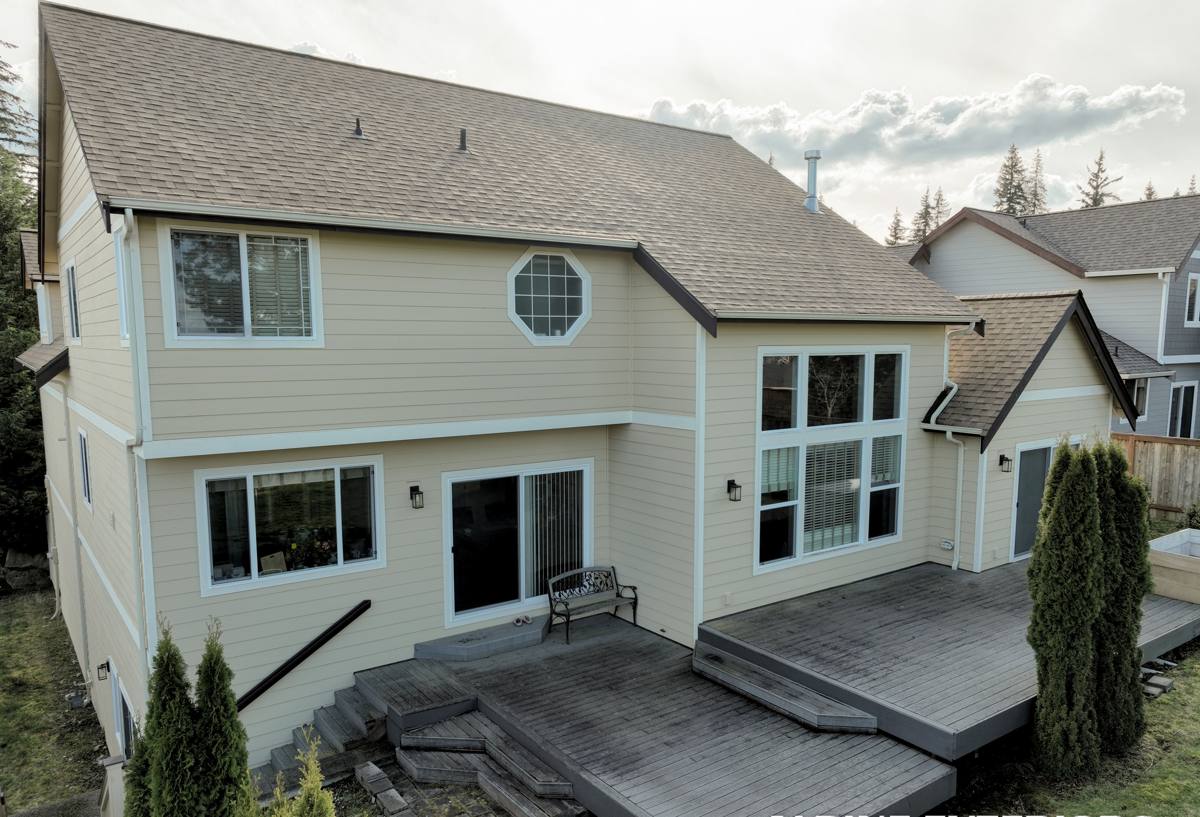
What "Custom" Should Actually Mean for a Silver Beach Deck
Reading the Lot Before Drawing the Deck
Custom doesn't mean picking a shape out of a catalog. It starts with a site walk — grade, drainage patterns, existing tree cover, and how close the structure sits to open water or a wooded slope. A lot that stays shaded and damp for most of the day needs different spacing, ventilation, and material choices than a lot that gets full afternoon sun. Sloped and wooded lots are common in this part of Whatcom County, and they change how footings, stairs, and drainage need to be planned before a single board is cut.
Designing for Water, Not Against It
The decks that hold up best around here are designed assuming water will land on them regularly and need somewhere to go. That means board spacing that lets rain drain through rather than pool, framing layouts that avoid flat, low spots where debris and moss can collect, and rail and post placement that doesn't trap moisture against ledger boards or fascia. A good custom design solves drainage in the layout itself, not with caulk after the fact.
Choosing Decking Material for Salt Air and Constant Moisture
There's no single "best" decking material for every home — the right choice depends on how much upkeep you want to do and how close the structure sits to salt air and shade. Here's how the common options actually perform in this climate:
| Material | Moisture & Rot Resistance | Maintenance Needed | Typical Lifespan Here | Relative Cost |
|---|---|---|---|---|
| Pressure-treated lumber | Good if properly sealed and re-sealed | Annual cleaning and resealing | 10–15 years | Lowest |
| Cedar | Naturally rot- and insect-resistant, but softer | Regular cleaning, periodic oil or sealant | 12–20 years | Moderate |
| Composite decking | Very good; resists rot but can trap surface moss if not cleaned | Low — periodic washing | 20–25+ years | Higher |
| Capped PVC decking | Excellent; fully sealed surface, no wood fibers to hold moisture | Lowest — occasional rinsing | 25+ years | Highest |
Composite and capped PVC products cost more up front, but in a climate with this much sustained moisture and a genuine moss season, the reduced maintenance and rot resistance often make up the difference over the life of the deck. Wood is still a reasonable choice for homeowners who prefer its look and are willing to keep up with sealing — we'll walk you through the honest trade-offs for your specific site rather than steer you toward whatever's easiest for us to install.
Framing and Substructure — Where Coastal Decks Actually Fail
Most deck failures we see don't start at the surface — they start underneath, where nobody's looking until there's a problem. Three areas matter most in this climate:
Ledger Board Flashing
The ledger board — where the deck attaches to the house — is the single most common failure point on decks anywhere, and driving rain makes it worse here. Proper flashing that directs water away from the house band board, rather than relying on caulk alone, is not optional in a climate that sees this much sideways rain.
Hardware and Joist Hangers
Salt air corrodes standard galvanized hardware faster than manufacturers' ratings assume for inland installations. We use connectors and fasteners rated for the exposure the deck will actually see, not just the minimum code requirement.
Footings and Drainage
Footing depth and placement need to account for local frost depth and soil drainage, especially on sloped or wooded lots where water moves differently than on flat, open ground. Poor drainage around footings is a slow, invisible problem that shows up years later as a wobbly or settling deck.
Railings, Fasteners, and Hardware That Won't Rust or Streak
Salt air is hardest on the small stuff — screws, brackets, and rail hardware — long before it visibly affects the decking or framing. Rust streaks bleeding down light-colored composite or painted surfaces are almost always a sign that standard-grade fasteners were used somewhere they shouldn't have been.
- Stainless steel fasteners in high-exposure areas resist corrosion far longer than standard coated screws
- Cable and metal railing systems need corrosion-resistant hardware rated for coastal exposure, not just "exterior grade"
- Wood balusters and rails require more frequent sealing than decking boards because they're more exposed on all sides
- Post bases and structural connectors should be checked periodically for early corrosion, especially near ground level
Our Process, Start to Finish
- Site visit and consultation — we walk the lot, discuss how you'll use the space, and note drainage, sun exposure, and grade challenges specific to your property
- Design and material selection — we lay out the deck footprint, discuss material trade-offs honestly, and finalize a design that solves drainage and moisture problems in the layout itself
- Permitting — we handle the permit application and coordinate any required inspections with the local building department
- Framing and structural work — footings, ledger flashing, and framing go in first, with hardware selected for the exposure your specific site sees
- Decking, railing, and finish work — surface material and railings are installed to the agreed design, with attention to fastener placement and spacing for drainage
- Final walkthrough — we go over the finished deck with you, including what maintenance it will need and when
Permits and Local Building Requirements
Most decks attached to a house, and many freestanding ones, require a building permit — the exact threshold depends on height, size, and your specific jurisdiction's rules. We handle the permitting process as part of the job, including coordinating inspections. A few general code standards apply broadly across Washington jurisdictions and are worth knowing regardless of who builds your deck: guardrails are typically required once a deck surface sits more than 30 inches above grade, and guardrail height generally needs to be at least 36 inches. Setback requirements from property lines vary by lot and zoning, which is another reason a proper site plan matters before construction starts rather than after.
Maintenance Checklist for a Long-Lasting Silver Beach Deck
The single biggest factor in how long a deck lasts in this climate isn't the material — it's whether it gets basic maintenance on a regular schedule. A short annual routine prevents most of the problems we get called out to fix.
- Sweep debris out of board gaps regularly — trapped leaves and needles hold moisture against the surface and framing
- Clean moss and algae with a deck-safe cleaner before it builds up enough to make the surface slick
- Reseal or re-stain wood decking and railings on a regular schedule — don't wait until the finish has visibly failed
- Inspect fasteners and metal hardware for early rust or corrosion, especially near rail posts and connectors
- Check that the ledger board flashing and any wall connections are still sealed and directing water away from the house
- Keep nearby gutters and downspouts clear so runoff isn't draining directly onto or under the deck
- Trim back overhanging branches that keep the deck surface shaded and slow to dry after rain
Why Hire a Crew That Already Works This Neighborhood
A contractor who's built decks across a wide range of climates will still give you a structurally sound deck. But a crew that already works regularly in Silver Beach and the surrounding Whatcom County area knows which fastener grades actually hold up against this specific salt exposure, how the local moss season affects material choice, and what the local building department expects on a permit application before it becomes a delay. That familiarity shows up in fewer surprises during construction and fewer callbacks after the deck is finished. It's also worth asking any contractor you're considering about licensing, bonding, and insurance, and asking to see recent local work — those basics matter as much as the design itself.
If you're planning a new deck or replacing one that's showing its age, we're glad to walk the site with you and put together a straightforward plan — no pressure, no upsell script. Use the form below to request a free estimate.