 Glenhaven Siding
 Why Decks in Silver Beach Wear Out Faster Than the Manuals Say
Every deck manufacturer publishes a service life estimate, and almost none of them were written with a Whatcom County waterfront community in mind. Silver Beach sits close enough to the water that salt-laden air is a daily fact of life, not an occasional event. Add in the long stretch of driving rain that defines a Pacific Northwest winter and spring, and then add the moss season that follows — often lasting from late fall through early summer on shaded or north-facing lots — and you get a set of conditions that shorten the life of an ordinary deck by years.
Salt air accelerates corrosion in any exposed metal: nails, screws, joist hangers, post bases, and railing hardware. Driving rain doesn't just fall straight down here; wind-driven rain gets pushed sideways into ledger connections, under railing posts, and into end-grain cuts that were never sealed. And moss doesn't just look bad on a deck surface — it holds moisture against the boards long after a dry afternoon, which is exactly the environment rot fungus needs to get established.
None of this means a deck in Glenhaven is doomed. It means a deck built or replaced without accounting for these three factors together — salt, rain, and moss — will fail in specific, predictable places well before its structural life should be up.
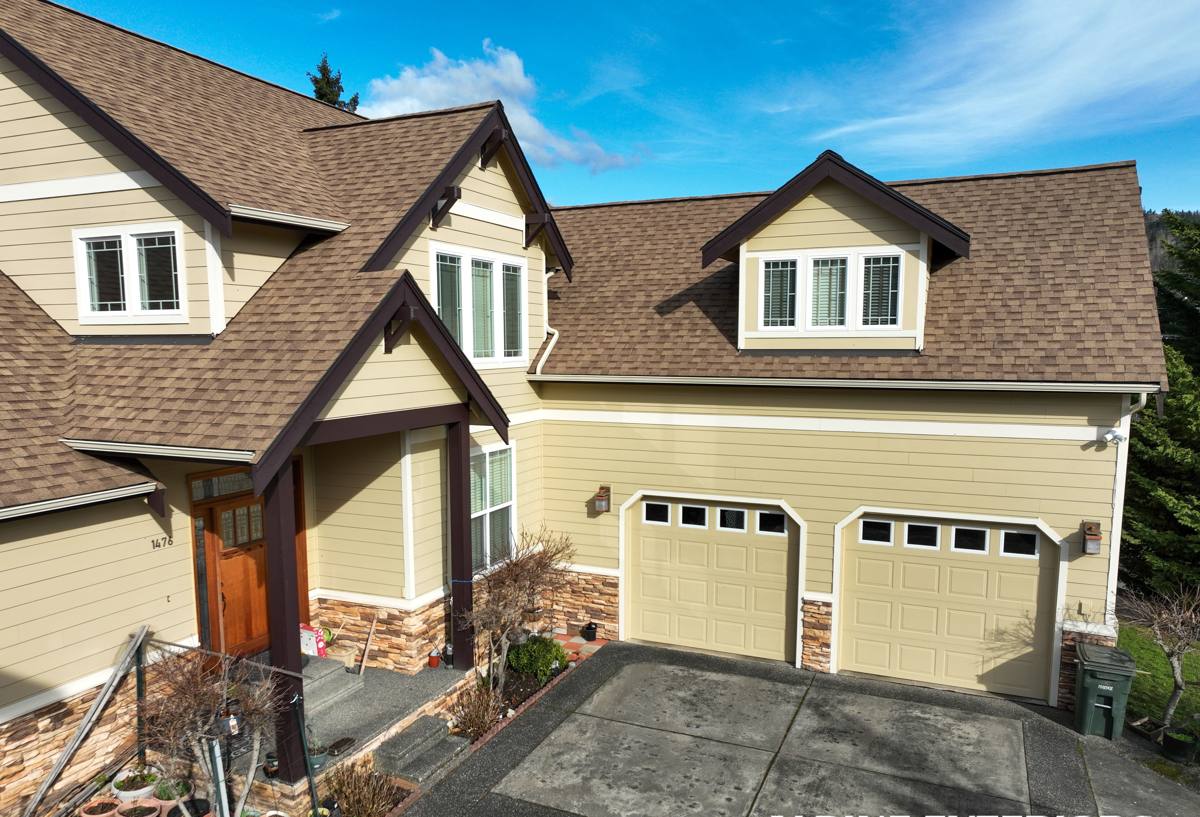
Signs a Deck Needs Replacement, Not Another Repair
We get called out to a lot of decks where the owner has already replaced a board or two, or had someone re-seal the surface, and the problem came right back. Surface fixes don't solve structural ones. Here's how we tell the difference on a walkthrough.
Replace it
- Soft or spongy spots anywhere in the decking, especially near the house or at board ends
- Rot or heavy corrosion at the ledger board connection to the house
- Posts or footings that have shifted, heaved, or show rot at the base
- Railing posts that flex or wiggle under hand pressure
- Joists that are cracked, split, or soft to a screwdriver test
- A deck built without a code-compliant ledger flashing or without proper post footings
Repair may be enough
- A handful of surface-cupped or splintering boards on an otherwise sound frame
- Loose railing hardware with no rot underneath
- Fading or graying finish on wood that's still structurally solid
The honest answer is that most decks we're asked to look at in Silver Beach that are 15-20+ years old, built low to grade or close to the shoreline, need full replacement rather than repair — the framing underneath has usually taken the same beating as the surface, it's just less visible.
What a Correct Deck Replacement Actually Involves
A deck replacement done right is a structural project, not a cosmetic one. Skipping any of the following is how you end up back at square one in five years instead of twenty-five.
Ledger connection and flashing
Where the deck attaches to the house is the single most common failure point we find in this climate. Proper flashing — installed so water sheds away from the house framing rather than behind the ledger — is non-negotiable. This is also the point where wind-driven rain does the most damage if it's done wrong.
Footings and posts
Footings need to be sized and set below frost depth and bear on undisturbed soil. On sloped or waterfront-adjacent lots around Silver Beach, drainage around footings matters as much as the footing itself — standing water against a post base is a slow-motion failure.
Framing and fasteners
All structural hardware — joist hangers, post bases, structural screws — should be rated for the corrosive exposure this area sees, not just standard exterior-rated. This is where salt air separates a deck that lasts from one that doesn't.
Decking material and fastening
Board selection and how it's fastened affects moisture drainage between boards, which affects moss and rot risk directly. Gapping, board orientation, and airflow underneath the deck all matter more here than in a dry inland climate.
Railings and code compliance
Railing height, baluster spacing, and guard post attachment are code items, not style choices — and they're commonly done wrong on older decks we replace.
Decking Material Options for a Marine Climate
There's no single "best" decking material — there's a best fit for how much upkeep you want to do and what you're trying to protect against. Here's how the common options actually compare for a Silver Beach lot.
| Material | Moss/Moisture Behavior | Maintenance | Typical Lifespan |
|---|---|---|---|
| Pressure-treated wood | Absorbs moisture, needs sealing to resist moss and graying | Annual cleaning and periodic re-sealing | 10-15 years before major issues |
| Cedar | Naturally rot-resistant but still needs upkeep near salt air | Regular cleaning and finish maintenance | 15-20 years with upkeep |
| Composite decking | Doesn't rot, but surface can still hold moss film if not cleaned | Occasional cleaning, no sealing | 25-30 years |
| Capped composite / PVC | Best moisture and moss resistance of the options above | Low — occasional wash-down | 25-30+ years |
We'll walk you through the honest trade-offs for your specific lot rather than pushing one product — a shaded, moss-prone yard changes the calculus differently than an open, sun-exposed one.
Our Deck Replacement Process
- On-site assessment — we inspect the existing ledger, framing, footings, and posts to confirm what's driving the failure, not just what's visible on the surface
- Plan and permit — sizing footings, ledger flashing detail, and railing layout to current code before any demo starts
- Demolition — full removal of the old deck surface and framing, checking the house band board and sheathing behind the ledger for hidden rot
- Framing rebuild — new footings, posts, joists, and ledger flashing sized for this site's exposure
- Decking and railing install — material installed with proper gapping and fastening for drainage and airflow
- Final walkthrough — we go over the finished deck with you, including what maintenance it actually needs going forward
What Makes Silver Beach Specifically Different
Silver Beach's proximity to the water means salt exposure is more constant here than it is even a few miles inland in Glenhaven proper. Combined with tree cover common on many lots in the area, north- and east-facing decks in particular hold shade and moisture longer through the day, which is exactly the setup moss and rot favor. Sloped lots near the shoreline also mean drainage planning around footings and under the deck structure needs more attention than a flat inland yard would require.
None of this is exotic — it's just specific. A crew that replaces decks across Whatcom County generally knows the code. A crew that works Silver Beach regularly knows which corner of which type of lot fails first, and builds for that from the start.
Cost Factors to Understand Before You Get Quotes
| Factor | Why It Changes the Price |
|---|---|
| Deck size and height | More framing, more footings, more material |
| Decking material chosen | Wood, composite, and capped composite carry different material costs |
| Ledger and framing condition | Hidden rot behind the ledger or in band boards adds repair scope |
| Site access and slope | Waterfront-adjacent and sloped lots can complicate footing work and material staging |
| Railing style and code requirements | Custom railing details and guard requirements affect labor and material |
We give straightforward, written estimates broken down by these factors rather than a single lump number — you should be able to see what you're paying for and why.
Maintenance Checklist Once Your New Deck Is In
- Wash the surface at least once a year, more often on shaded or moss-prone areas
- Keep gutters and downspouts clear so water isn't dumping onto or near the deck
- Check railing posts and hardware annually for looseness or corrosion
- Trim back vegetation that shades the deck and slows drying
- Address any soft spots or discoloration immediately rather than waiting
Why It Matters That We Already Work This Neighborhood
A deck built to a generic spec sheet can still fail early in a place like Silver Beach if the crew building it hasn't accounted for salt exposure, wind-driven rain angles, and moss-holding shade patterns together. We work throughout Glenhaven and Whatcom County, and Silver Beach's waterfront-adjacent conditions are part of what we plan for on every deck we replace here — from hardware selection to how the framing drains.
If your deck is showing soft spots, corroded hardware, or a moss problem that keeps coming back no matter how often you clean it, we're happy to take a look and give you a straight answer about whether it's a repair or a replacement. Reach out for a free, no-pressure estimate using the form below.